How to Choose the Right Movable Hydraulic Lift for Your Needs?
Choosing the right Movable Hydraulic Lift requires careful consideration. Many factors influence this decision. These factors can directly impact your safety and productivity.
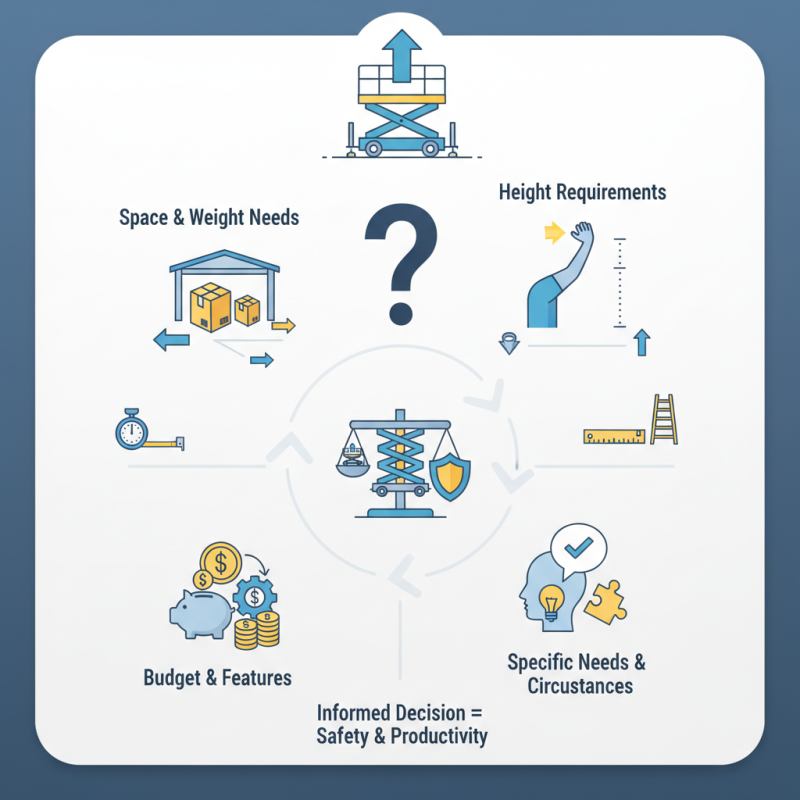
When evaluating options, think about your space and weight needs. Each lift model has unique specifications. Not all lifts fit every project. Understand the height requirements for your tasks. A lift that is too tall or too short won’t serve you well.
Reflect on your budget as well. Sometimes a cheaper model might lack essential features. You want a lift that balances quality and cost. In the end, the right Movable Hydraulic Lift will depend on your specific needs and circumstances. Make an informed decision to ensure a successful outcome.
Understanding the Basics of Movable Hydraulic Lifts
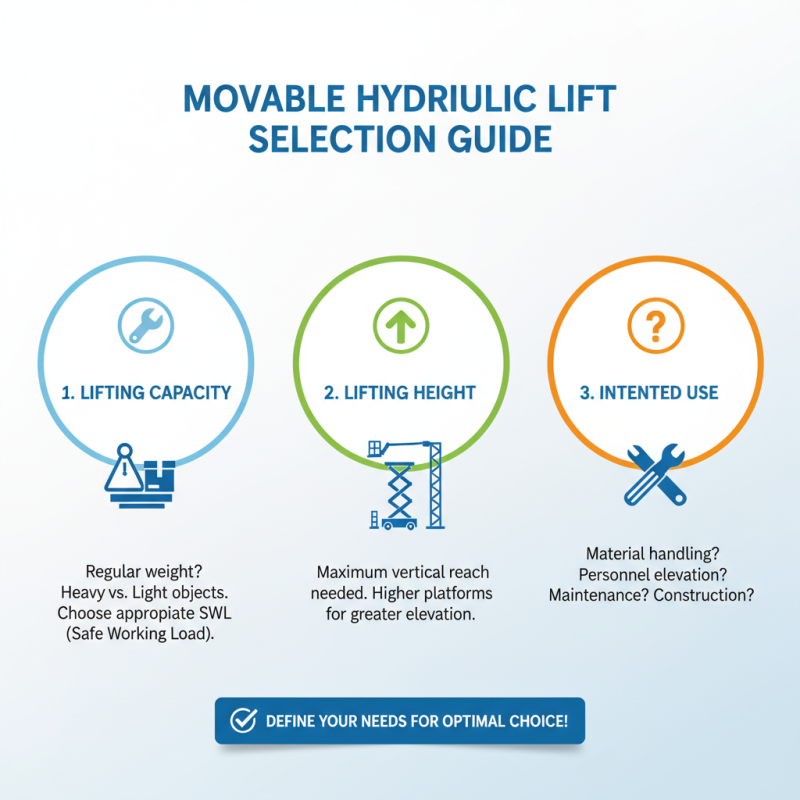
Movable hydraulic lifts are essential for various industrial tasks. Understanding how they work is crucial for selecting the right one. These lifts rely on hydraulic pressure to raise and lower loads, making them powerful and efficient. They can handle heavy items, which is great for warehouses and construction sites.
When choosing a lift, consider the weight capacity. Each model has a specific limit. If your load exceeds this limit, it may lead to accidents. Think about the height you need. Not all lifts can reach the same elevation. Ensure that the lift's height suits your tasks.
Tips: Always check safety features. Some lifts have emergency stops and load indicators. These can prevent mishaps. Look for portability. A lift that’s too heavy or bulky may hinder your operations. Weigh the sizes carefully.
In addition, evaluate the terrain where you'll use it. Some lifts perform poorly on uneven surfaces. If your lift can't handle this, it won’t be effective. Take the necessary time to assess each option. Not every choice will meet your specific needs.
Evaluating the Load Capacity and Size of the Lift
When selecting a movable hydraulic lift, evaluating the load capacity is crucial. Each lift has a specific weight limit. Exceeding this limit can lead to accidents. It’s important to know the heaviest item you plan to lift. Will it be heavy machinery or lighter packages? Understand the weight distribution as well.
Another key factor is the size of the lift. The lift should fit in your workspace without obstructing movement. Measure the area where you plan to operate it. Consider the height requirements as well. If the lift is too tall, it could pose a hazard. Are there overhead structures to consider? Also, think about the lifting range. Will it meet your daily tasks?
It’s easy to overlook these details. Many choose based on price alone. Yet, this can lead to improper selections. Reflect on your actual needs before purchasing. A lift that meets your specifications will enhance efficiency. Getting the right capacity and size is not just about function; it ensures safety too. Make informed decisions to avoid costly mistakes.
Assessing Safety Features and Compliance Standards
When selecting a movable hydraulic lift, safety features are crucial. Look for lifts with overload protection systems. These prevent accidents when the weight limit is exceeded. Check for stabilizing features, such as outriggers or wider bases. These help keep the lift steady during operation.
Compliance with safety standards is equally important. Ensure the lift meets local regulations. This includes checking certifications from relevant authorities. Documentation can be complex, but it plays a vital role. Lack of compliance can lead to serious liabilities. It’s worth spending time on these details.
Regular inspections are also necessary. They help identify potential issues early. Neglecting maintenance could result in accidents or malfunctions. This is an area where many users falter. A checklist can help keep track of inspections. Consider involving a professional for thorough evaluations. Safety should never be an afterthought.
Safety Features and Compliance Standards of Movable Hydraulic Lifts
Comparing Different Manufacturers and Models on the Market
When selecting a movable hydraulic lift, understanding the market landscape is crucial. Various manufacturers offer unique features, making comparisons essential. Industry reports indicate that nearly 30% of users prioritize load capacity. Many lifts can handle between 1,000 to 10,000 pounds. Knowing your lifting requirements is fundamental.
Efficiency is another vital factor. Many models display specifications showing pumping speeds of 1 to 3 inches per second. Assessing these speeds can impact your operation's productivity. However, not every model delivers consistent performance. Thorough testing is recommended to ensure reliability under different conditions.
Cost is often a deciding factor. The price range for hydraulic lifts varies significantly. Basic models can cost around $2,000, while advanced systems may exceed $20,000. Value assessment is essential here. Sometimes, the lowest price doesn't guarantee quality. In some cases, spending more can save maintenance costs later. Always weigh the benefits before finalizing your decision.