What is Electric Hoist Scaffold and How Does It Work?
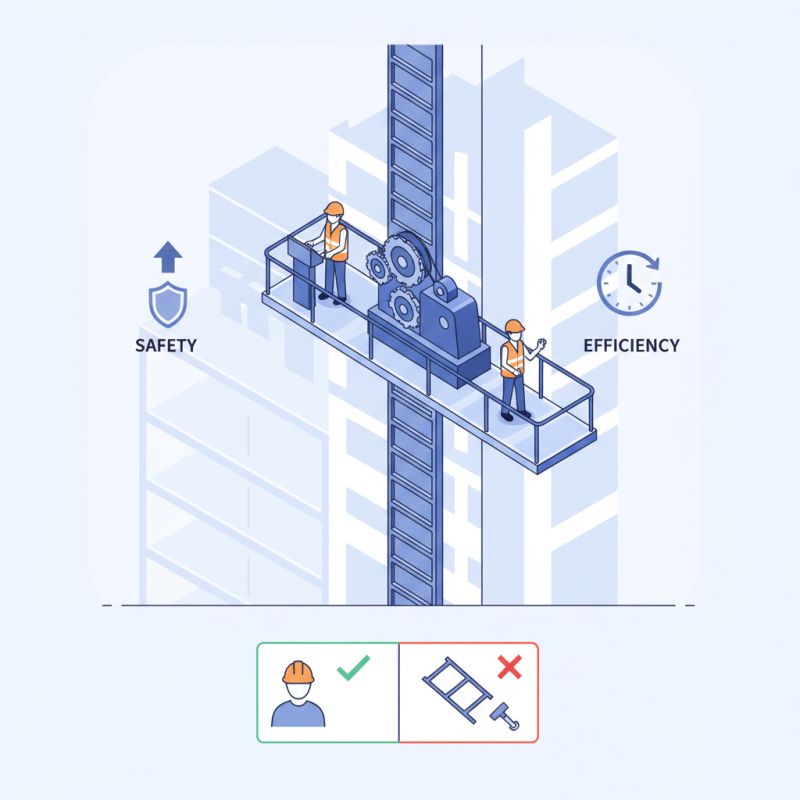
Electric Hoist Scaffold is a vital tool in modern construction. It enhances safety and efficiency on work sites. This equipment allows workers to access higher areas without the need for traditional scaffolding. It combines the benefits of a hoist with a scaffold, providing stability and ease of use.
Working with Electric Hoist Scaffold can boost productivity. It minimizes the time workers spend on assembly and dismantling. However, there are challenges. Operators must be trained properly. Misuse or improper installation can lead to accidents. Safety is essential when using this scaffold. It's not just about lifting; it's about ensuring everyone goes home safe.
In conclusion, Electric Hoist Scaffold represents a significant advancement. Its advantages are clear, but safety precautions cannot be overlooked. Workers need to remain vigilant while using this equipment. A moment's distraction can lead to serious consequences.
What is an Electric Hoist Scaffold?
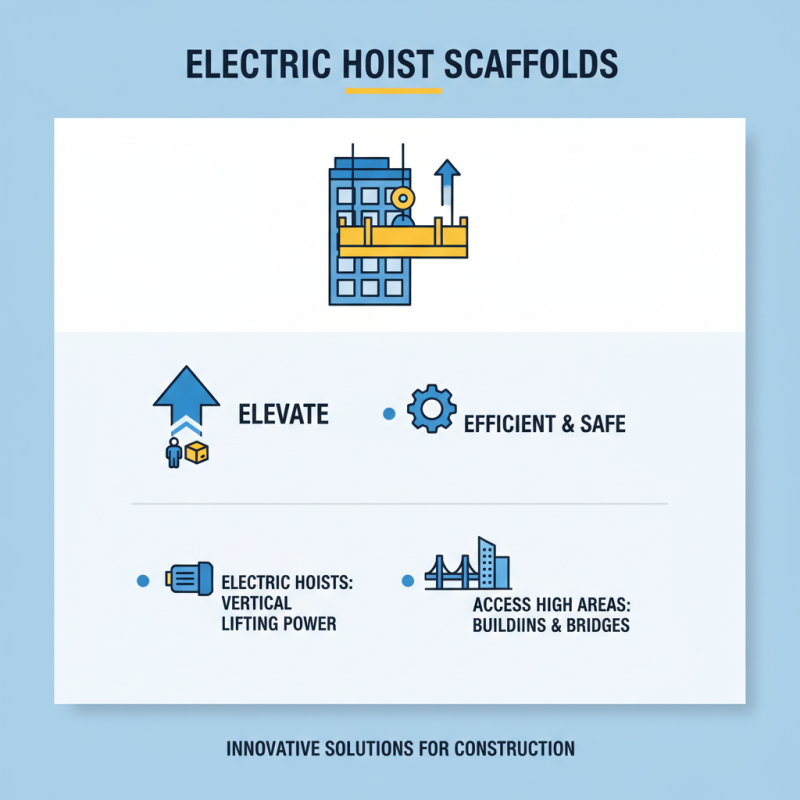
Electric hoist scaffolds are innovative structures designed for construction and maintenance tasks. They offer a safe and efficient way to elevate workers and materials. These scaffolds utilize electric hoists, which are devices that lift heavy loads vertically. This mechanism simplifies tasks that require access to elevated areas, like buildings and bridges.
The electric hoist scaffold consists of a platform and a hoisting mechanism. The platform supports workers and tools, while the hoisting mechanism raises or lowers it. Operators use controls to adjust the height. Safety features are critical, including limit switches and emergency stops. Regular maintenance is crucial, too. Users must check the equipment for wear and tear frequently.
While these scaffolds significantly enhance productivity, they are not without challenges. Training is essential to ensure safe operation. Misuse can lead to accidents. Workers must understand the limits of the equipment. Additionally, environmental factors like wind can impact safety. Awareness of these challenges can lead to safer practices on the job site.
Key Components of Electric Hoist Scaffold
Electric hoist scaffolds are innovative solutions for construction environments. They combine traditional scaffolding with electric hoisting mechanisms. This integration enhances efficiency and safety on job sites. Understanding the key components of electric hoist scaffolds is vital for optimal use.
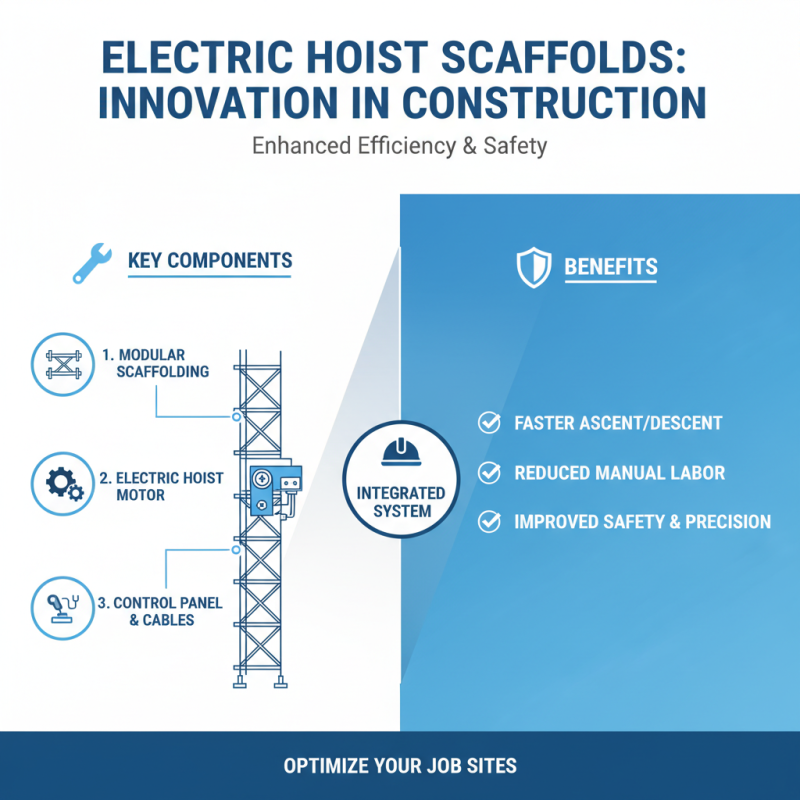
The main components include the hoist, scaffold frame, and control system. The hoist is typically electric, allowing for easy vertical movement of materials. Data from recent industry reports indicates that these systems can increase productivity by up to 40%. The scaffold frame provides the support structure. It is designed to withstand heavy loads, often recommended to meet specified weight limits. Oversizing the platform can sometimes lead to imbalance, which is a common pitfall that requires attention.
Another critical element is the control system. Operators can manage height adjustments effortlessly, but improper training can lead to misuse. Regular maintenance is crucial to ensure that all components function seamlessly. Industry studies show that regular inspections reduce accident rates significantly. However, many workers still overlook these maintenance checks. Understanding these components and their functions can lead to safer and more efficient construction practices.
How Electric Hoist Scaffold Operates
Electric hoist scaffold is an innovative solution for construction and maintenance tasks. It employs a simple mechanism that raises and lowers workers along a vertical space. This type of scaffolding is efficient, particularly in high-rise buildings where traditional scaffolding could be cumbersome. According to industry reports, the demand for electric hoist systems has surged by 15% in the past year alone.
The key to its operation lies in the electric hoist. It consists of a motorized winch that pulls a cable or rope, lifting the scaffold upwards. Users can control the height easily with a remote, enhancing safety and convenience. The load capacity typically ranges from 500 kg to 2000 kg, making it suitable for various tasks. However, operators must be trained to mitigate risks. Misuse of the equipment can lead to accidents, as highlighted by safety audits indicating that nearly 20% of workplace incidents involve scaffold misuse.
Proper maintenance is crucial for electric hoist scaffolds. Routine inspections can prevent mechanical failures. Users often neglect this aspect, leading to unsafe working conditions. In fact, a report stated that over 30% of scaffolding accidents result from equipment failure. Awareness and education about safe practices are imperative for everyone involved in construction.
Safety Features in Electric Hoist Scaffold
Electric hoist scaffolds are essential in construction. Their design enhances safety and efficiency. Key safety features are crucial for preventing accidents.
One important feature is the overload protection system. This system prevents the hoist from lifting loads that exceed its capacity. Regular inspections ensure this feature functions properly. An overlooked inspection could lead to serious issues.
Another safety element is the emergency stop button. It allows workers to quickly halt operations in case of a danger. Training workers to use this feature effectively is vital. Always remember that a moment’s distraction can lead to mistakes.
When working on scaffolds, secure your tools properly. Falling tools can injure workers below. Keep the work area clean to avoid tripping hazards. Safety should always be a top priority on job sites.
Usage and Safety Features of Electric Hoist Scaffold
Applications of Electric Hoist Scaffold in Construction
Electric hoist scaffolds are revolutionizing construction sites. These systems are designed to lift heavy materials quickly and safely. They are commonly used for high-rise buildings and other projects that require lifting items to significant heights. According to a recent industry report, the global market for electric hoists is anticipated to exceed $2 billion by 2025. This growth is driven by the rising demand for efficient construction methods.
In construction, electric hoist scaffolds play critical roles. They enhance productivity by reducing manual labor. Workers can lift tools and materials without the strain or time associated with traditional scaffolding. This not only increases efficiency but also improves safety on the job site. The scaffolds are equipped with safety features, yet there’s always room for improvement. Studies show that accidents still occur, often due to misuse or equipment failure.
Beyond lifting capabilities, electric hoist scaffolds can also support different applications. They can accommodate various materials, including steel beams and concrete panels. However, the dependency on electrical systems can pose challenges during power outages. Construction teams need to plan for such contingencies. Balancing efficiency and safety is crucial in optimizing these systems for diverse projects.
What is Electric Hoist Scaffold and How Does It Work?
| Feature |
Details |
| Definition |
An electric hoist scaffold is a construction platform that utilizes electric hoists for lifting and lowering loads, providing a stable working environment at height. |
| Components |
Includes hoists, platforms, support frames, and safety mechanisms. |
| Operation |
Hoists are powered by electricity, allowing for precise control of lifting and lowering operations, which can be managed via remote control or control panels. |
| Applications |
Commonly used in high-rise construction, maintenance of buildings, and in situations requiring safe lifting of heavy materials. |
| Advantages |
Increases efficiency, enhances safety, and reduces manual labor requirements. |
| Safety Features |
Equipped with overload sensors, emergency stop buttons, and safety brakes to prevent accidents. |