10 Essential Tips for Choosing the Right Trolley Crane Hoist for Your Needs?
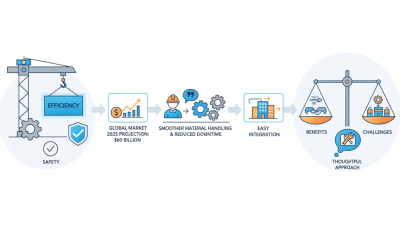
Choosing the right Trolley Crane Hoist is crucial for optimizing workplace efficiency. The global material handling equipment market, projected to reach USD 192.49 billion by 2027, highlights the importance of selecting the right tools for heavy lifting operations. A well-chosen hoist can enhance productivity, reduce downtime, and improve workplace safety.
Many factors contribute to the decision-making process. Load capacity is a primary concern. Selecting a hoist that can handle the required weight is vital. Reports indicate that overloading is a common mistake, leading to accidents and equipment damage. Understanding duty cycles and operational environments also plays a significant role. Hoists designed for continuous use differ from those used intermittently.
Investing in a high-quality Trolley Crane Hoist can prevent costly setbacks. However, it also requires a balance of budget and functionality. Some operators may prioritize price over performance, resulting in potential frustrations. Reflecting on specific needs and potential future demands will lead to better outcomes. Choosing wisely is not just advisable; it’s essential for a safe and efficient operation.
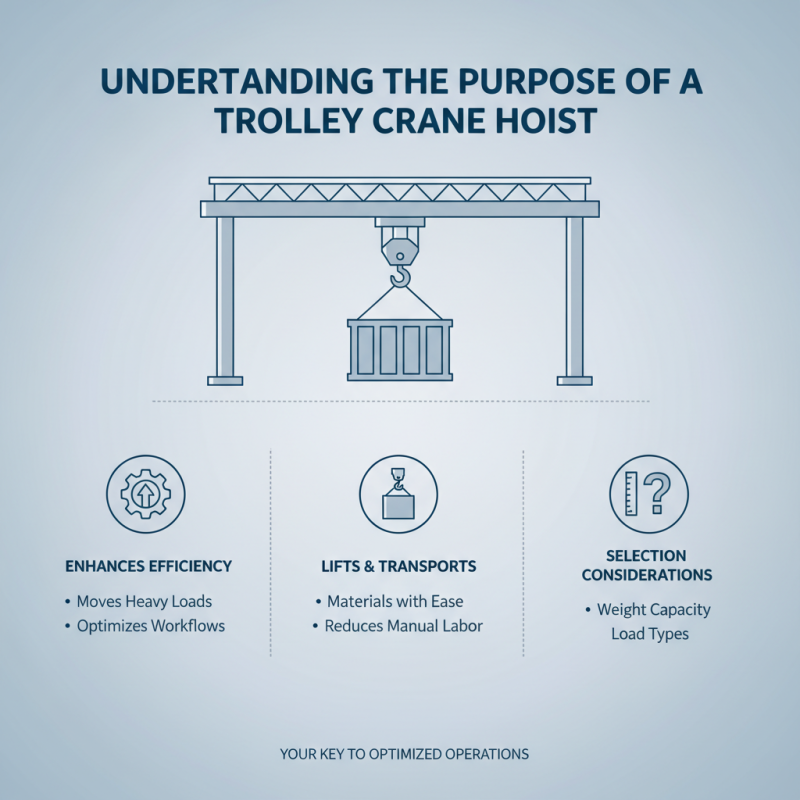
Understanding the Purpose of a Trolley Crane Hoist in Your Operation
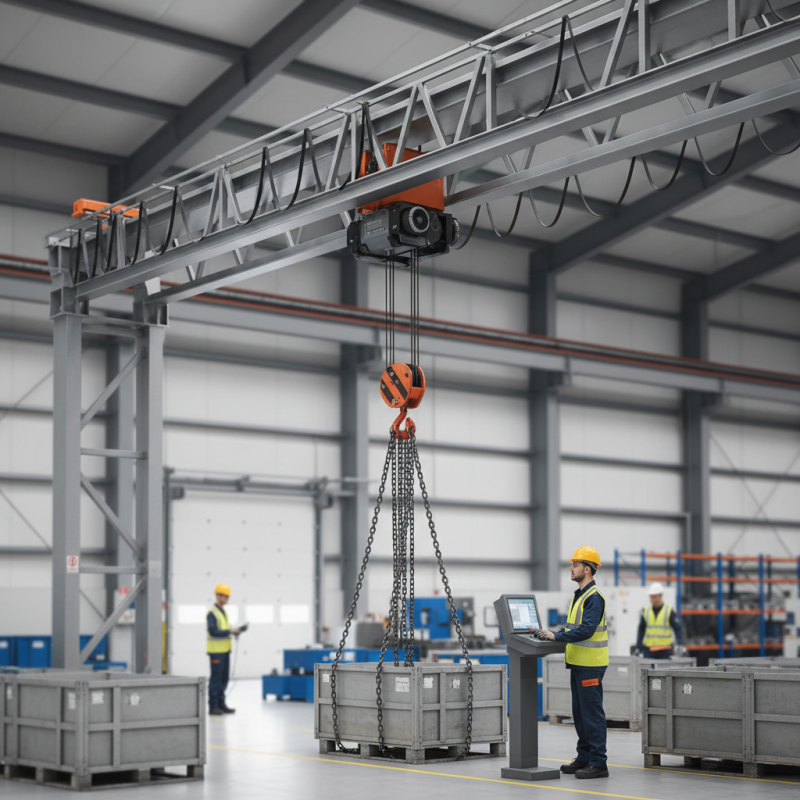
A trolley crane hoist plays a critical role in various operations. It enhances efficiency in moving heavy loads. By understanding its purpose, businesses can optimize their workflows. This equipment is designed to lift and transport materials with ease. Considering factors like weight capacity and varying load types is essential in the selection process.
When selecting a hoist, assess your operational needs. Are you frequently handling bulky items? Does your work environment require versatility? Reflect on these questions to ensure your choice aligns with your operational demands. Additionally, the hoist's compatibility with existing equipment is pivotal. Poor integration can lead to safety hazards or inefficiencies.
Maintenance is another vital aspect. A well-maintained hoist ensures longevity and consistent performance. Neglecting regular inspections can cause unforeseen breakdowns. It’s wise to create a checklist for upkeep. This practice fosters reliability, ensuring safe operations. Balancing efficiency and safety is not always easy, but it’s crucial for success in any endeavor involving heavy lifting.
Analyzing Load Capacity Requirements for Effective Hoist Selection
When selecting a trolley crane hoist, understanding load capacity is critical. Choosing the right hoist means carefully analyzing the weight you need to lift. Calculate the maximum weight, considering safety factors. A hoist that is too weak can lead to catastrophic failures. Aim for a model with a capacity 25% above your highest load for added safety.
Always consider the type of materials you will lift. Some hoists are better suited for specific environments. For instance, corrosive environments require rust-resistant models. Ensure your chosen hoist can handle the load dynamics and frequency of use. It’s important to reflect on your operational needs.
Look into the power source as well. Electric hoists may offer different lifting speeds compared to pneumatic options. Think about where the hoist will be used, whether indoors or outdoors. Additionally, observe the portability of the hoist. Will you need to move it frequently? These factors will help you make a well-informed decision.
10 Essential Tips for Choosing the Right Trolley Crane Hoist for Your Needs
| Load Capacity (tons) |
Lift Height (m) |
Power Source |
Speed (m/min) |
Features |
| 1 |
10 |
Electric |
8 |
Remote Control, Overload Protection |
| 2 |
15 |
Manual |
6 |
Lightweight, Easy Transport |
| 3 |
20 |
Electric |
10 |
Heavy Duty, Adjustable Speed |
| 4 |
25 |
Electric |
12 |
High Efficiency, Safety Features |
| 5 |
30 |
Hydraulic |
5 |
Compact, Easy to Operate |
Assessing the Power Source Options for Trolley Crane Hoists
When selecting a trolley crane hoist, the power source is a critical aspect to consider. Electric, pneumatic, and hydraulic hoists are widely used in various industries. According to the International Organization for Standardization (ISO), up to 50% of hoists in industrial settings are electric. They typically offer ease of use and low maintenance. However, electric hoists may not perform well in all environments, particularly in hazardous locations.
Pneumatic hoists, powered by compressed air, excel in explosive or flammable settings. They are lighter and often more compact than their electric counterparts. However, their efficiency can be compromised by the need for a compressed air supply, which isn't always feasible. This needs careful evaluation when determining which power source aligns with your operational needs.
Consider the following tips when assessing hoist power options. Review your operating environment; choose a power source that matches it. Evaluate the load requirements. Higher loads may require more robust, specialized solutions like hydraulic systems. Additionally, consult industry reports for insights into efficiency ratings and performance standards, which contribute to informed decisions. Balancing power source options against specific needs can lead to suitable choices, enhancing overall operational efficiency.
Power Source Options for Trolley Crane Hoists
Evaluating Safety Features and Compliance Standards for Hoists
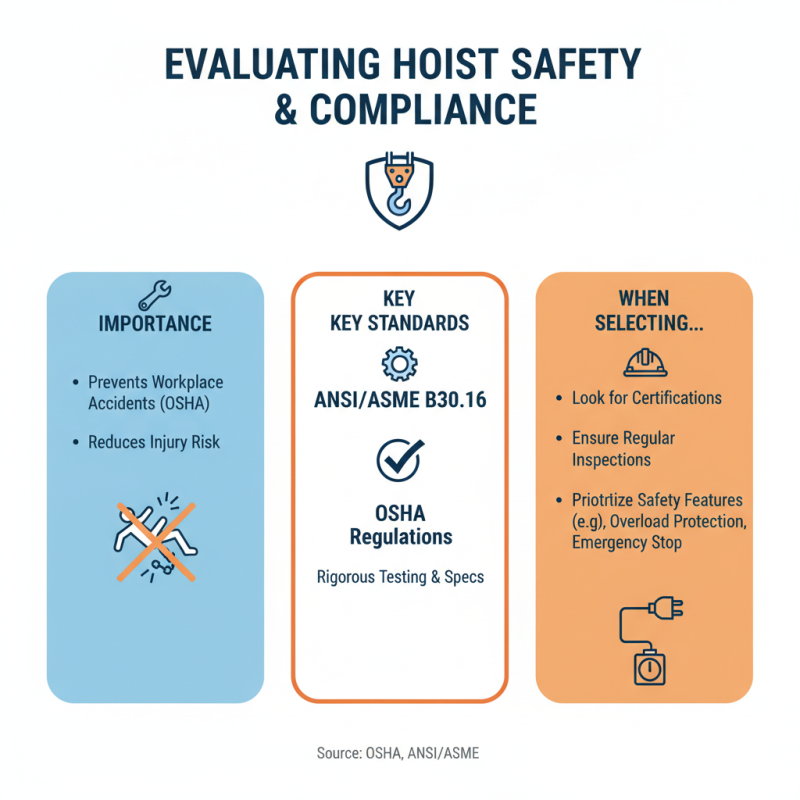
When selecting a trolley crane hoist, safety features and compliance standards are paramount. According to the Occupational Safety and Health Administration (OSHA), improper hoist usage can lead to workplace accidents, making thorough evaluations essential. Look for equipment that meets ANSI/ASME standards. This ensures the hoist has undergone rigorous testing and meets safety specifications. Compliance with these standards can significantly reduce the risk of accidents and injuries.
Tip: Always verify if the hoist has an overload protection feature. This mechanism prevents lifting beyond safe capacity, thereby avoiding potential equipment failure.
Another critical aspect is the design of safety features. Consider hoists equipped with emergency stop buttons and alarms that alert operators in dangerous situations. According to the National Institute for Occupational Safety and Health (NIOSH), proper training and user-friendly controls can significantly enhance safety. A study found that nearly 50% of accidents were due to operator error; thus, selecting a hoist with intuitive controls is advisable.
Tip: Inspect the emergency braking system. Ensure that it activates promptly and holds the load securely in case of a power failure.
Shortcomings can exist in many products. Some hoists may offer features that seem advanced but lack depth in safety protocols. Always conduct a thorough needs assessment. The right hoist balances efficiency with robust safety measures, ultimately promoting a safer work environment.
Considering Space and Mobility Needs in Trolley Crane Hoist Selection
When selecting a trolley crane hoist, considering
space and mobility is crucial. Space constraints can heavily influence
the type of crane hoist that is suitable for your facility. Studies show that nearly
40% of crane-related accidents occur in confined spaces.
Therefore, a compact design is often more beneficial. A hoist with a smaller footprint allows for better
maneuverability in tight areas.
Mobility features should also not be overlooked. For example, models with features like electric trolleys
can increase efficiency by allowing rapid repositioning. According to industry experts, trolleys with
good mobility can reduce operation time by
25%. Keep in mind the path the crane will travel.
If it's on a fixed track, ensure there is enough clearance for its full range of motion.
Reflecting on the importance of these factors can help you avoid costly mistakes. It’s essential to
assess the layout and logistics of your workspace. This can impact both
safety and productivity. Proper planning and
consideration can significantly enhance the effectiveness of your lifting operations. A thoughtful
approach could prevent future operational inefficiencies.