What is Hand Crane Hoist and How Does It Work?
In the world of lifting equipment, the "Hand Crane Hoist" stands out for its efficiency and versatility. John Thompson, an industry expert with over 15 years of experience, states, "A Hand Crane Hoist revolutionizes how we approach lifting tasks." This simple yet effective mechanism is commonly used in warehouses and construction sites.
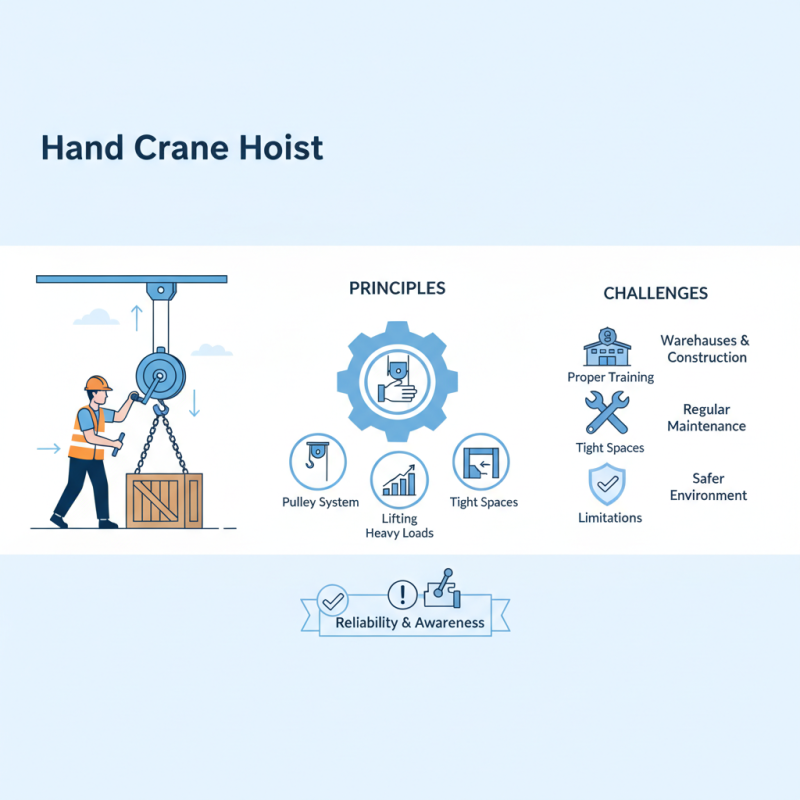
The Hand Crane Hoist operates on a straightforward principle. It utilizes a pulley system to lift heavy loads with ease. Users can manually crank the hoist, allowing for precise control. This feature is especially beneficial in tight spaces where larger machinery cannot operate. Additionally, it fosters a safer working environment.
Despite its advantages, challenges exist. Users must ensure proper training to avoid mishandling. Regular maintenance is essential for optimal performance. The Hand Crane Hoist offers reliability, yet awareness of its limitations is crucial. By acknowledging potential pitfalls, operators can maximize the effectiveness of this powerful tool.
What is a Hand Crane Hoist?
Hand crane hoists are vital tools in various industries, particularly for lifting heavy loads. These hoists combine a simple mechanical design with efficient functionality. Typically, they consist of a pulley system mounted on a frame, allowing operators to lift, lower, and move objects with minimal manual effort. According to industry statistics, approximately
60% of all lifting operations in warehouses use manual hoists like these, emphasizing their importance in day-to-day tasks.
The basic operation of a hand crane hoist involves pulling on a rope or chain to lift the load. Users can easily control the hoist, adjusting the height as needed. The lifting power depends significantly on the design and materials used. Reports suggest that hand cranes can safely lift loads ranging from a few hundred to several tons, depending on the model. However, improper use or overload can lead to accidents. Awareness and training are essential.
In practice, ensuring the hoist is securely attached to the load is critical. Regular inspections for wear and damage can prevent failures. Despite their efficiency, hand crane hoists require mindfulness to avoid unsafe conditions when loads are lifted. The safety guidelines set forth by industry bodies remind users of the importance of following manual instructions closely.
Essential Components of Hand Crane Hoists
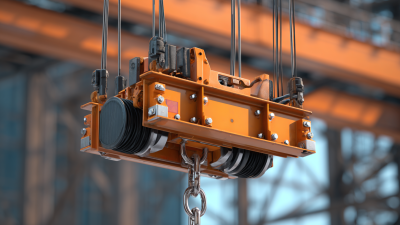
Hand crane hoists are essential tools in various industries, designed to lift and move heavy loads. To understand their effectiveness, we must delve into the essential components that make them function efficiently. A hand crane hoist typically consists of a hook, a chain or cable, and a lifting mechanism. Each component plays a vital role in ensuring safe and reliable operations.
The hook is the part that directly connects to the load. It must be sturdy and well-designed to prevent accidents. The lifting mechanism can be manual or powered. Manual hoists require physical effort, while powered versions utilize electricity to lift weights easily. Chains or cables also significantly affect the hoist's performance. Chains are durable and ideal for heavy loads, while cables may be used for lighter tasks.
Maintenance of these components is crucial. Over time, wear and tear can compromise safety. Regular inspections help identify any issues early. An overlooked or damaged component could lead to failures, so the importance of attentiveness cannot be overstated. Proper training on handling these hoists also enhances safety and ensures optimal performance in work environments.
How Hand Crane Hoists Function Mechanically
Hand crane hoists are essential tools for lifting heavy objects with precision. They function mechanically by using a combination of pulleys, gears, and cables. When a user pulls the hand crank, it rotates the gears. This action moves the cable over the pulley system, effectively lifting the load. The mechanical advantage allows for lifting weights that would otherwise be unmanageable by hand.
In operation, the hand crane hoist converts manual effort into significant lifting power. The efficiency of this mechanism is critical, especially in industrial settings. Proper maintenance of pulleys and cables is crucial. Wear and tear can lead to equipment failure, posing safety risks. Regular inspections ensure reliable performance.
Tips: Always check the load capacity before use. Overloading can damage the hoist. Ensure that the surrounding area is clear of obstacles during operation. Avoid distractions while lifting, as focus is key to safe handling. Operators should undergo training to handle equipment properly. This knowledge can prevent accidents and enhance overall safety.
What is Hand Crane Hoist and How Does It Work?
| Dimension |
Description |
Typical Applications |
| Type |
Manual or Electric |
Construction, Warehousing |
| Capacity |
From 0.5 tons to 10 tons |
Heavy lifting tasks |
| Lift Height |
Up to 30 meters |
High-rise buildings |
| Drive Mechanism |
Chain, Rope, or Wire |
Material handling |
| Control Method |
Remote or Manual |
Lifting operations |
| Main Components |
Hoist, Crane, Controls |
Various industries |
Applications and Uses of Hand Crane Hoists
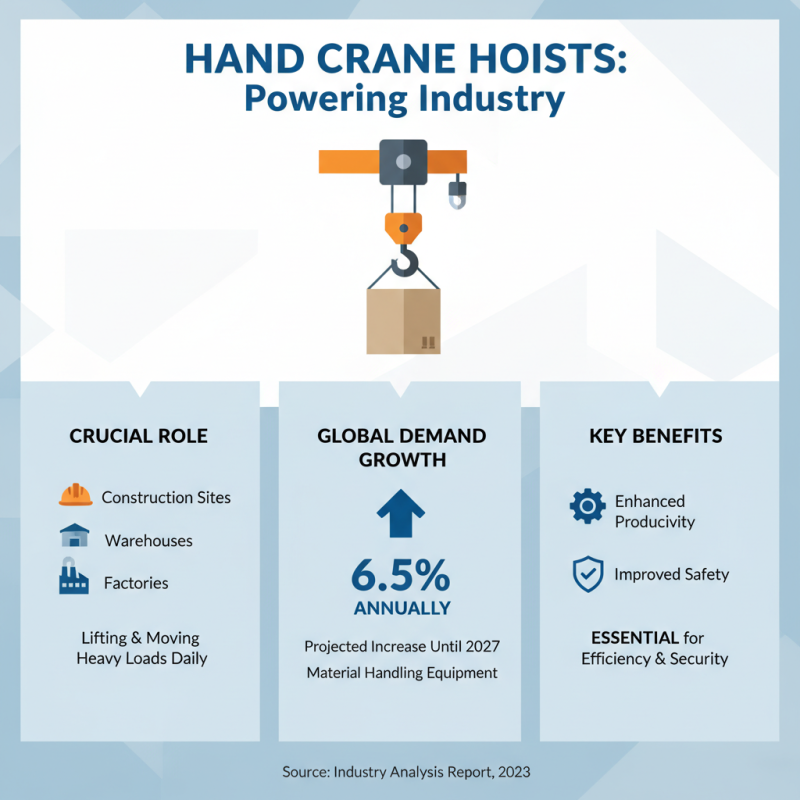
Hand crane hoists play a crucial role in various industries, offering efficient solutions for lifting and moving heavy loads. Construction sites, warehouses, and factories rely on these devices daily. According to industry reports, the global demand for material handling equipment is projected to grow by 6.5% annually until 2027. Hand crane hoists are essential for enhancing productivity and safety in these settings.
In construction, hand crane hoists are vital for lifting building materials like steel beams and concrete blocks. Their use can significantly reduce labor costs and time. Furthermore, in manufacturing, they are commonly employed to transport heavy machinery parts during assembly. The versatility of hand crane hoists contributes to their widespread application across various sectors.
However, using hand crane hoists requires careful consideration. Overloading these devices can lead to accidents, resulting in injuries or fatalities. Operators must undergo proper training to ensure safety and efficiency. Additionally, maintenance is critical; regularly inspecting equipment helps prevent malfunctions. The cost of safety incidents can far exceed maintenance expenses, emphasizing the importance of adhering to safety protocols.
Safety Considerations for Using Hand Crane Hoists
When using hand crane hoists, safety is paramount. Operators must ensure they understand the equipment's limits. Familiarize yourself with the maximum load capacity before lifting any object. Overloading can lead to serious accidents. Proper usage includes checking the hoist for wear and damage. This includes inspecting ropes and hooks regularly. A worn hook may not hold weight securely.
Training is crucial for anyone operating a hand crane hoist. Operators should undergo comprehensive safety training. They must know the proper signaling methods and communication techniques. Without this knowledge, accidents can occur easily. It's essential to have clear guidelines on how to approach lifting tasks. A well-considered plan can prevent pitfalls.
Always wear appropriate personal protective equipment. Hard hats, gloves, and steel-toed boots can reduce injury risk. Also, be mindful of the working environment. Ensure that the area is free from obstacles and distractions. A cluttered space increases the chance of errors. Consider the weather conditions too, as wind can affect stability. Regular safety audits can help identify potential hazards.