Top 5 Electric Scissor Lift Tables You Should Consider?
When it comes to material handling, Electric Scissor Lift Tables are indispensable tools. They improve efficiency and safety in various industries. However, not all models are created equal. Choosing the right lift table can be challenging. The market offers a wide range of options with different features.
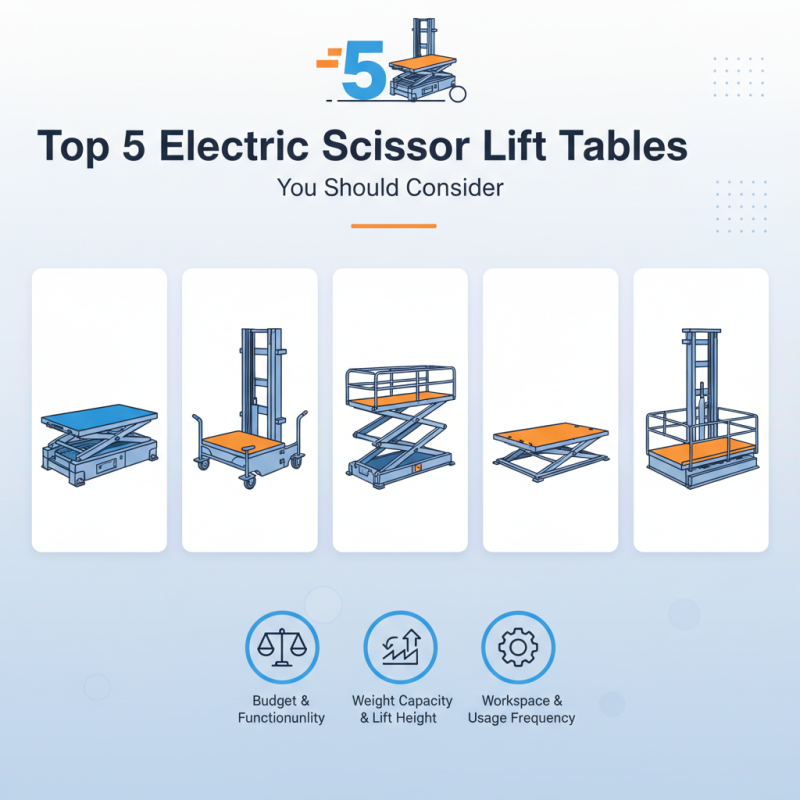
In this article, we'll explore the top 5 Electric Scissor Lift Tables you should consider. Each model has unique advantages and some drawbacks. It’s essential to assess your specific needs. For example, consider the weight capacity and lift height. These details can make a significant difference in your operations.
Reflect on your workspace and how often you will use the table. Some models are more durable than others, but they may cost more. Balancing budget and functionality is crucial. A well-informed choice can enhance productivity and reduce workplace injuries. However, overlooking important details can lead to regrets later. Choosing wisely is essential.
Top 5 Electric Scissor Lift Tables: Key Features to Evaluate
When selecting electric scissor lift tables, it's essential to evaluate key features. Load capacity is a primary consideration. Most tables support 500 to 2,500 pounds. According to industry reports, models with higher capacity allow for greater versatility in various work environments. However, some may struggle with stability at maximum loads.
Another critical feature is height range. Look for lift tables that offer versatile elevation options. The ideal range is typically between 30 to 60 inches. Tables with limited height may restrict usage in larger spaces. It's important to assess the lift speed as well. Some models offer faster lift times, which can enhance productivity. Yet, faster doesn't always mean better; slow operators often prioritize safety over speed.
Consider the material quality as well. Steel construction typically withstands heavy use. However, lighter aluminum tables are easier to maneuver. Weight shouldn't compromise durability. Battery life is another aspect to reflect on. While many lifts guarantee several hours of operation, real-world performance can vary. Users often report diminishing battery life after heavy usage. Balancing these features leads to better decision-making.
Top 5 Electric Scissor Lift Tables You Should Consider
| Model |
Max Height (ft) |
Load Capacity (lbs) |
Platform Size (ft) |
Power Source |
| Model A |
20 |
1000 |
4 x 8 |
Electric |
| Model B |
25 |
1500 |
5 x 10 |
Electric |
| Model C |
30 |
2000 |
6 x 12 |
Electric |
| Model D |
15 |
800 |
3 x 6 |
Electric |
| Model E |
22 |
1200 |
4 x 8 |
Electric |
Market Trends in Electric Scissor Lifts: Growth and Innovations
The electric scissor lift market is witnessing significant growth. Demand for versatile lifting solutions is rising in various industries. These lifts enhance productivity while ensuring safety. Innovations in battery technology are improving efficiency. Users benefit from longer operation times and reduced downtime.
Recent trends show a shift towards eco-friendly designs. Manufacturers are focusing on sustainability. New models often feature lightweight materials and reduced energy consumption. Remote controls are becoming standard, offering greater operator convenience. However, these advancements can complicate maintenance. Users must adapt to new features and possible issues.
The market also faces challenges. The cost of electric scissor lifts can be high for small businesses. Ensuring proper training for operators is crucial. Many workplaces still lack adequate safety training. As innovations come forward, companies need to rethink their training programs. Improving workforce skills will be essential in this evolving landscape.
Top 5 Electric Scissor Lift Tables: Market Trends and Innovations
Safety Standards in Electric Scissor Lift Design and Use
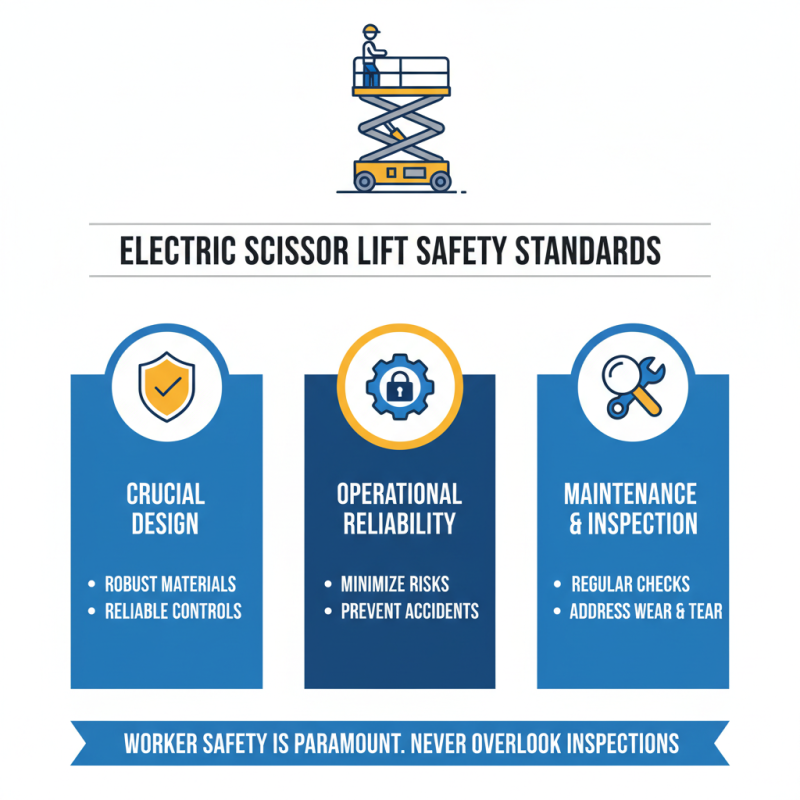
When it comes to electric scissor lift tables, safety standards are crucial. These standards ensure that the equipment is reliable and minimizes risks during operation. Every design aspect, from the construction materials to the control mechanisms, plays a vital role in worker safety. Operators should never overlook the importance of regularly inspecting the lifting equipment, as wear and tear can lead to unsafe conditions.
Compliance with safety regulations often involves mandatory features like guardrails and emergency stop buttons. These elements may seem standard, but they can be life-saving. Proper training for operators is equally important. A well-trained operator can identify potential hazards and respond quickly in emergencies. There's room for improvement in how some workplaces conduct training sessions. Sometimes, workers are rushed through safety protocols, which can create gaps in knowledge.
Understanding load capacities is another essential safety aspect. Exceeding weight limits can cause accidents. It's critical to respect these limits, even if it seems inconvenient. Many accidents could be avoided if workers double-check their loads and equipment before use. Regular maintenance is just as important. Neglecting maintenance can lead to unexpected failures, jeopardizing both equipment and personnel. Safety should never be treated as an afterthought.
Comparative Analysis of Load Capacities Among Leading Models
When evaluating electric scissor lift tables, load capacity is a crucial factor. Many units offer varying lift capacities, typically ranging from 1,000 to 6,000 pounds. A report by Industrial Equipment Insights noted that models designed for heavy loads often perform with more stability. This data suggests that businesses focusing on heavy industries should consider lifts with higher capacities for safety and efficiency.
Consider lifts with a load capacity of 4,000 pounds. They often provide sufficient strength for a variety of tasks without overextending their limits. However, some models rated up to 6,000 pounds may face issues with awkward maneuvering. Consequently, operators must balance capacity with ease of use. Certain designs, while impressive in numbers, can hinder productivity due to weight distribution challenges.
Moreover, not all high-capacity models offer the same durability. A study from Lift Equipment Review found that some should not be used continuously at maximum load. Over time, this can lead to performance decline. In practical terms, choosing a reliable model means understanding your specific requirements and everyday workloads. It’s essential to approach this decision with careful consideration and acknowledgment of potential shortcomings.
Cost-Effectiveness: Evaluating ROI on Electric Scissor Lift Investments
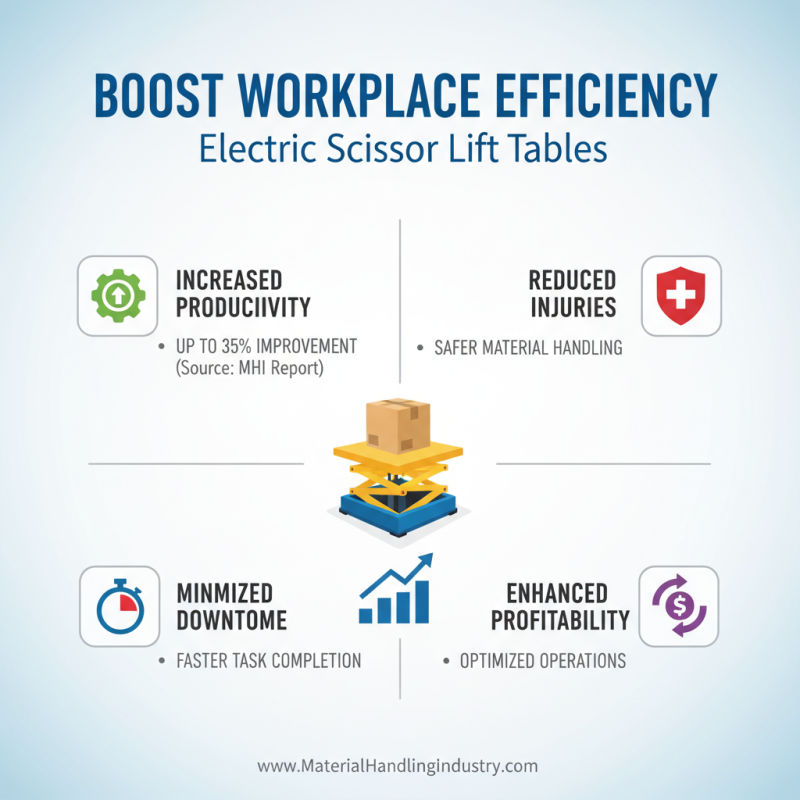
Investing in electric scissor lift tables can significantly enhance workplace efficiency. According to a report by the Material Handling Industry, businesses that adopt lifting solutions can see productivity improvements of up to 35%. This increase stems from reduced downtime and fewer workplace injuries. Enhanced mobility aids in efficient material handling, which directly impacts profitability.
Cost-effectiveness is critical when evaluating ROI on electric scissor lifts. A study from the Equipment Leasing and Finance Association noted that 72% of companies reported lower operational costs after purchasing new lifting equipment. However, initial expenses can be daunting. Companies must assess their specific needs to avoid overspending on features that may not be utilized. Balancing quality and cost is crucial in making sound investment choices.
Some facilities might find that not all electric lifts perfectly meet their requirements. Misjudging the lift height needed can lead to project delays. Moreover, maintenance costs should not be overlooked. Careful budgeting is necessary, as unplanned repairs can erode ROI. Workers also need training to maximize lift utilization, adding another layer of investment. Each of these factors highlights the need for thorough evaluation before making a purchase.