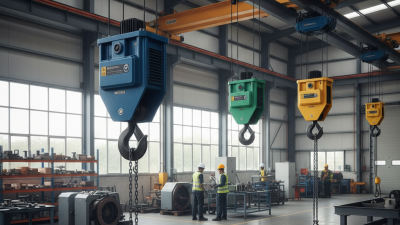
Choosing the right Motorized Hoists in 2026 requires more than comparing lifting capacity and purchase price. Global buyers must examine load weight, lifting height, duty cycle, travel speed, power supply, and working environment. A compact electric chain hoist may suit a repair workshop. A wire rope hoist may perform better in a high-bay manufacturing plant. Pneumatic models can offer practical advantages where compressed air is already available.
The best choice depends on real operating conditions. A warehouse with frequent pallet movement needs smooth controls and dependable braking. A steel facility may require stronger protection against heat, dust, and impact. Buyers should also review pendant controls, emergency stops, overload protection, spare parts, and maintenance access. Product documentation matters. So does supplier experience. Ask for test records, technical drawings, warranty terms, and service contacts before placing an international order.
There is no universal winner. That is easy to forget. A lower initial price can become expensive when downtime, difficult repairs, or unavailable components affect production. This guide compares major hoist types, practical applications, safety features, and selection criteria for global buyers. It also considers regional voltage differences, installation requirements, and applicable standards. However, specifications can be misunderstood when site information is incomplete. Buyers should confirm calculations with qualified lifting professionals and competent inspectors. Even experienced teams can overlook headroom limits or uneven load patterns. Careful evaluation may feel slower, but it usually produces a more reliable lifting decision.
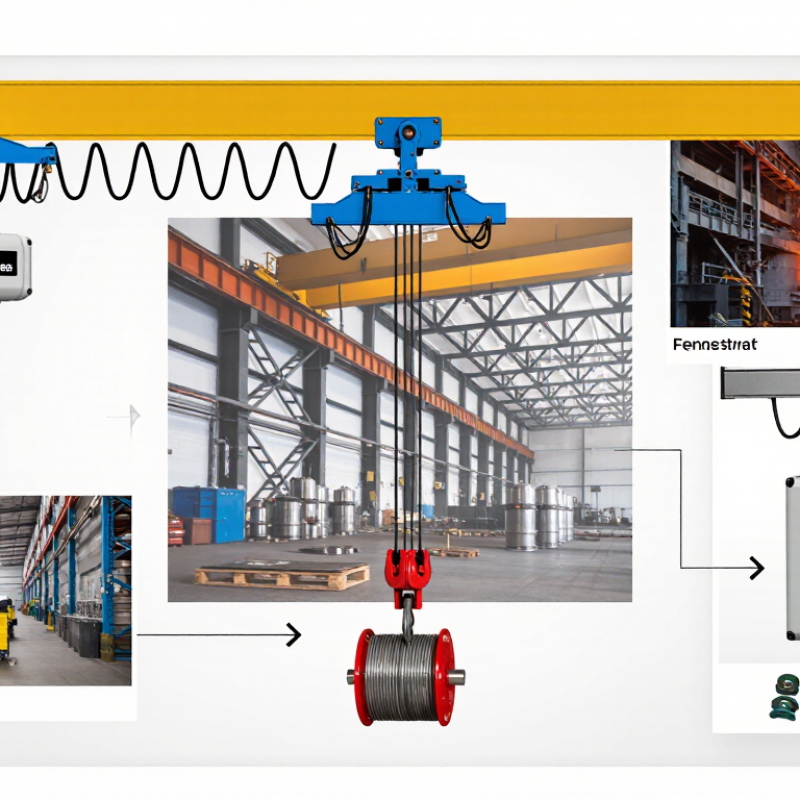
A motorized hoist lifts and lowers loads using an electric motor, gearbox, brake, drum, or chain wheel. The motor creates torque, while the gearbox increases lifting force. A pendant, remote controller, or integrated control panel starts and stops movement.
The load travels on wire rope or load chain. The brake holds it when power stops. Limit switches prevent over-travel, but they are not a substitute for inspection.
Common types include electric chain hoists, wire-rope hoists, low-headroom models, and explosion-protected units for approved industrial areas. Selection depends on capacity, lift height, duty cycle, speed, beam design, and operating temperature.
Details matter. A 2-ton hoist may suit a workshop, yet fail under frequent starts and stops. MHI’s 2024 Annual Industry Report found that 55% of respondents planned to increase supply-chain technology investment.
That trend supports wider use of powered lifting equipment, but automation does not remove human judgment. The report also found that 88% expected greater technology adoption within five years.
For safe design, buyers should compare specifications with ASME B30.16 and applicable local requirements. Operators should check the hook latch, chain, brake, controls, and abnormal noise before use.
In practical inspections, poor anchoring causes more concern than advertised lifting speed.
A useful question remains: Is the hoist being selected for its real duty cycle, or only its maximum rated load?
In 2026, global buyers can choose from several motorized hoist types. Electric chain hoists suit workshops, maintenance bays, and moderate lifting duties. Their compact bodies fit beneath low ceilings. Chain containers also keep the lifting chain controlled during repeated cycles. However, chain wear can become noticeable in dusty or poorly maintained environments.
Electric wire rope hoists handle heavier loads and longer lifting heights. They are common in factories, warehouses, and steel-processing areas. The wire rope runs over a grooved drum, allowing smoother vertical travel. Some models include variable-speed controls, overload protection, and travel systems. Buyers should check drum capacity, duty class, brake design, and power requirements. A powerful motor is not enough.
Low-headroom hoists help when roof clearance limits conventional equipment. They can improve usable lifting height in crowded production spaces. Pneumatic hoists remain useful where electric power presents operational concerns or where frequent starts create heat. Explosion-resistant configurations may be suitable for carefully assessed hazardous work areas. Certification and installation must match the site’s actual conditions.
A practical selection also depends on load shape, lifting frequency, beam type, and operator training. In field inspections, small misjudgments often cause larger costs than expected. A hoist rated for five tonnes should not routinely lift five tonnes. Leaving a safety margin is wiser, although the exact margin requires qualified engineering review. Some buyers focus too heavily on purchase price. That approach can overlook maintenance access, spare parts, noise, and downtime.
When comparing motorized hoists, start with the real load, not the maximum advertised capacity. A 2-ton hoist lifting 1.8 tons repeatedly may suffer more wear than expected. Check the working load limit, lifting height, duty cycle, and load frequency together. Electric chain hoists suit compact workshops and moderate lifting heights. Wire-rope hoists often perform better in heavy-duty production areas. The choice depends on travel distance, installation space, and maintenance access.
Speed affects productivity, but faster lifting is not always better. A variable-speed system can move quickly between levels, then slow down near a fragile load. Look for overload protection, upper and lower limit switches, mechanical brakes, emergency stopping, and clearly marked controls. The control panel should remain usable while operators stand outside the drop zone. Pendant controls work well for short travel paths. Radio controls offer better visibility, but they require disciplined battery checks and signal management. Confirm voltage, enclosure protection, and control compatibility before ordering internationally.
During equipment checks, I compare test records with actual site conditions. A clean certificate cannot correct poor anchoring or an uneven runway. Keep inspection points accessible. This matters. I have seen buyers focus on speed and regret ignoring brake response. A spreadsheet can also mislead when duty ratings use different definitions. Ask suppliers for load-test evidence, service intervals, spare-part availability, and clear operating instructions. Leave room for human error. Controls should make the safe action obvious.
| Motorized Hoist Type | Typical Rated Capacity | Typical Lifting Speed | Typical Lift Height | Duty and Operating Profile | Safety Features | Control System | Main Advantages | Key Limitations | Best-Fit Applications |
|---|---|---|---|---|---|---|---|---|---|
| Electric Wire Rope Hoist | 2–100 t; higher capacities available with engineered systems | 4–20 m/min; dual-speed or variable-speed options | 6–30 m commonly; longer lifts by design | Medium to heavy duty; suitable for frequent production lifting | Mechanical brake, upper and lower limit switches, overload protection, emergency stop, rope guide, thermal motor protection | Pendant, radio remote, contactor control, or inverter-based variable-frequency control | High capacity, good lifting speed, long lift capability, suitable for bridge and gantry cranes | Larger installation envelope; more maintenance points; wire-rope inspection is required | Factories, steel handling, machinery assembly, warehouses, shipyards, and heavy fabrication |
| Electric Chain Hoist | 0.125–10 t; compact units are commonly below 5 t | 2–12 m/min; two-speed versions are common | 3–20 m commonly | Light to medium duty; suited to intermittent handling and workstation lifting | Load brake, chain container, limit switches, overload clutch or load limiter, emergency stop, thermal protection | Push-button pendant, radio remote, or variable-frequency control on selected models | Compact, economical, easy to install, and suitable for limited headroom | Lower capacity and speed than most wire-rope hoists; chain requires regular inspection and lubrication | Maintenance bays, production lines, workshops, service stations, and light manufacturing |
| Low-Headroom Electric Chain Hoist | 0.5–10 t | 2–10 m/min; precision low-speed control available | 3–15 m commonly | Light to medium duty where vertical clearance is restricted | Load brake, overload limiter, upper and lower limits, chain guide, emergency stop, motor overheat protection | Pendant or radio remote; inverter control is preferred for accurate positioning | Maximizes hook travel in low-ceiling buildings; compact trolley and short headroom | Usually costs more than standard chain hoists; capacity and lift height may be limited by compact design | Machine tools, low-ceiling factories, modular production cells, and indoor maintenance areas |
| Variable-Frequency Electric Hoist | 0.5–50 t, depending on chain or wire-rope configuration | Programmable range, commonly 0.5–20 m/min | 6–30 m commonly | Frequent cycling, precision handling, and applications requiring smooth acceleration | Controlled acceleration and braking, overload monitoring, travel limits, emergency stop, brake monitoring, fault diagnostics | Variable-frequency drive, PLC interface, pendant, radio remote, and optional anti-sway integration | Low shock loading, accurate positioning, reduced mechanical wear, adjustable speed, and improved load control | Higher purchase price; requires qualified commissioning and electrical parameter setup | Precision assembly, automated lines, glass handling, aerospace work, mold handling, and high-cycle production |
| Pneumatic Chain Hoist | 0.25–20 t | 3–18 m/min; speed depends on air pressure and flow | 3–15 m commonly | Heavy or high-cycle duty; suitable for wet, dusty, or spark-sensitive areas | Spring-applied brake, overload protection, emergency air shutoff, chain container, pendant dead-man control | Air pendant, proportional air control, or pneumatic remote control; requires filtered and regulated air | No electric motor at the hoist, good overload tolerance, and reliable operation in damp or hazardous environments | Needs a suitable compressed-air system; operating cost can be higher; exhaust noise may require control | Chemical processing, foundries, marine facilities, paint areas, and potentially explosive atmospheres when properly certified |
| Explosion-Protected Electric Hoist | 0.5–20 t, depending on hazardous-area design | 2–12 m/min; controlled low-speed operation is common | 3–20 m commonly | Intermittent or medium duty in classified hazardous locations | Certified enclosure, protected motor and brake, temperature control, overload limiter, limits, emergency stop, grounding and bonding provisions | Pendant or remote control using equipment certified for the applicable hazardous-area classification | Designed for locations where flammable gas, vapor, dust, or fibers may be present | Higher cost, greater procurement complexity, and strict requirements for inspection and installation | Oil and gas facilities, chemical plants, pharmaceutical production, grain handling, and solvent-processing areas |
| Electric Hoist with Integrated Trolley | 0.5–50 t, depending on chain or wire-rope design | Hoisting: 2–15 m/min; trolley travel: 5–30 m/min | 6–25 m commonly | Material transfer along monorails, runway beams, bridge cranes, or gantries | Hoist brake, trolley brake, overload protection, upper and lower limits, travel limits, emergency stop, wheel guards | Two-motion or four-motion pendant, radio remote, contactor control, or variable-frequency control | Combines lifting and horizontal movement in one coordinated system; efficient for repetitive routes | Requires correctly sized runway or beam; installation must account for wheel loads, clearances, and alignment | Assembly stations, warehouses, fabrication bays, maintenance buildings, and process-transfer lines |
Choosing a motorized hoist depends on the industry, lifting frequency, load shape, and working environment. Electric chain hoists suit workshops, maintenance bays, and light production lines. They are compact, affordable, and accurate for loads below roughly 5 tonnes. Wire-rope hoists fit steel plants, shipyards, warehouses, and heavy manufacturing. Their drums handle higher capacities and longer lifts. Pneumatic hoists work well in wet, dusty, or spark-sensitive areas, but air quality and compressor capacity require careful checking.
Duty class matters as much as rated capacity. A 2-tonne hoist lifting twice daily may need less capacity than a 1-tonne hoist operating continuously. Grand View Research estimated the global industrial hoist market at about USD 2.7 billion in 2023, with growth expected through 2030. Such expansion reflects wider automation, but market reports rarely show the site-specific risks. ISO 4301 classifications and ASME B30.16 guidance help buyers compare operating cycles, load spectrum, and inspection needs. Real sites are messier. A neat classification can mislead.
Tips: Confirm the actual load center, lift height, trolley travel, and duty cycle before purchasing. Check beam strength and electrical protection separately. In food processing, corrosion-resistant components simplify cleaning. In construction, remote control improves visibility around blind lifts. Ask for test certificates, maintenance records, and overload protection details. A cheaper hoist may become expensive when downtime, training, and spare parts are included. Allow a safety margin, but avoid buying oversized equipment that reduces control and efficiency.
Which motorized hoist fits different industries and lifting tasks?
The chart compares typical suitability on a 1–5 scale, based on common operating characteristics such as lifting precision, duty-cycle capability, portability, environmental adaptability, and capacity potential. Electric chain hoists are widely suited to general workshop and maintenance work, wire-rope hoists are preferable for heavy-duty and high-lift applications, air chain hoists fit hazardous or wet environments, and low-headroom electric hoists are designed for space-constrained facilities. Scores are comparative suitability indicators, not market-share or manufacturer performance data.
For global buyers, selecting a motorized hoist starts with the load, not the catalog photo. Record maximum weight, lifting height, daily cycles, and ambient conditions. A 2-ton hoist may struggle when used continuously near its rated limit. Leave practical margin.
Check the power supply, control voltage, trolley width, and available headroom. These details often decide whether installation is smooth or expensive.
When sourcing overseas, request a readable datasheet, wiring diagram, inspection records, and spare-parts list. Ask how the supplier tests brakes, limit switches, chains, and emergency stops.
I prefer a sample acceptance checklist with measured noise, lifting speed, and brake-holding performance. It exposes vague claims early.
Paperwork is not proof. Confirm packing, replacement-part lead times, technical support, and operator training in writing.
One overlooked dimension can delay installation for weeks. Avoid choosing only by low price.
After delivery, inspect hooks, chains, cables, brakes, and fasteners on a planned schedule. Keep a log with dates, findings, and corrective work.
Operators should watch for uneven motion, unusual heat, slipping, or new noise. Stop using the hoist when defects affect safe operation.
A competent technician should perform detailed inspections and load testing according to local requirements and the equipment manual.
I have seen teams over-focus on lifting capacity and under-plan spare parts. That mistake is easy to repeat.
Store critical parts clean, dry, and clearly labeled.