Choosing the best Electric Trolly Hoist from China requires more than comparing prices or glossy product photos. A reliable choice begins with the lifting task. Consider the rated load, lifting height, working frequency, trolley speed, beam width, and available power supply. A hoist for a quiet workshop may not suit a busy steel plant. Small details matter. A warm motor casing, uneven chain movement, or delayed braking can reveal problems before a serious failure occurs.
This guide examines practical features found in Chinese electric trolley hoists, including motor performance, load-chain quality, gearbox design, electromagnetic brakes, pendant controls, and overload protection. It also considers supplier experience, factory inspection, documentation, spare-parts availability, and after-sales support. Test records and clear technical drawings deserve attention. So does communication. A supplier that answers quickly but avoids specific questions may create trouble later. Ask for rated-load testing, component details, maintenance guidance, and evidence of quality-control procedures. Independent inspection can add confidence before shipment.
There is no universal winner.
The “best” model depends on operating conditions, budget, and risk tolerance. Some buyers focus too heavily on purchase cost. That can be a costly mistake. Others may choose unnecessary specifications and increase expenses. A balanced evaluation is wiser. This article offers a practical framework for comparing Chinese manufacturers and selecting an Electric Trolly Hoist that fits real working demands, while recognizing that product claims should be verified before purchase.
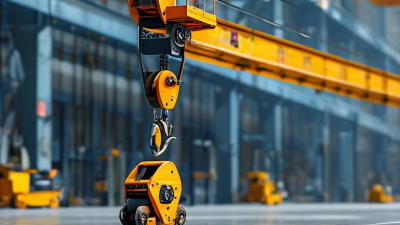
An electric trolley hoist combines lifting and horizontal movement in one machine. The hoist motor turns a drum or sprocket through a gearbox. Wire rope or chain then raises the load. A second motor drives trolley wheels along an overhead beam. That distinction matters. The load rises vertically, while the trolley travels sideways.
A pendant control or remote controller starts, stops, and reverses both motors. Brakes hold the load when power stops. Limit switches prevent excessive lifting. Variable-frequency drives can reduce sudden starts and swinging. According to the International Energy Agency’s Energy Efficiency 2023 report, motor-driven systems consume roughly half of global electricity. Efficient motors therefore matter, even in short lifting cycles. A practical specification should show motor efficiency, duty class, braking performance, and control response.
Safety depends on more than rated capacity. The beam, end stops, hook, rope, and electrical protection must match the application. The U.S. Bureau of Labor Statistics recorded 1,069 fatal occupational injuries involving falls, slips, or trips in 2023. This figure is not hoist-specific, but it exposes the wider risk around elevated work. A higher capacity rating is not automatically better. It may add cost, weight, and structural demand. A neat catalog can still mislead. Check real duty cycles, load frequency, travel distance, ambient conditions, inspection records, and test documentation before selecting an electric trolley hoist from China.
The best electric trolley hoist from China is defined by performance, traceability, and dependable construction. A high-quality model should lift its rated load smoothly, without sudden starts or excessive noise. Check the motor’s duty rating, brake response, trolley alignment, and thermal protection. These details matter during repeated warehouse operations.
Safety features deserve close attention. Upper and lower limit switches should stop travel reliably, while emergency controls must remain easy to reach. A suitable IP rating protects electrical parts from dust and moisture. Ask for load-test records, wiring diagrams, inspection documents, and clear maintenance instructions. Factory quality systems help, but paperwork alone cannot prove durability. A polished brochure is not proof. The steel frame, welds, wheels, and gear housing still need careful inspection. In some cases, buyers focus too much on lifting capacity and overlook trolley movement under uneven floor conditions.
Tips: Request a video showing a full-load test and trolley travel. Confirm voltage, control type, lifting speed, and available spare parts before ordering. Compare the stated working class with your actual daily cycle. If the hoist will run continuously, choose stronger cooling and braking systems. Keep a small margin below the rated capacity; real workplaces are rarely perfectly controlled. A pre-shipment inspection is useful, though it may not reveal every long-term weakness. Check local installation and safety requirements with a qualified professional.
Which Features Define a High-Quality Chinese Electric Trolley Hoist?
The reference quality index uses a 0–100 scale to show the relative importance of measurable selection criteria. Safety systems, structural durability, braking reliability, lifting performance, environmental protection, and documentation are key factors when evaluating a high-quality electric trolley hoist.
When comparing an electric trolley hoist from China, lifting capacity deserves careful attention. I start with the real load, not the advertised maximum. A two-ton machine may lift safely only within specific duty limits. Check the rated load, lifting height, beam width, and operating cycle. The trolley must travel smoothly on the actual beam flange. A mismatch can cause wheel wear and unstable movement. Ask for overload protection and test records.
Speed also changes daily productivity. A fast lifting rate saves time, but it can reduce control near the floor. For positioning machinery, a dual-speed hoist is often more practical. Measure both lifting and trolley travel speeds. Do not rely on one catalog number. In a workshop, stopping accuracy matters more than impressive speed.
Safety details reveal manufacturing quality. Look for an emergency stop, upper-limit switch, brake holding performance, guarded electrical parts, and clear load markings. Request inspection documents from an independent testing body when possible. Durability depends on gear materials, brake design, motor insulation, paint thickness, and spare-part access. I once underestimated cable protection; repeated bending caused early damage. That was my mistake. A lower price can hide maintenance delays, so compare service records, warranty terms, and replacement lead times. Real reliability is proven under repeated loads, not shown by polished photographs.
Electric trolley hoists suit workplaces where loads travel repeatedly along fixed beams. They combine vertical lifting with horizontal movement, reducing manual handling around production lines.
According to Grand View Research, the global crane market was valued at about USD 26.86 billion in 2023. It is forecast to grow at roughly 4.6% annually through 2030. This growth reflects wider demand for safer, more efficient material movement.
Different applications require different trolley designs.
A geared trolley offers controlled travel for workshops, maintenance bays, and moderate lifting cycles. It feels steady when operators position loads near machinery.
A motorized trolley works better in warehouses, steel plants, and busy assembly areas. It supports longer travel distances and frequent movement.
Low-headroom models help where roof height is limited. Dual-speed controls can improve positioning, although operators may need training. The strongest hoist is not always the best choice. Overspecification can increase cost and reduce practical efficiency.
Tips: Check the beam profile, duty cycle, travel length, ambient temperature, and available power before selecting equipment. Compare the rated load with real working conditions, not only the maximum weight. ISO 4301 classification can help match hoist usage with expected operating intensity. Leave clearance around hooks and trolley wheels. A small alignment error can create noise, wear, and uneven travel. In my experience, specifications often look convincing on paper, but site measurements reveal the real problem.
What Is the Best Electric Trolley Hoist from China?
How to Select the Best Chinese Electric Trolley Hoist for Your Needs
The best Chinese electric trolley hoist should match your working conditions, not just your budget. Start with the rated load, lifting height, beam width, and daily operating frequency. A hoist lifting two tons occasionally needs different protection than one running every few minutes. Check whether the trolley fits your existing beam flange accurately. Small measurement errors can cause noise, wheel wear, or unsafe movement.
Review the motor rating, brake response, control voltage, and emergency stop design. Ask for load-test records, technical drawings, inspection reports, and clear maintenance instructions. Reliable suppliers should explain duty classification and provide replacement-part information. Test the pendant controls before installation. They should feel firm, readable, and easy to operate while wearing work gloves.
Site conditions also matter. Dust, moisture, outdoor exposure, and low temperatures can change the required protection level. Confirm the power supply before ordering, including voltage, phase, and frequency. A sample inspection or independent factory inspection can reveal details that product photos hide. Look closely at weld quality, cable routing, gear noise, and hook safety-latch movement. The lowest quotation may still become expensive after installation. I would rather accept a slightly higher cost than unclear documentation. Yet, price alone cannot prove reliability. Some selection decisions remain imperfect, especially when long-term service data is limited. Ask difficult questions before placing the order.
| Selection Profile | Typical Rated Capacity | Typical Lift Height | Recommended Hoist Type | Typical Lifting Speed | Trolley Travel Speed | Suitable Work Duty | Key Features to Require | Best Application Fit |
|---|---|---|---|---|---|---|---|---|
| Light Workshop Handling | 0.5–2 tonnes | 3–6 metres | Electric wire-rope hoist with motorized trolley | Approximately 4–8 m/min | Approximately 15–20 m/min | Intermittent service, commonly equivalent to FEM 2m–3m or ISO M5–M6 depending on configuration | Adjustable overload protection, upper and lower limit switches, emergency stop, mechanical load brake, pendant or radio control | Maintenance areas, fabrication workshops, machine loading and general material handling |
| General Industrial Use | 2–5 tonnes | 6–9 metres | Electric wire-rope hoist with low-headroom or standard motorized trolley | Approximately 3–6 m/min | Approximately 20 m/min | Regular production use, commonly equivalent to FEM 3m–4m or ISO M6–M7 depending on duty calculations | Two-speed lifting, variable-frequency drive option, thermal motor protection, phase-loss protection, galvanized or coated rope guide, overload limiter | Manufacturing plants, steel workshops, warehouses and equipment installation |
| Heavy-Duty Production | 5–10 tonnes | 6–12 metres | Heavy-duty electric wire-rope hoist with geared motor trolley | Approximately 2–5 m/min | Approximately 12–20 m/min | Frequent or intensive service, commonly equivalent to FEM 4m–5m or ISO M7–M8 subject to load spectrum | Designed duty class, high-temperature motor insulation, redundant braking arrangement where required, independent travel and lifting limits, load monitoring | Continuous production lines, foundries, heavy fabrication and industrial assembly |
| Low-Headroom Installation | 1–10 tonnes | 3–9 metres | Low-headroom electric hoist with compact trolley | Approximately 2–6 m/min | Approximately 10–20 m/min | Selected according to daily cycles, average load and operating hours | Published minimum headroom, compact drum and trolley arrangement, adequate hook approach, adjustable end stops, accessible inspection points | Buildings with limited overhead clearance, production bays and retrofit crane systems |
| Outdoor or Harsh Environment | 2–10 tonnes | 6–12 metres | Weather-protected electric trolley hoist | Approximately 2–6 m/min | Approximately 12–20 m/min | Duty class must reflect outdoor cycles, wind exposure and environmental conditions | Suitable enclosure rating, corrosion-resistant finish, sealed electrical components, rain protection, anti-condensation heater where needed, wind restraint for outdoor cranes | Covered yards, ports, construction support areas and outdoor maintenance facilities |
| High-Precision Positioning | 0.5–5 tonnes | 3–9 metres | Electric hoist with variable-frequency lifting and trolley drives | Approximately 0.5–6 m/min with two-speed or variable-speed control | Approximately 2–20 m/min with variable-speed control | Regular service where smooth starting, stopping and positioning are important | VFD control, soft start and stop, low-speed inching, adjustable acceleration, anti-sway compatibility, encoder or position feedback when required | Precision assembly, mold handling, glass handling and sensitive equipment installation |
Selection note: The most suitable electric trolley hoist is determined by rated load, load spectrum, lifting height, lifting frequency, trolley travel distance, available headroom, power supply, environmental conditions and required safety standard. Confirm the final configuration through a duty-class calculation and verify applicable requirements such as ISO 4301, FEM classification, IEC electrical practices and local lifting-equipment regulations.