Inquiry
Form loading...

10 Best Motorized Hoists for Global Buyers in 2026

Global buyers are reassessing lifting equipment as factories, warehouses, ports, and construction sites demand safer material movement. Motorized Hoists now support repetitive lifting where manual handling creates fatigue, delays, and inconsistent control. The International Labour Organization reports that work-related injuries and illnesses remain a major global burden, reinforcing the need for engineered lifting practices and competent operators.

Market research also shows why this category deserves careful comparison. Fortune Business Insights places the global crane market in the tens of billions of dollars, with continued growth expected through the next decade. Its analysis links expansion to infrastructure investment, manufacturing automation, and warehouse modernization. These trends do not automatically make every hoist a sound purchase. Capacity, duty cycle, lifting speed, brake design, control response, and service access still determine real value.

This guide evaluates ten Motorized Hoists for international buyers in 2026. It considers electric chain and wire-rope designs, typical working environments, rated load ranges, control options, maintenance needs, and supplier support. Safety references include ISO 4309, ISO 9927, and relevant occupational guidance from OSHA and the European Agency for Safety and Health at Work. Certification alone is not enough. Installation quality matters.

A practical buyer should picture the equipment in use: a 2-ton load rising six meters, a pendant exposed to dust, or a brake holding position during a power interruption. Small details become expensive quickly. No ranking can replace a site assessment. Some specifications may look impressive but remain unclear without test conditions, and that deserves honest scrutiny.
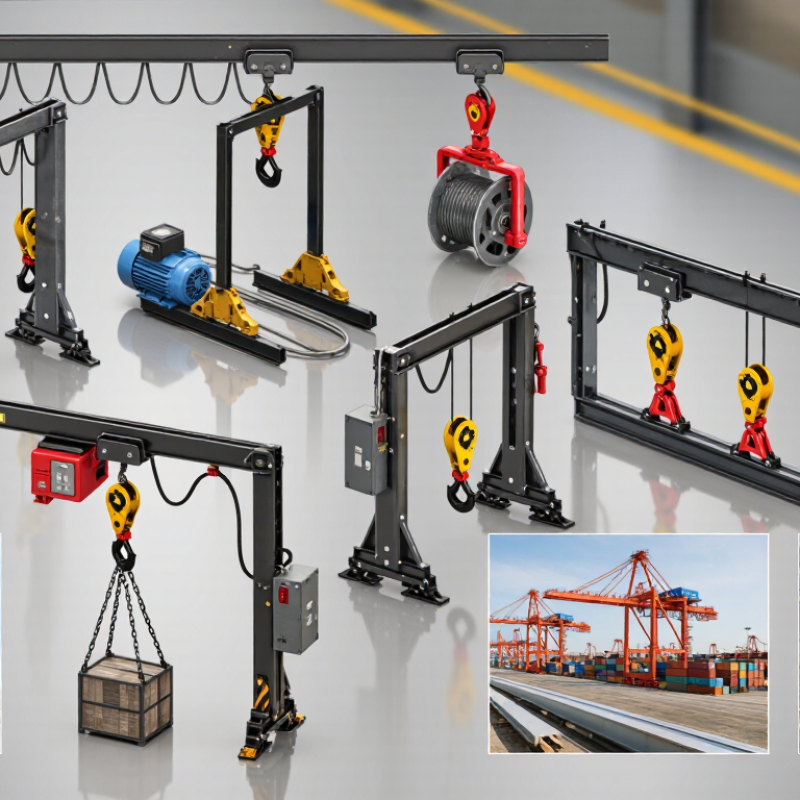
10 Best Motorized Hoists for Global Buyers in 2026

What a Motorized Hoist Is and How It Works

A motorized hoist lifts and lowers loads with an electric motor, gearbox, drum, or chain mechanism. It replaces repeated manual pulling with controlled mechanical power. The operator uses pendant controls or a remote system to start, stop, and adjust movement. Inside, the motor creates torque, while the gearbox increases lifting force and reduces speed. A brake holds the load when power stops. This small detail matters greatly.

Before selecting a hoist, buyers should match rated capacity, lifting height, duty cycle, and power supply. A unit lifting 500 kilograms may not suit continuous warehouse work. Temperature, dust, humidity, and available voltage also affect performance. Limit switches prevent over-travel, while overload protection helps reduce unsafe lifting. However, protection systems are not a substitute for inspection. A common mistake is trusting the rating without checking dynamic loads, sling angles, or the supporting beam.

Tips: Check the load path before every lift. Keep the chain or wire rope aligned. Listen for unusual clicks, slipping, or uneven motion. Record inspections and maintenance dates. A qualified technician should verify brakes, controls, hooks, and electrical connections. Specifications can look perfect on paper, yet installation conditions may reveal a poor fit. Reconsider the choice when the hoist feels slow, unstable, or difficult to control.
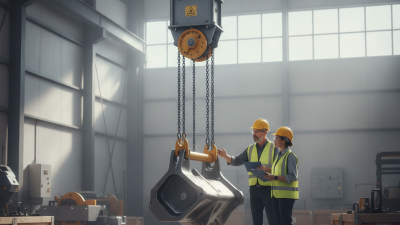
Key Hoist Types for Different Lifting Applications

Electric chain hoists suit workshops, maintenance bays, and light production lines. Their compact bodies fit beneath low ceilings, while adjustable speed improves load positioning. Wire rope hoists handle taller lifts, heavier loads, and longer travel distances. They are common in warehouses, fabrication plants, and process facilities. Measure twice. A small error in lift height can create costly installation changes.

Pneumatic hoists perform well where moisture, dust, or ignition risks limit electric equipment. They require a dependable air supply, clean filtration, and careful hose management. For repetitive overhead movement, a motorized trolley combined with a chain or wire rope hoist can reduce manual repositioning. Low-headroom models help when roof clearance is limited, but their compact design may complicate inspection access.

Selection should match rated capacity, duty cycle, lifting speed, control method, and operating temperature. Check the supporting beam, not only the hoist. Site reviews often find that structural capacity receives less attention than motor power. That is a weak assumption. Buyers should also confirm voltage compatibility, emergency stopping, overload protection, spare parts access, and inspection records. Local engineering requirements still matter, even when equipment crosses borders. A practical trial with the real load can reveal sway, noise, and awkward controls before full installation.

How to Compare the 10 Best Motorized Hoists in 2026

How to Compare the 10 Best Motorized Hoists in 2026

Global buyers should compare motorized hoists by duty class, lifting speed, control accuracy, and service access. A fast hoist is not automatically safer or better. The right model must match load cycles, headroom, voltage, beam width, and ambient conditions.

Recent industry analysis from Grand View Research estimates the global hoist market will continue growing through 2030, supported by construction, warehousing, and manufacturing demand. That growth makes lifecycle cost more important. Compare purchase price, energy use, brake replacement, inspection time, and spare-part availability. A 2024 material-handling report from MarketsandMarkets also identifies automation and remote monitoring as major equipment trends. However, sensors cannot replace competent operators or scheduled inspections.

Check rated capacity against real loads, not optimistic averages. Review duty classification under ISO 4301 and technical requirements under ASME B30.16 where applicable. Examine emergency stops, overload protection, pendant response, hook latch design, and thermal protection. Ask for documented test results and maintenance records.

Small details matter.

I sometimes overvalue lifting speed. That can be a mistake. Lower speed may improve load control near fragile machinery or crowded work areas. Buyers should also test noise, braking smoothness, and control usability before purchase. A practical comparison sheet, verified by a qualified lifting engineer, is more reliable than a glossy specification page.

Safety Standards, Load Ratings, and Installation Requirements

In 2026, motorized hoists should be compared by verified safety evidence, not lifting speed alone. A suitable model should carry a clearly stated working load limit, duty class, and test record. Look for compliance with applicable requirements such as ASME, OSHA, EN, or ISO frameworks. Requirements vary by country. Certificates must match the exact hoist, not a similar series. I have seen buyers accept translated documents without checking issuing bodies. That shortcut creates risk.

Load ratings need practical interpretation. A 1,000-kilogram rating does not permit every 1,000-kilogram lift. Dynamic loading, angled pulling, suspended personnel, and frequent cycles may require different equipment. The supporting beam, trolley, hooks, chains, brakes, and power supply must share the same capacity. Never treat the weakest component as an afterthought. Suppliers should provide inspection intervals, emergency-stop details, overload protection, and operating temperatures. Still, manuals can be vague. Ask for clarification in writing before purchase.

Installation requires a competent technician who understands local electrical and lifting rules. The mounting structure should be inspected for deflection, corrosion, bolt torque, and travel clearance. Before service, perform no-load checks, controlled test lifts, brake checks, and limit-switch tests. Record the results with dates and operator names. A poor installation can defeat excellent engineering. I would also question remote operation near people, even when safeguards are fitted. It deserves a site-specific risk assessment.

10 Best Motorized Hoists for Global Buyers in 2026

The chart compares ten commonly specified motorized hoist capacity classes, from 125 kg to 20,000 kg. These are representative standardized market ratings rather than brand or company rankings.

Buyers should verify compliance with applicable requirements, including EN 14492-2, ASME B30.16, ISO 4301, local electrical regulations, rated-load testing, structural support capacity, emergency stopping, upper and lower limit protection, and manufacturer-specific installation instructions.

Global Buying Factors: Pricing, Shipping, Support, and Maintenance

Choosing among the 10 best motorized hoists for global buyers in 2026 requires more than comparing catalog prices. A low quote may exclude controls, lifting chains, taxes, or export packaging. Request a complete cost sheet for the exact configuration. Include lifting capacity, lift height, duty cycle, voltage, pendant length, and installation requirements. A 2-ton hoist for a six-meter lift may cost more when high-use components are required.

Shipping details deserve equal attention. Ask for crate dimensions, gross weight, loading photos, and the named delivery term. Port delays can damage project schedules, especially when spare parts travel separately. Confirm whether the seller supports door delivery, customs documents, and cargo insurance. Freight estimates often change after packaging. That detail is easy to miss.

Support separates dependable equipment from expensive downtime. Before ordering, test the response time with technical questions. Request manuals, wiring diagrams, inspection checklists, and training materials in clear English. Maintenance planning should cover brake inspection, chain lubrication, limit-switch testing, and replacement-part availability. A local technician may reduce delays, but only if parts are standardized and documented. Buyers sometimes focus too heavily on purchase price. That shortcut can become costly during the first breakdown. I would also verify warranty exclusions, because “global support” can mean very different things.

10 Best Motorized Hoists for Global Buyers in 2026 — Global Buying Factors: Pricing, Shipping, Support, and Maintenance

Comparative guide based on common industrial hoist specifications and indicative international purchasing conditions. Prices are typical equipment-only ranges in USD and exclude taxes, installation, lifting accessories, and local compliance costs.

Rank Hoist Configuration Recommended Use Rated Capacity Standard Lift Typical Hoisting Speed Duty Classification Common Power Input Indicative Price Range Typical Global Shipping Support Considerations Maintenance Profile
1 Electric Chain Hoist with Trolley Workshops, machinery installation, maintenance bays, and light production lines 1–5 tonnes 6–12 m 4–8 m/min M4–M5 / FEM 1Am–2m 380–415 V, 3-phase, 50 Hz US$1,200–5,500 20–45 days by sea; 5–12 days by air for compact units Remote commissioning, spare-chain availability, wiring diagrams, and multilingual manuals are important Inspect chain, hook latch, brake, limit switches, and chain container; lubricate chain according to the service schedule
2 Single-Girder Electric Wire-Rope Hoist General manufacturing, warehouses, steel service centers, and assembly plants 3–10 tonnes 6–18 m 4–8 m/min M4–M5 / FEM 2m–3m 380–480 V, 3-phase, 50/60 Hz US$6,000–22,000 30–60 days by sea because of beam, drum, and trolley dimensions Require certified load-test documentation, installation drawings, replacement brake parts, and technician access Check wire rope, sheaves, drum, gearbox oil, brakes, electrical panels, and trolley wheels at scheduled intervals
3 Low-Headroom Electric Chain Hoist Facilities with limited ceiling height and close-to-ceiling lifting requirements 1–3 tonnes 3–9 m 2–6 m/min M4 / FEM 1Am–2m 220–240 V or 380–415 V, 3-phase US$2,500–8,500 20–40 days by sea; packaging is generally compact Confirm beam-flange compatibility, available mounting clearances, overload protection, and local service coverage Frequent inspection of chain wear, guide rollers, brake response, limit devices, and trolley alignment
4 Variable-Speed Electric Wire-Rope Hoist Precision handling, production lines, molds, dies, and fragile loads 5–20 tonnes 9–24 m 0.5–10 m/min, variable M5–M6 / FEM 3m–4m 380–480 V, 3-phase, 50/60 Hz US$15,000–55,000 35–70 days by sea; control electronics require moisture-protected packing Prioritize drive-parameter backup, electrical troubleshooting, software support, and replacement inverter availability Inspect encoder, inverter cooling, brakes, rope system, gearbox, and electrical connections; maintain accurate records
5 Explosion-Protected Electric Chain Hoist Paint facilities, chemical plants, fuel-handling areas, and other hazardous locations 0.5–5 tonnes 6–12 m 2–6 m/min M3–M4 / hazardous-area rated 380–415 V, 3-phase, 50 Hz US$8,000–30,000 30–65 days by sea; certification documents may affect customs clearance Verify hazardous-area certification, temperature class, enclosure rating, conformity documents, and authorized service capability Use only approved replacement parts; inspect seals, grounding, brakes, chain, pendant controls, and enclosure integrity
6 Outdoor Weather-Resistant Wire-Rope Hoist Ports, construction yards, water-treatment plants, and outdoor fabrication areas 5–30 tonnes 9–30 m 3–8 m/min M4–M5 / FEM 2m–3m 380–480 V, 3-phase, 50/60 Hz US$18,000–75,000 40–80 days by sea; oversize components may require project cargo Confirm corrosion protection, enclosure rating, cold-weather options, drainage design, and local installation support Inspect paint and galvanizing, cable glands, brakes, rope, bearings, gearbox oil, and water ingress after severe weather
7 Manual-Override Electric Hoist Remote sites, backup lifting, utilities, and applications requiring emergency operation 1–10 tonnes 6–15 m 2–6 m/min M3–M4 / FEM 1Bm–2m 220–240 V or 380–415 V, 3-phase US$3,500–16,000 25–55 days by sea; spare controls can usually ship separately Check emergency lowering procedure, overload protection, battery options, service instructions, and operator training Test the manual override and emergency systems regularly; inspect brake holding capacity, chain or rope, and controls
8 Compact Portable Electric Hoist Vehicle maintenance, small fabrication shops, agricultural equipment, and temporary lifting tasks 0.25–1 tonne 3–12 m 3–8 m/min M3–M4 / light industrial 110–120 V or 220–240 V, single-phase US$400–2,500 7–25 days by air or courier; low freight volume Confirm voltage compatibility, duty-cycle limits, mounting method, replacement pendant availability, and warranty process Inspect hook, cable or chain, brake, thermal protection, pendant, and mounting points before each regular use
9 Heavy-Duty Double-Girder Wire-Rope Hoist Foundries, shipyards, heavy machinery plants, and high-capacity production facilities 20–100 tonnes 9–36 m 1–6 m/min M5–M7 / FEM 3m–5m 380–690 V, 3-phase, 50/60 Hz US$45,000–180,000 60–120 days by sea; engineered project cargo is commonly required Budget for site surveys, structural calculations, commissioning, load testing, and long-term spare-parts planning Requires documented preventive maintenance, rope and sheave measurement, brake testing, gearbox service, and structural inspection
10 Stainless-Steel Electric Chain Hoist Food processing, pharmaceutical production, clean environments, and corrosive washdown areas 0.5–3 tonnes 3–9 m 2–6 m/min M3–M4 / hygienic-duty adapted 220–240 V or 380–415 V, 3-phase US$5,000–20,000 25–60 days by sea; corrosion-resistant components can increase lead time Verify washdown rating, material certificates, cleanability, food-contact requirements, and replacement-part compatibility Clean and dry surfaces after washdown; inspect chain lubrication, seals, brakes, hooks, limit switches, and fasteners

Buyer note: Actual pricing, freight cost, delivery time, certification requirements, and service availability vary by capacity, lift height, duty cycle, voltage, destination, trade terms, and local regulations. Before ordering, request a technical datasheet, factory test certificate, load-test documentation, spare-parts list, warranty terms, and a written quotation under a clearly stated Incoterm such as FOB, CIF, or DAP.