How to Choose the Right Micro Electric Hoist for Your Needs?
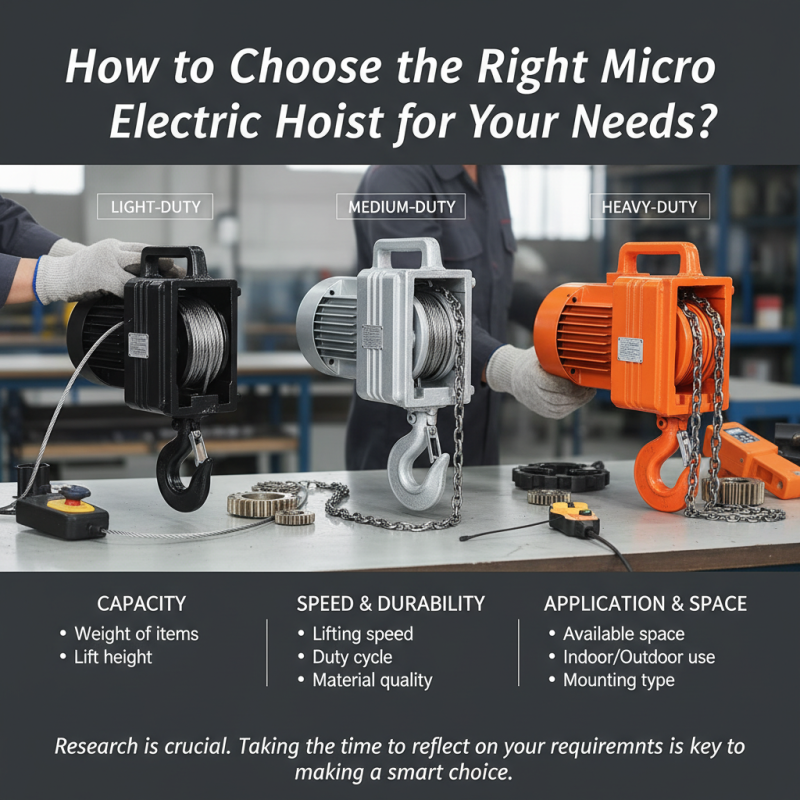
Choosing the right Micro Electric Hoist can be a daunting task. Many factors come into play. Different applications require different types of hoists. You might wonder about lift capacity, speed, or durability.
It is essential to understand your needs before making a decision. Consider the weight of the items you will lift. Think about the space you have available. Sometimes, users overlook these aspects. This can lead to frustration later.
A Micro Electric Hoist can save time and effort. However, not all models are created equal. Some may seem appealing but lack essential features. Research is crucial. Taking the time to reflect on your requirements is key to making a smart choice.
Understanding Micro Electric Hoists: Definition and Applications
Micro electric hoists are compact lifting devices used in various industries. They usually have a lifting capacity ranging from 50 to 500 kg. This makes them suitable for tasks in warehouses, manufacturing plants, and even in some residential settings. The versatility is appealing; however, knowing the right type for your application is crucial.
Applications of micro electric hoists vary widely. In construction, they lift heavy materials to elevated areas. In healthcare, they assist in moving patients safely. According to a report by the National Institute of Standards and Technology, improper use can lead to accidents. It is essential to analyze load weight and environment before purchase.
Some users may overlook the specifics, like power supply options and safety features. For example, a hoist with limited overload protection might suffice for light tasks. However, it poses risks for heavier loads. Micro electric hoists should match the unique demands of your projects. Understanding their applications helps mitigate risks and enhance productivity.
Key Factors to Consider When Selecting a Micro Electric Hoist
When selecting a micro electric hoist, several key factors come into play.
Capacity is one of the most critical aspects. Most micro hoists have a payload range from
50 to 1,000 pounds. Choosing a model that fits your specific weight requirements is essential.
This ensures safe operation and prolongs the hoist's lifespan.
Another factor to consider is the lifting height.
Different applications may require various lifting distances, often between
10 and 30 feet. It's vital to assess your
workspace and determine the necessary height. Also, consider the type of materials you will be lifting.
Various hoists come with hooks, straps, or even remote controls for convenience.
Noise level can also be a significant concern. Many users overlook this but fail to realize that
noisy hoists can disrupt work environments. For instance, models rated below 85 decibels
can minimize disturbances. According to industry reports, hoists with good insulation and soundproofing become valuable during extended usage.
Reflecting on these factors will lead to better decisions and improved efficiency in your projects.
Power Source Options: Electric vs. Battery-Powered Hoists
When choosing a micro electric hoist, the power source is key. The two common options are electric and battery-powered hoists. Each type has its benefits and drawbacks. Electric hoists typically deliver consistent power and are ideal for heavy lifting. However, they require a stable power source, which limits mobility. They suit fixed locations well.
Battery-powered hoists are more versatile. They can be used in remote areas without power outlets. This flexibility makes them great for construction sites or emergency situations. However, battery life can be a concern. Users may find the need to recharge mid-task disruptive.
Tips: Consider your typical lifting tasks. If you need high lifting capacity regularly, an electric model may be best. If you require mobility, a battery-powered hoist would suit you better. Reflect on where and how often you'll use the hoist. This can greatly influence your choice. Always read user reviews; real-world experiences provide valuable insights.
Safety Features: Ensuring Reliable and Secure Hoisting Operations
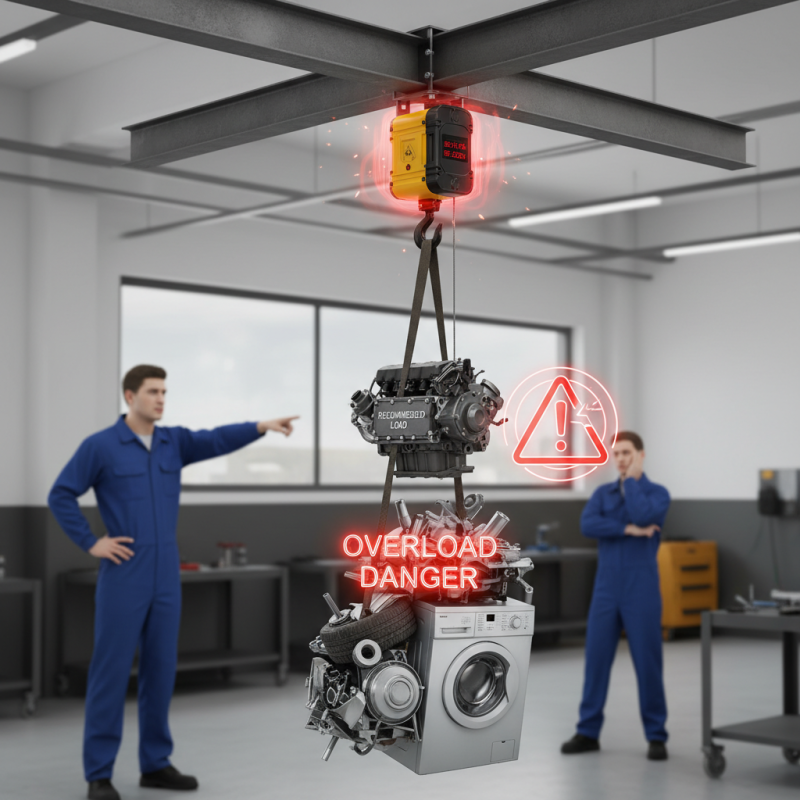
When selecting a micro electric hoist, safety features should be at the forefront of your decision. Reliability is crucial. Look for hoists with overload protection. This feature prevents the hoist from lifting loads that exceed its capacity. It’s an essential aspect that avoids potential accidents. Other safety mechanisms include emergency stop buttons. These should be easily accessible, allowing quick actions during unforeseen circumstances.
Another important feature is the built-in braking system. A reliable brake can hold the load securely in place, preventing unwanted drops. It’s vital to choose a model with a dual braking system. This option can provide extra safety assurance. Always check for the quality of materials used in construction. Lightweight materials can be tempting, but durability matters. Steel components often ensure long-term reliability.
Consider user-friendly controls as well. Complicated interfaces can lead to mistakes. Simple, intuitive controls help operators focus on the task at hand. Remember, even with safety features, human error can occur. Regular maintenance checks are essential to guarantee that all safety features function correctly. A hoist is not just a tool. It’s an investment in safety and efficiency.
How to Choose the Right Micro Electric Hoist for Your Needs? - Safety Features: Ensuring Reliable and Secure Hoisting Operations
| Feature |
Description |
Importance |
Recommended Standard |
| Overload Protection |
Prevents hoist from lifting beyond its rated capacity. |
High - prevents accidents and equipment damage. |
ANSI/ASME B30.16 |
| Emergency Stop |
Immediate stop function in case of emergency. |
Critical - ensures quick response to hazards. |
OSHA Regulation 1926 |
| Limit Switches |
Stops the hoist at maximum and minimum heights. |
Important - prevents over travel and mechanical failures. |
ISO 13732 |
| Hoist Structure |
Robust construction to handle dynamic loads. |
Essential - maintains stability and safety under load. |
EN 15011 |
| Portable Design |
Ease of transport and setup for various applications. |
Useful - increases usability across different job sites. |
Not Specified |