Inquiry
Form loading...

2026 Best Micro Electric Hoist for Global Buyers?

Choosing the 2026 Best Micro Electric Hoist for Global Buyers requires more than comparing lifting capacity and price. A reliable Micro Electric Hoist should match the real working environment, not just the product brochure. Buyers need to examine rated load, lifting height, duty cycle, rope or chain design, control response, and installation space. A compact unit may lift 500 kilograms, yet perform poorly under repeated daily use.

This guide evaluates practical factors for international purchasing. It considers motor efficiency, brake reliability, overload protection, emergency controls, noise levels, and enclosure ratings. Voltage compatibility also matters. A hoist designed for 220V may require a different configuration in another market. Documentation should include test reports, maintenance instructions, wiring diagrams, and traceable quality records. These details support safer decisions and more dependable operation.

Real workshops reveal problems that specifications can miss. A small warehouse may have limited headroom, dusty air, and uneven power supply. A production line may need precise positioning rather than maximum speed. Service access matters too. Spare parts can become expensive or slow to obtain across borders. There is no universal best model. That assumption deserves reconsideration. Even respected manufacturers can provide unsuitable options when application details are incomplete. This introduction outlines the key questions global buyers should ask before selecting, comparing, and importing a micro electric hoist in 2026. Practical evidence matters. So does honest evaluation.

2026 Best Micro Electric Hoist for Global Buyers?

What Is a Micro Electric Hoist and How Does It Work?

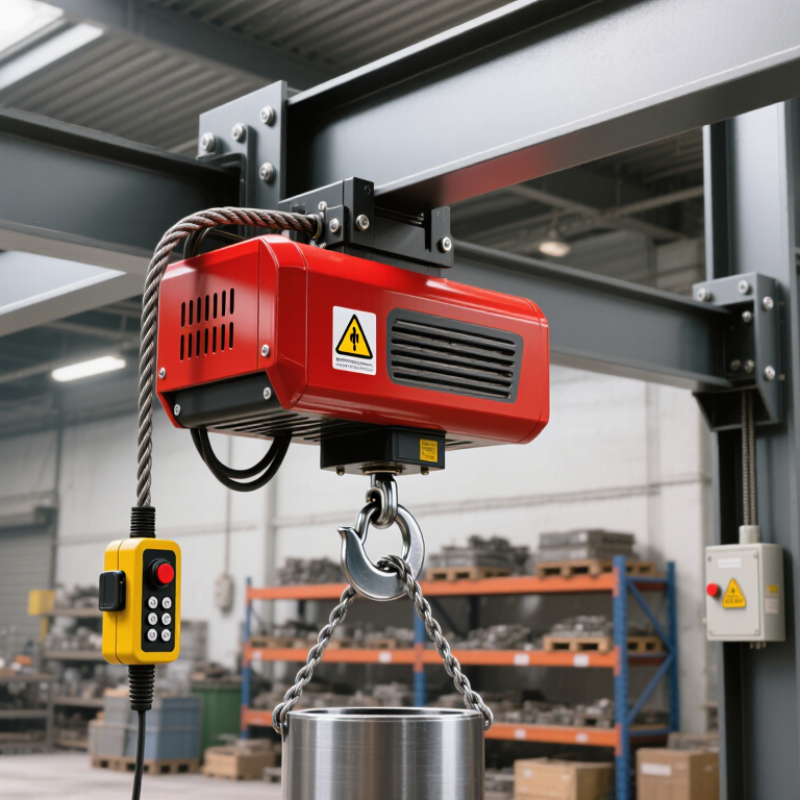
A micro electric hoist is a compact lifting machine for light loads in workshops, garages, warehouses, and maintenance areas. It uses an electric motor to raise or lower materials through a geared transmission. Common parts include a steel wire rope, lifting hook, drum, brake, control switch, and upper limit switch. It is small, but not automatically suitable for every job. Rated capacity matters more than appearance.

When the operator presses the control, electricity drives the motor. The gearbox reduces speed and increases lifting force. The drum then winds the rope around its surface, raising the hook steadily. Releasing the switch stops the motor, while the mechanical brake helps hold the load. A limit switch can stop over-travel near the top. It is not magic. Heat matters.

In practical use, check the beam, mounting plate, voltage, rope condition, and duty cycle before installation. A hoist lifting 200 kilograms may need pauses after repeated cycles. Listen for grinding sounds and watch for uneven rope winding. These small details reveal problems early. A common mistake is choosing the highest lifting capacity without checking headroom or power supply. I would also verify local electrical and lifting requirements, because safe specifications differ between markets. The instruction manual should match the exact configuration, not a similar-looking model.

Key Specifications for Comparing Micro Electric Hoists in 2026

2026 Best Micro Electric Hoist for Global Buyers?

Key Specifications for Comparing Micro Electric Hoists in 2026

Choosing a micro electric hoist requires more than checking its lifting capacity. Start with the rated load, lifting height, and duty cycle. A 200-kilogram hoist may handle short lifts, but repeated loading can create heat quickly. Confirm the motor’s thermal protection and cooling design. Lift speed also matters. Faster movement saves time, while controlled speed improves positioning.

Check the power supply carefully. Voltage, frequency, plug type, and current demand must match the installation site. A dual-control system can improve handling during workshop tasks. Look for upper and lower limit switches, emergency stopping functions, and overload protection. These features reduce operating mistakes. They do not replace trained operators or routine inspections.

Mechanical specifications deserve equal attention. Examine the wire rope diameter, hook shape, brake response, and gearbox construction. A clear safety factor and readable load label show better engineering discipline. Protection against dust and moisture can support outdoor or dusty work, but the stated rating needs verification.

I once focused too heavily on maximum capacity. That was a mistake.

Noise, maintenance access, spare-part availability, and technical documentation often affect ownership more than a higher lifting figure. Buyers should compare test records, inspection guidance, warranty terms, and local service support before ordering. Ask for evidence, not attractive wording.

How to Choose the Right Hoist for Different Lifting Applications

2026 Best Micro Electric Hoist for Global Buyers?

Choosing the right hoist starts with the load, not the price. A micro electric hoist may suit workshops, service vehicles, warehouses, and light production lines. However, “micro” does not mean universally safe. Confirm the rated load, lifting height, duty cycle, and available voltage before ordering. Grand View Research’s 2024 market analysis expects the global electric hoist market to grow at more than 6% annually through 2030. That growth reflects wider use, but selection errors remain common.

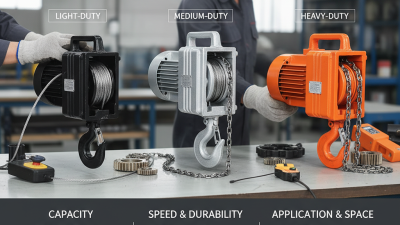
Match the hoist to the working rhythm. Occasional lifting may need a compact wire-rope or chain model with moderate speed. Repeated lifting needs a stronger motor, better thermal protection, and a suitable duty classification. For fragile equipment, choose lower speed and smoother control. For dusty or humid areas, check enclosure ratings, brake protection, and corrosion resistance. A 300-kilogram load at one meter is not equivalent to 300 kilograms lifted five meters repeatedly. The motor works harder.

Safety details deserve more attention. ASME B30.16 guidance emphasizes rated-load limits, inspection, and proper operation for underhung hoists. The operator should inspect the hook, chain, brake, pendant, and emergency stop before use. Field reviews often reveal an uncomfortable truth: buyers measure maximum capacity but overlook duty frequency. That shortcut can shorten service life. Leave a practical margin above the normal load. I would also verify local electrical requirements and training records, because a technically suitable hoist can still perform poorly in an unprepared workspace.

Safety Standards, Installation, and Routine Maintenance

2026 Best Micro Electric Hoist for Global Buyers?

A micro electric hoist is compact, but its risks are not small. Buyers should verify rated capacity, duty class, lifting speed, and emergency stopping performance. Safety certification must match the destination market and installation environment. Check overload protection, upper and lower limit switches, insulated controls, and guarding around moving parts. A clear load plate should remain readable after installation. Never rely on appearance alone.

Installation begins with the supporting structure. A ceiling beam must handle dynamic loading, not just the stated weight. Use a qualified technician to inspect the beam, fasteners, electrical supply, and grounding. Keep the lifting path vertical. Side pulling can damage the wire rope, chain, drum, or trolley. Test the hoist without a load, then use a light test load before normal operation. Stop immediately if the brake slips, the motor sounds uneven, or the hook twists.

Routine maintenance works best when it is visible and simple. Before each shift, inspect the hook latch, rope or chain, pendant, limit switches, and control cable. Remove dust from ventilation openings. Lubricate only with the lubricant specified for the mechanism. Monthly checks should include fasteners, brake response, electrical connections, and unusual wear. Record findings with dates and load conditions. A checklist is not enough. Workers sometimes sign it too quickly, and that weakness needs correction through practical supervision. Replace damaged parts promptly, even when the hoist still moves.

2026 Best Micro Electric Hoist for Global Buyers? - Safety Standards, Installation, and Routine Maintenance

Evaluation Dimension Recommended Specification or Practice Why It Matters to Global Buyers Verification Point
Typical rated capacity 125–500 kg for compact single-phase micro hoists; select a model with a rated capacity above the maximum lifted load. Provides a practical range for workshops, service areas, light fabrication, warehouses, and small material-handling tasks. Confirm the marked Working Load Limit (WLL) on the nameplate and technical documentation.
Rated load selection The lifted load must not exceed the hoist WLL. Include the weight of slings, hooks, spreader beams, containers, and other lifting accessories. Accessories and attachments reduce the available lifting capacity and can cause overload if ignored. Calculate the complete suspended load before every lifting operation.
Lifting height Common compact configurations provide approximately 6–12 m of wire rope or chain, depending on the model. The required lift should match the working area while avoiding excessive unused rope or chain. Measure the actual vertical travel from the storage point to the highest required landing position.
Lifting speed Approximately 3–10 m/min is common for compact electric hoists; lower speeds generally provide improved load-control precision. Speed affects productivity, positioning accuracy, and the risk of load swing. Compare the rated speed at the intended load, voltage, and duty condition.
Power supply Typical versions use 110–120 V or 220–240 V AC, 50/60 Hz, single-phase power. The electrical rating must match the installation supply. Incorrect voltage or frequency can cause overheating, poor performance, or electrical damage. Check the nameplate, plug configuration, grounding arrangement, and local electrical requirements.
Duty classification Choose the duty class according to lifting frequency, operating time, load spectrum, and number of starts per hour; avoid using light-duty equipment for continuous production. A compact hoist designed for intermittent use may overheat or wear prematurely under frequent industrial cycles. Review the manufacturer’s duty rating, maximum starts per hour, and permissible operating time.
Safety standards and conformity Check applicable local requirements and recognized references such as ISO 12100 for risk assessment, IEC 60204-32 for electrical equipment of lifting machines, and applicable regional machinery, electrical, and EMC regulations. Requirements differ by destination, workplace, electrical system, and intended application. Request a declaration of conformity, test records, risk information, and the applicable standard list.
Overload protection Use a hoist equipped with a suitable overload-limiting device or clearly specified overload protection where required by the application. Overload protection helps reduce the risk of structural, motor, brake, and rope or chain damage. Confirm the protection method, activation behavior, reset procedure, and inspection requirement.
Upper and lower limit control Use functioning travel-limit devices where provided; do not use limit switches as routine stopping controls. Limit controls help prevent over-travel, reeving damage, and contact with the hoist body or surrounding structure. Test the controls without a load during commissioning and at scheduled inspection intervals.
Brake performance The brake must hold the rated load when power is removed and should stop the load without excessive drift or shock. Brake reliability is essential for preventing unintended load descent. Inspect for abnormal noise, slipping, delayed stopping, overheating, or excessive stopping distance.
Hook and latch condition The hook should have an operational safety latch, rotate freely when designed to do so, and show no cracks, severe wear, twisting, or permanent deformation. Hook deformation or latch failure can allow the load or sling to disengage. Inspect before use and remove the hoist from service if damage or an enlarged throat opening is found.
Wire rope or load chain Keep the lifting medium correctly reeved, clean, lubricated where specified, and free from kinks, broken wires, corrosion, stretched links, or abnormal wear. The rope or chain carries the suspended load and requires direct condition monitoring. Follow the inspection and discard criteria in the equipment manual and applicable local rules.
Support structure The beam, trolley, bracket, tripod, gantry, or suspension point must be engineered and rated for the total imposed load, including dynamic effects. A correctly rated hoist cannot compensate for an inadequate supporting structure. Verify structural capacity, deflection, connection strength, end stops, and installation by a competent person.
Installation position Install the hoist so the load line remains vertical; do not side-pull, drag, or use the hoist to pull loads horizontally unless specifically designed for that purpose. Side loading can damage the hook, rope, chain, gears, brake, and supporting structure. Check alignment at the lowest and highest operating positions.
Electrical installation Use protective earthing, suitable overcurrent protection, correctly rated cables, and a readily accessible disconnecting device. Proper electrical protection reduces shock, fire, motor, and control-circuit risks. Electrical work should be completed and tested by a qualified person under local regulations.
Commissioning test Before service, perform no-load functional tests and controlled load tests in accordance with the equipment instructions and local requirements. Commissioning confirms correct direction, controls, limit devices, brake action, and structural stability. Record test results, defects, corrective actions, and the date of authorization for use.
Pre-use inspection Before each shift or use, inspect the hook, latch, rope or chain, controls, brake response, power cable, emergency stop if fitted, and visible fasteners. Frequent visual and functional checks identify defects before a lifting operation begins. Document findings where required and tag out equipment with safety-critical defects.
Routine cleaning Remove dust, metal particles, moisture, and oil contamination with approved methods; keep ventilation openings clear. Contamination can accelerate corrosion, impair controls, restrict cooling, and conceal defects. Do not use high-pressure water or solvents that can damage electrical insulation and seals.
Lubrication Lubricate the chain, wire rope, gears, bearings, or other points only with products and intervals specified for the particular design. Correct lubrication reduces friction and wear; incompatible or excessive lubricant can attract abrasive dust or contaminate brakes. Use the maintenance schedule and approved lubricant specifications supplied with the hoist.
Periodic inspection Arrange periodic inspections based on use severity, environment, legal requirements, and the equipment manufacturer’s instructions. Heavy use, corrosive environments, outdoor exposure, and high-temperature service require more frequent attention. Have a competent or authorized person assess wear, structure, electrical systems, brake function, and safety devices.
Operating environment For outdoor, dusty, humid, corrosive, or hazardous areas, select an enclosure and protection level suitable for the environment; standard indoor hoists are not automatically suitable for hazardous locations. Environmental conditions affect insulation, corrosion resistance, cooling, brake performance, and safe service life. Confirm the stated ambient temperature, ingress protection, corrosion protection, and hazardous-area certification where applicable.
Operator training Operators should be trained in rated-capacity limits, pre-use checks, load attachment, signaling, emergency procedures, and prohibited practices. Human factors are a major part of lifting safety, especially when loads are suspended or visibility is limited. Maintain training records and authorize only competent personnel to operate the hoist.
Prohibited practices Do not lift people, exceed the WLL, leave a suspended load unattended, shock-load the hoist, lift trapped loads, or operate with damaged safety components. These practices can create sudden dynamic forces, uncontrolled movement, equipment failure, or serious injury. Include prohibited-use rules in the operating procedure and workplace safety training.
Documentation and spare parts Keep the user manual, wiring diagram, inspection records, load-test records, parts list, and approved replacement-part information available. Complete documentation supports safe installation, traceability, maintenance, and regulatory compliance across different countries. Verify that documents are available in a language understood by operators and maintenance personnel.
Buyer note: Specifications shown are representative selection ranges and safety practices for compact electric hoists. The applicable legal requirements, inspection intervals, load-testing procedures, and conformity documentation must be confirmed for the destination country and intended application.

Global Buying Factors: Suppliers, Costs, Shipping, and After-Sales Support

In 2026, global buyers should judge a micro electric hoist by supplier evidence, not glossy listings. Request load-test records, motor specifications, duty-cycle data, and clear voltage options. Ask whether the supplier controls production or only resells equipment. Factory photos, inspection videos, and traceable serial numbers can reveal useful details. Do not trust certificates without checking their issuing body and scope. Samples can still mislead.

Compare the complete landed cost, not only the unit price. Include packaging, inland delivery, export documents, insurance, duties, and destination charges. A low quotation may become expensive after port handling fees appear. Confirm the trade term in writing, such as FOB or DAP, before payment. Shipping weight matters greatly for compact hoists, especially when reinforced crates protect gears and controls. Sea freight suits planned orders, while air freight may help urgent replacements. It costs more.

After-sales support should be measurable. Confirm spare-part availability, troubleshooting procedures, warranty coverage, and response times across time zones. Ask for a parts list with prices, including brakes, switches, cables, and control pendants. The supplier should explain safe inspection intervals and provide usable manuals in the buyer’s language. A short video call with a technician is often more revealing than a sales promise. I have seen buyers overlook local service skills, then struggle with simple adjustments. That weakness deserves honest planning. Written commitments matter.