10 Best Power Chain Hoists for Global Buyers in 2026
Choosing the right Power Chain Hoist in 2026 requires more than comparing lifting capacity and purchase price. Global buyers must examine duty class, chain grade, brake performance, control systems, maintenance access, and supplier support. A compact hoist lifting a 2-ton mold behaves differently from one moving loads across a busy fabrication floor.
Industry evidence supports this careful approach. The International Labour Organization estimated 2.93 million work-related deaths annually in its 2023 global assessment, including millions linked to unsafe working conditions. Material-handling decisions therefore deserve disciplined risk review. OSHA regulations, ASME B30.16 guidance, and ISO 4309 inspection principles provide useful reference points for safe hoist selection, inspection, and operation. These frameworks do not replace local requirements, but they help buyers ask better questions.
Market research also shows continuing demand for industrial lifting equipment. Reports from Grand View Research and Fortune Business Insights identify manufacturing, construction, logistics, and energy as major application sectors. Their market estimates differ, which is worth noting. Forecasts are not facts. Regional demand, exchange rates, infrastructure spending, and reporting methods can change the result.
This guide evaluates ten leading Power Chain Hoist options for international buyers in 2026. Each product should be judged against its real working environment, not only its catalogue specifications. Look for verified load tests, traceable components, clear technical manuals, accessible spare parts, and trained service partners. Small details matter. A noisy brake, stretched chain, or confusing pendant can create serious downtime and safety concerns. No ranking is perfect, but transparent criteria can make the decision more reliable.
What Power Chain Hoists Are and How They Work
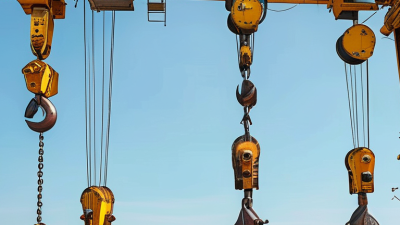
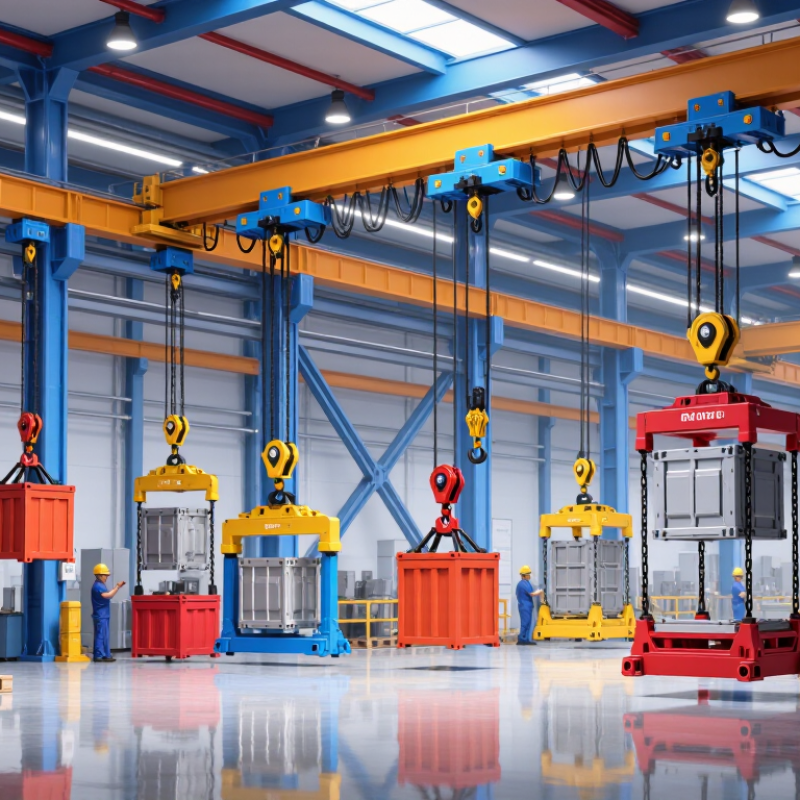
Power chain hoists lift loads through a motor-driven chain system. The motor turns a gearbox and load sprocket. The sprocket pulls the calibrated chain through the guide. A mechanical brake holds the load when power stops. Electric models suit workshops and warehouses. Pneumatic models can fit demanding industrial areas.
The lifting capacity is not simply motor strength. It depends on the working load limit, duty class, chain condition, suspension point, and lifting speed. ASME B30.16 provides inspection guidance for underhung hoists. OSHA 1910.179 also requires proper crane operation and maintenance. The U.S. Bureau of Labor Statistics reported 5,070 fatal work injuries in 2023. That figure covers all industries, not hoists alone, but it shows why lifting controls matter. A small mistake can become a dropped pallet.
Tips: Check the nameplate before every lift. Confirm the load weight and lifting path. Keep the chain straight. Never pull sideways. Inspect hooks, latches, brakes, and pendant controls. Replace damaged chain sections, even when the hoist still runs. That judgment can feel conservative. It is often correct. Power chain hoists are efficient, but they are not self-managing machines. A trained operator must watch for unusual noise, chain jumping, delayed braking, or uneven lifting. These signs deserve investigation, not optimism.
Power chain hoists use an electric motor to drive a load chain through a chain sprocket, converting electrical power into controlled vertical lifting. Common rated capacities range from 0.5 to 25 tonnes, while typical lifting speed decreases as the rated load increases. Actual performance depends on motor power, duty class, lift height, voltage, and operating conditions.
Key Criteria for Evaluating Hoists in 2026
When evaluating power chain hoists in 2026, start with the actual lifting cycle, not the catalog capacity. A 5-ton hoist may lift safely once, yet fail prematurely under repeated, near-limit loading. Check rated capacity, lift speed, duty class, starts per hour, and motor heating. ISO 4301-1 classification helps match equipment to working intensity, while ASME B30.16 provides practical inspection and operating guidance.
Safety data deserves more weight. The International Labour Organization and World Health Organization estimated 2.93 million work-related deaths annually in their 2023 joint report. Hoist selection cannot remove every risk, but overload protection, emergency stopping, upper-limit controls, braking performance, and clear pendant controls reduce exposure. Test the emergency stop with the load secured. Small details matter.
Environment changes the decision. Dust, humidity, corrosive air, low temperatures, and outdoor duty require suitable enclosures and materials. Ask for test records, load-chain certificates, electrical ratings, spare-part availability, and service intervals. Total cost should include inspection labor and downtime, not only purchase price. A neat spreadsheet can still mislead. Field conditions often defeat laboratory assumptions. I would also question unusually light housings or vague noise claims; lower weight may improve handling, but it can reduce durability when documentation is weak.
Ten Leading Power Chain Hoists for Global Buyers
Ten Leading Power Chain Hoists for Global Buyers
The ten leading power chain hoists in 2026 are defined by application, not appearance. Global buyers commonly compare compact fixed models, low-headroom units, motorized trolley hoists, dual-speed designs, outdoor-duty systems, stainless-steel options, high-cycle units, precision positioning hoists, smart-monitoring models, and heavy-duty configurations. Each choice should match load weight, lift height, duty cycle, travel speed, and local voltage.
The Global Industrial Hoists Market report by MarketsandMarkets identifies automation and warehouse expansion as major demand drivers through this decade. Its findings support a practical trend: buyers increasingly value overload protection, emergency stopping, chain containers, and serviceable controls. ISO 4301 duty classification and ASME B30.16 inspection guidance remain useful reference points. A 2024 report from the International Labour Organization also emphasizes risk assessment and competent maintenance for lifting equipment. Numbers help, but they do not replace a site inspection.
Tips: Record the real load, not the advertised average. Check pendant reach, ambient temperature, noise limits, and spare-part access. Confirm conformity requirements before ordering. Ask for test certificates and inspection records. A spreadsheet can look perfect. It can still miss corrosive dust, uneven floors, or frequent shock loading. That is where many purchasing decisions become less certain. Choose a hoist with a suitable safety margin, but avoid paying for capacity the structure cannot support. Local technicians and clear manuals often matter more than a polished specification sheet.
Performance, Safety, and Application Comparison
10 Best Power Chain Hoists for Global Buyers in 2026
Performance, safety, and application fit matter more than headline lifting capacity. The ten strongest options should handle their rated load without excessive noise, heat, or chain sway. Compare lifting speed, duty class, motor efficiency, and braking response under repeated cycles. A 500-kilogram hoist may suit maintenance work, while production lines often need higher duty ratings and smoother variable control.
Safety requires measurable details. Look for overload protection, upper and lower limit switches, mechanical load brakes, emergency stopping, and clearly marked controls. Chain containers should prevent loose links from striking nearby workers. Check the enclosure rating when dust, moisture, or washdown exposure is expected. Certification must match the destination market, voltage, and workplace rules. Never assume one document satisfies every country.
Application changes the ranking. Compact hoists work well above machine bays, but low headroom can restrict hook travel. Outdoor lifting needs corrosion-resistant finishes and protected electrical components. Frequent starts demand better thermal management than occasional warehouse use. Experienced buyers should request test records, inspection guidance, spare-chain availability, and service response times. No ranking is perfect. A quiet motor can still hide poor braking. A high lifting speed can reduce control near fragile loads. That trade-off deserves practical testing before purchase.