China’s position in the global lifting-equipment supply chain deserves careful examination. The country offers broad manufacturing capacity, competitive pricing, and extensive component networks. However, a low quotation alone does not identify a dependable Manual Chain hoist manufacturer.
The global material-handling market continues to expand. Grand View Research reports that the worldwide material handling equipment market was valued at approximately USD 216 billion in 2022, with continued growth expected through the decade. Mordor Intelligence also identifies warehouse expansion, infrastructure investment, and safer workplace handling as major market drivers. These trends create opportunities for Chinese suppliers, but they also raise buyer expectations for traceability and engineering support.
A serious manufacturer should provide tested load chains, forged hooks, brake performance records, and clear working-load-limit markings. Factory audits should review heat treatment, assembly controls, calibration records, and final inspection procedures. Relevant references may include EN 13157, ASME B30.21, and applicable CE requirements for the destination market. Compliance must match the actual product configuration, not merely appear on a brochure.
Field experience often reveals the difference. A hoist installed in a humid port, a fabrication shop, or a remote construction site faces different risks. Buyers should compare duty cycles, lift height, chain grade, spare-part access, packaging, and after-sales response. ISO 9001 certification can support process confidence, but it cannot replace product-specific evidence.
Small details matter. Proof matters.
No supplier is perfect, including experienced factories. Manufacturing records can contain gaps, and specifications may need clarification. A reliable China-based partner acknowledges these weaknesses, corrects them openly, and builds a purchasing process around measurable evidence rather than attractive claims.
Manual Chain Hoists: Definition, Structure, and Working Principles
A manual chain hoist is a mechanical lifting device operated by hand. It raises or lowers loads without electricity, using a hand chain and gear system. Common applications include workshops, warehouses, construction areas, and maintenance facilities. For global buyers, understanding its internal design helps during product selection and inspection.
The main parts include the load chain, hand chain, gears, brake, hooks, chain wheel, and housing. When an operator pulls the hand chain, the gears multiply force and rotate the load wheel. The load chain then moves through the wheel, lifting the attached hook. A friction brake holds the load when the operator stops pulling. The upper hook connects to a supporting structure, while the lower hook carries the load. In practical inspections, uneven chain movement often indicates poor alignment, contamination, or wear. Small details matter. A hoist may look strong but still perform poorly if its brake or chain receives little maintenance.
Tips: Confirm the rated capacity before lifting. Inspect hooks, latches, chains, and brake action every time. Keep the chain straight and avoid side pulling. Never use a damaged hoist. Operators should practice controlled lifting with a light test load first, because real handling conditions can expose weaknesses that specifications overlook. Routine records also improve reliability, although many teams still underestimate their value.
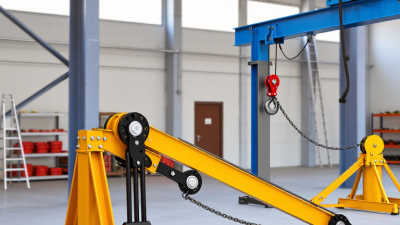
A manual chain hoist is a mechanical lifting device that uses a hand chain, gears, a load chain, a brake, and hooks to raise or lower suspended loads. The chart shows the theoretical gravitational force produced by common metric load masses.
Calculated using F = m × g, with standard gravitational acceleration g = 9.81 m/s². Actual lifting effort is higher because of gear friction, brake resistance, and hoist efficiency.
China has become a major manual chain hoist manufacturing hub because its industrial network is unusually complete. UNIDO’s International Yearbook of Industrial Statistics 2024 estimates that China produced about 31% of global manufacturing value added in 2022. That scale supports steel processing, gear cutting, heat treatment, casting, and surface finishing within connected regions. A hoist factory can source chains, hooks, bearings, and brake components from nearby suppliers. This shortens purchasing cycles and supports competitive export pricing.
Production capability is only part of the explanation. Experienced manufacturers commonly use load testing, dimensional inspection, and batch traceability during assembly. Buyers should request proof-load records, material certificates, and clear capacity markings. EN 13157 and ASME B30.16 are frequently referenced when evaluating lifting equipment, although the applicable requirement depends on the destination market. UNCTAD’s Review of Maritime Transport 2024 also shows China’s continuing strength in container shipping, helping suppliers serve overseas distributors with regular schedules.
The model is not flawless. Quality can differ sharply between factories, even within one industrial cluster. Low pricing may hide weaker braking parts, inconsistent heat treatment, or poor inspection discipline. Practical buyers should audit production areas, examine test equipment, and compare samples against technical drawings. Supplier communication matters too. A polished catalog cannot replace measurable evidence. This is where China’s manufacturing depth becomes useful, but only when purchasing decisions remain technically controlled.
| Evaluation Dimension | Verified Industry Information | Why It Matters to Global Buyers | Typical Sourcing Implication | Reference |
|---|---|---|---|---|
| Product Category | Manual chain hoists are manually operated lifting devices that use a hand chain, load chain, gears, hooks and a mechanical brake to raise or lower suspended loads. | They can operate without electricity, making them suitable for construction, maintenance, workshops, warehouses and locations without reliable power. | Buyers should define rated capacity, lifting height, duty cycle, operating environment and hook configuration before requesting quotations. | ASME B30.21 |
| Common Rated-Capacity Range | Commercial manual chain hoists are commonly offered in fractional-ton and multi-ton capacities. Exact ranges vary by design, certification and intended application. | A broad capacity range allows buyers to consolidate more lifting requirements with fewer product platforms. | Capacity should be selected from the actual maximum working load, not from the average load. Never exceed the marked working load limit. | ASME B30.21 |
| Standard Lifting Height | Three-metre lift is widely used as a standard configuration in the international lifting-equipment market, while longer or customized lifts can be specified for particular applications. | Standard lift lengths are easier to produce, inspect, pack and replace. | Request the clear lifting height, free chain length, headroom and storage arrangement separately because these dimensions affect installation and operation. | International product-specification practice; verify against the applicable product documentation. |
| Load Chain Material | Load chains for lifting applications are generally manufactured from alloy steel and are commonly supplied in calibrated, heat-treated grades suitable for overhead lifting. | Chain material and heat treatment directly influence strength, fatigue resistance, wear resistance and service life. | Ask for chain grade, nominal diameter, proof-load information, material traceability and inspection records. | ISO 3077:2019 |
| Safety Brake | A manual chain hoist normally uses a mechanical load-pressure brake or equivalent braking system to hold the load when the hand chain is released. | Reliable load holding is essential during lifting, positioning and temporary suspension. | Buyers should request brake-holding test results, overload-test procedures and maintenance instructions rather than relying only on catalogue claims. | ASME B30.21 |
| Applicable International Standards | Depending on the destination market, manual hoists may be designed, tested or assessed against standards such as ASME B30.21 and EN 13157. | Standards provide a common framework for design, testing, marking, inspection and safe use. | The required standard should be written into the purchase contract and matched with the destination country’s regulatory requirements. |
ASME B30.21 EN 13157 |
| Manufacturing Supply Base | China has a large industrial base covering steel, casting, forging, machining, heat treatment, surface finishing, packaging and export logistics. | Several production processes can be sourced within one manufacturing region, reducing coordination time and supporting scalable production. | Supplier evaluation should include process capability, in-house versus outsourced operations, calibration control and quality-system documentation. | World Steel Association |
| Component Integration | A manual chain hoist combines multiple safety-critical components, including load chain, hooks, gears, bearings, brake parts, side plates and hand-chain mechanisms. | A mature component network can support replacement parts, engineering changes and different capacity configurations. | Request a component bill of materials, critical-part inspection plan and documented change-control procedure. | Quality-management and lifting-equipment procurement best practice. |
| Customization Options | Common customization areas include lift length, hook type, chain container, corrosion-protection finish, headroom, packaging, labels and destination-market documentation. | Customization helps adapt the hoist to local handling systems, climate conditions and regulatory requirements. | Changes to load-bearing parts, braking systems or rated capacity should require engineering review and renewed testing. | Applicable design and test standard should be confirmed for each modification. |
| Inspection and Testing | Important controls include dimensional inspection, material verification, chain inspection, no-load operation, brake operation and proof-load or overload testing as required by the applicable standard. | Testing helps identify assembly errors and safety risks before shipment. | Require a pre-shipment inspection plan, test records, serial-number traceability and photographs of product markings. | ASME B30.21 |
| Marking and Documentation | A compliant hoist should have durable identification showing information such as rated capacity, manufacturer or responsible supplier, product identification and relevant warnings. | Clear markings support safe operation, inspection and after-sales service. | Confirm that nameplates, user manuals, certificates and warning labels are available in the language required by the destination market. | ASME B30.21 |
| Export Logistics Advantage | China has extensive container-port infrastructure and established international freight networks serving major manufacturing regions. | Regular export routes can support consolidated shipments, container loading and delivery to multiple global markets. | Compare total landed cost, including inland transport, export packing, ocean freight, duties, customs clearance and local compliance costs. | UNCTAD Data Hub |
| Quality-Risk Consideration | Factory location alone does not prove product quality. Performance depends on engineering controls, material quality, process consistency, testing and traceability. | Price comparisons without technical verification can create safety, warranty and compliance risks. | Use a supplier-audit checklist covering drawings, incoming inspection, heat treatment, brake assembly, final testing, calibration and corrective actions. | International lifting-equipment procurement best practice. |
| Recommended Buyer Qualification Method | Evaluate suppliers through technical-document review, sample testing, factory or third-party inspection, certificate verification and reference checks. | A structured qualification process separates manufacturing capability from simple trading or catalogue supply. | Use the same specification, test criteria and acceptance limits for every shortlisted supplier to make quotations comparable. | Supplier-quality and conformity-assessment best practice. |
| Overall Sourcing Assessment | Strong Manufacturing Potential China is a major sourcing base because it combines industrial capacity, component availability, customization capability and export infrastructure. |
The manufacturing hub advantage can support competitive cost and flexible supply when supported by documented quality controls. | Select suppliers based on verified compliance, testing capability, traceability and service support—not on country of origin or quoted price alone. | Assessment based on the standards and public industry references listed above. |
A reliable manufacturer begins with verifiable engineering, not polished photographs. Ask for load-test records, material certificates, and inspection reports for each production batch. EN 13157 covers manually powered cranes, while EN 818 addresses lifting chains. Serious factories understand both requirements and explain their limits clearly.
Request a factory audit. Check machining areas, heat-treatment records, chain calibration, and final inspection stations. A hoist should lift smoothly, hold its rated load, and show no abnormal brake slip. The brake matters most. According to the International Labour Organization, nearly 2.78 million workers die annually from work-related causes, including occupational accidents and diseases. This broad figure is not hoist-specific, but it shows why equipment traceability cannot be treated as paperwork.
Review independent testing, not only internal claims. A 2024 material-handling market report from Mordor Intelligence identifies safety, automation, and compliance as major purchasing factors, although manual hoists remain practical for low-frequency lifting. Ask how the manufacturer handles failed tests, replacement parts, and warranty claims. Weak answers reveal weak systems.
A dependable supplier should provide serial-number tracking, clear rated-capacity markings, operating instructions, and realistic delivery data. Check whether the quoted capacity matches the complete hoist configuration, including chain length and hooks. I would also inspect five randomly selected units, not one prepared sample. That method costs more time. It may still expose inconsistent finishing, stiff hand chains, or uneven brake adjustment. No factory is perfect, and any supplier claiming otherwise deserves another question.
For global buyers, choosing a China-based manual chain hoist requires more than comparing prices. The key question is whether the manufacturer controls safety, testing, and documentation consistently. In supplier audits, request material certificates, production records, inspection reports, and traceable serial numbers. Check whether the rated capacity, lifting height, and test results match the product label. Relevant references may include ASME B30.21, EN 13157, and applicable national requirements. Requirements differ by market. Do not treat one certificate as universal approval. A certificate with unclear scope creates risk. That detail matters.
Safety features should be visible and testable. A reliable hoist normally includes a mechanical load brake, hardened load chain, safety latches, and clearly marked capacity information. Inspect the hand chain for smooth movement and abnormal resistance. The brake should hold the load without slipping during controlled testing. Hooks must show no cracks, twisting, or dangerous deformation. Quality systems such as ISO 9001 can support consistency, but they do not replace product inspection. Ask for evidence of dimensional checks, heat-treatment control, corrosion protection, and final load testing. Factory acceptance records help buyers compare shipments over time. No hoist is maintenance-free. Manuals should explain inspection intervals, lubrication points, storage conditions, and replacement parts. Some suppliers provide complete files but weak after-sales guidance. That gap deserves honest review.
China Top Manual Chain Hoist Manufacturer for Global Buyers?
Global buyers need more than a low factory quotation. UNCTAD’s Review of Maritime Transport reports that over 80% of global trade moves by sea. Export planning therefore matters. Confirm the HS code, Incoterm, shipping route, carton strength, and spare-parts policy before ordering. A small packaging weakness can damage a hoist’s chain or hook during a long voyage. This happens more often than purchasing teams expect.
Customization should begin with the working environment. Specify rated load, lifting height, chain length, hook opening, operating frequency, and corrosion exposure. Ask for material certificates, load-test records, inspection reports, and serial-number traceability. ISO 16872 addresses hand-operated chain hoists, while local rules may require additional testing. A supplier should explain the differences clearly. Vague compliance claims are not enough. Not even close.
Safety data deserves priority. The International Labour Organization estimated 2.93 million work-related deaths annually in its 2023 global estimates. A manual hoist cannot remove every workplace risk, but reliable design and correct training reduce avoidable failures. Request a sample inspection checklist and maintenance schedule. Experienced buyers also compare lead time, warranty terms, replacement-chain availability, and after-sales response. The cheapest offer may become expensive after one missed delivery or unclear document. I would still challenge every specification, because even a well-prepared purchase can contain assumptions.