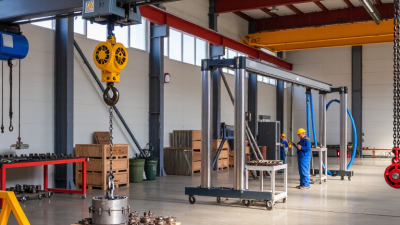
Choosing among China’s leading electric chain hoist manufacturers takes more than comparing catalog prices. The right supplier must match the hoist to its work environment, duty cycle, and maintenance plan. A warehouse beam lifting cartons faces different demands from a damp workshop moving steel fixtures. Small details matter: chain quality, brake response, pendant controls, overload protection, and spare-part access. A polished product page cannot prove dependable service. Buyers should review test records, warranty terms, and installation references. Ask how the hoist performs after repeated starts, not just during a showroom demonstration. That question can reveal a lot.
Thomas Tredgold, an English engineer, described engineering as “the art of directing the great sources of power in nature for the use and convenience of man.” His words offer a useful lens for Electric Chain equipment: power matters, but controlled movement matters more. This guide introduces ten Chinese manufacturers and considers product range, production experience, quality controls, customization, and export support. These factors can help buyers build a practical shortlist, but they cannot replace site-specific checks or direct supplier discussions. No ranking is perfect. Public information may be incomplete, and a strong factory profile does not guarantee a good fit for every operation. Compare rated capacity, lifting speed, operating class, and service arrangements against your actual workload. Then verify the details. A careful comparison may take longer, yet it can prevent costly surprises on the shop floor.
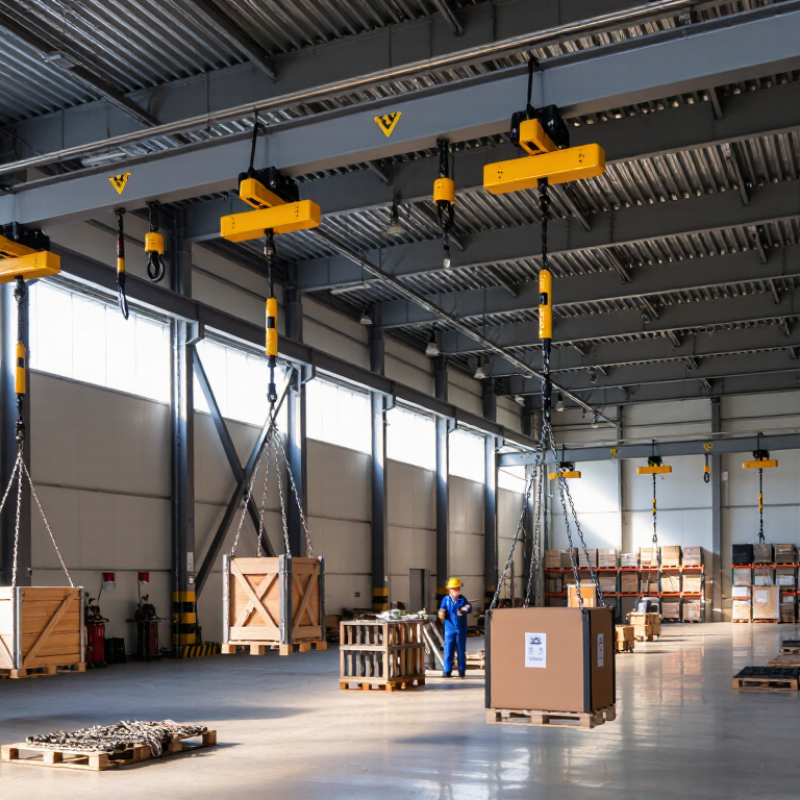
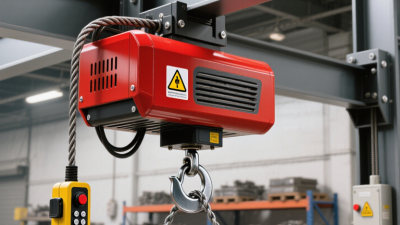
An electric chain hoist lifts loads by driving a calibrated steel chain around a load sprocket. Its motor supplies motion; a gearbox reduces speed and increases torque. The chain runs through a guide and supports a hook, while a brake holds the load when power stops. Compact, but not simple. A pendant or other control lets the operator raise, lower, or stop the load. Actual operation depends on the hoist’s rated capacity, duty class, and installation.
Inside the housing, the main parts work as one system: motor, brake, gearbox, chain wheel, chain, hook, and limit switches. The switches help prevent travel beyond set points, but they do not replace attentive operation. ASME B30.16 provides guidance for underhung and stationary hoists, including inspection and safe-use practices.
Technavio’s 2024–2028 material-handling equipment market analysis forecasts continued growth in demand for lifting equipment; that is market context, not proof that any individual hoist is suitable. Check the nameplate, chain condition, and brake response before use.
A slightly uneven lift can signal a problem, though it may be easy to dismiss. That deserves a pause.

China’s electric chain-hoist industry is shaped by both specialist production hubs and a broad machinery supply base. The National Bureau of Statistics reported that value added in equipment manufacturing enterprises above designated size rose 7.7% in 2024. This is useful context, not a hoist-specific growth figure. The distinction matters.
Henan, particularly Changyuan, is closely associated with lifting machinery and complete equipment production. Jiangsu, Zhejiang, and Shandong add strong metalworking, motor, control, and component capabilities. Coastal locations also offer practical access to ports and export services. Still, regional strengths overlap, and a province-level label cannot tell buyers how well a factory tests its brakes, chains, or overload protection.
For manufacturers, that structure can shorten sourcing routes: a hoist maker may obtain motors, forged hooks, and electrical controls from nearby suppliers. Buyers should check rated-load test records, chain specifications, duty class, and spare-part availability—not just production capacity. The NBS figures describe equipment manufacturing broadly, so they should not be read as proof that every local supplier is growing or equally qualified. The map is useful, but incomplete.
When comparing electric chain hoist manufacturers, look beyond rated capacity. Ask for duty-class calculations, chain and brake test records, overload protection details, and traceable component documentation. ISO 4301-1 classifies crane duty using operating cycles and load spectrum, a useful framework for checking whether a hoist suits repeated lifting or occasional workshop use.
The ILO’s 2023 global estimates report nearly three million work-related deaths annually across all industries. That figure is not hoist-specific, but it reinforces why safety evidence should outweigh a polished brochure.
Check how clearly each supplier explains maintenance intervals, spare-part availability, and service response times. Request a sample inspection record and confirm that test results identify the tested unit, load, and date.
Ask about low-headroom dimensions, lifting speed, and brake behavior under frequent starts. A low purchase price can hide costly downtime. Yet a thick manual alone proves little; compare actual service arrangements with your site’s needs.
Tips: Ask for a witnessed load test and a written parts lead-time estimate. Check the chain path and hook latch in person. Small details matter. A rushed review can miss them.
Top 10 Electric Chain Hoist Manufacturers in China
Comparing China’s leading electric chain hoist manufacturers takes more than counting product models. Buyers should examine rated load, lifting speed, duty class, chain grade, and motor protection. Ask for test records and spare-parts lead times. A clear nameplate and traceable inspection report matter on the factory floor.
The National Bureau of Statistics of China reported that equipment manufacturing value added grew 6.8% year on year in 2023, in its Industrial Production Operation report. This signals a broad manufacturing base, not proof that any hoist maker ranks among the top ten. A credible shortlist needs product-specific evidence: load-test results, documented quality controls, and consistent component sourcing. That distinction matters.
For practical comparisons, request drawings, operating manuals, and warranty terms before evaluating price. Check whether the rated capacity suits the real lift, including frequent starts and long shifts. Ask how the supplier handles chain wear and brake adjustment. Small details count. Factory visits can reveal assembly discipline, but one visit is only a snapshot. A supplier may show polished equipment while leaving service response times unclear. Note the gap, then verify it through references and written commitments.
Anonymized market overview, not a verified ranking of individual companies. The entries describe common electric chain hoist product profiles available from manufacturers; specifications vary by model and must be confirmed with the supplier.
| Profile | Typical rated capacity | Typical lifting speed | Common configuration | Typical application | Key details to verify |
|---|---|---|---|---|---|
| Profile 1 — Compact workshop hoists | 0.125–1 tonne | About 2–8 m/min, model dependent | Fixed or push-trolley; single- or two-fall chain options | Small workshops, maintenance bays, and light assembly | Rated load, headroom, duty classification, and overload protection |
| Profile 2 — General-purpose hoists | 0.5–5 tonnes | About 2–8 m/min; two-speed versions may be available | Fixed, push-trolley, or geared-trolley mounting | Factories, repair facilities, and material-handling stations | Chain falls, lifting height, brake type, and trolley compatibility |
| Profile 3 — Higher-capacity models | 5–10 tonnes | Often lower than light-duty models; confirm the model data sheet | Typically multi-fall chain; trolley may be separately specified | Heavy fabrication, machinery installation, and industrial maintenance | Load-chain specification, reeving, duty cycle, and supporting structure |
| Profile 4 — Low-headroom designs | 0.5–10 tonnes, depending on model | Model dependent; variable or two-speed options may be offered | Compact hoist body with a low-headroom trolley arrangement | Sites with restricted overhead clearance | Minimum headroom, beam dimensions, wheel loading, and hook travel |
| Profile 5 — Variable-speed hoists | 0.25–5 tonnes, depending on model | Speed range depends on motor and drive configuration | Inverter control may be available for lifting and/or trolley travel | Precise positioning, assembly, and handling of sensitive loads | Drive brand, speed range, braking behavior, and control functions |
| Profile 6 — Production-duty hoists | 0.5–10 tonnes, depending on model | Specified by the selected capacity and duty rating | May be supplied with a powered trolley and pendant or radio control | Repeated lifting in manufacturing and production environments | FEM/ISO duty classification, starts per hour, and permissible operating time |
| Profile 7 — Corrosion-resistant configurations | 0.25–5 tonnes, depending on model | Model dependent | Protective finishes or selected corrosion-resistant components may be offered | Humid or corrosive environments, when suitably specified | Coating system, component materials, ingress protection, and maintenance needs |
| Profile 8 — Outdoor-use configurations | 0.25–10 tonnes, depending on model | Model dependent | Weather protection and suitable electrical enclosures must be specified | Covered outdoor facilities and exposed industrial locations | IP rating, temperature range, wind exposure, and storage requirements |
| Profile 9 — Clean-area or food-industry options | 0.125–5 tonnes, depending on model | Model dependent | Special finishes or covers may be available; suitability is application-specific | Clean production areas where equipment hygiene requirements apply | Cleanability, lubricant type, material certificates, and applicable hygiene rules |
| Profile 10 — Customized or integrated systems | Selected to match the application; confirm engineered limits | Specified for the required lifting cycle and load handling | May integrate a trolley, radio control, limit switches, or production-line controls | Special lifting points, production lines, and bespoke material-handling systems | Engineering drawings, risk assessment, interface requirements, and test documentation |
Electrical supply commonly used for industrial hoists in China is 380 V, 50 Hz, three-phase, but the required supply and control voltage are model-specific. Confirm the nameplate, applicable standards, test certificates, warranty, spare-parts support, and suitability for the intended duty before purchase. Standards that may be relevant include EN 14492-2 for power-driven hoists and EN 818-7 for fine-tolerance hoist chains; applicability and conformity must be verified for the specific product.
Comparing China’s ten leading electric chain hoist manufacturers requires more than checking rated capacity. Compare product ranges, lifting speeds, chain-lift heights, and available control options. A 2-ton hoist moving steel fixtures all day faces different demands from a 500-kilogram unit used occasionally in a warehouse. Duty classification, brake design, overload protection, and spare-parts access reveal more about suitability than a catalogue headline. That matters.
Capabilities should match the worksite. Fabrication shops may need precise low-speed control and frequent starts; maintenance teams may prioritize compact bodies and straightforward servicing. For dusty or damp areas, check the stated enclosure rating and operating limits rather than assuming a standard model will cope. Ask how manufacturers test load-bearing components and document inspection intervals. Small details count.
MHI’s 2024 Annual Industry Report found that 55% of surveyed organizations increased supply-chain technology investment in 2023, while 88% expected investment to rise over the following five years. The report is not specific to hoists, but it reflects wider demand for more connected material handling. A ranking can still mislead: published specifications may not show performance under a site’s real duty cycle. Request operating data, service response times, and application references before comparing suppliers.