Inquiry
Form loading...

How to Choose the Best Motorized Hoists in 2026?

Choosing the best Motorized Hoists in 2026 starts with the work they must perform, not the most impressive specification sheet. A hoist lifting equipment across a busy workshop may need different capacity, speed, and duty ratings from one used occasionally in a small garage. Start with the load’s verified weight, then account for lifting attachments and the way the hoist will be used. Check rated capacity, lift height, operating speed, and duty cycle against the manufacturer’s documentation. More capacity is not automatically better if it adds cost or does not suit the supporting structure. Small details matter. A short lift can feel very different when repeated all day.

Next, consider the installation and working environment. Confirm that the available power supply matches the hoist, and check whether the trolley, beam, or mounting arrangement is compatible. Think about dust, moisture, temperature, and access for inspection. For example, a pendant control should be reachable without putting the operator in an awkward position. A wireless control may help in some layouts, but only if its operation and maintenance requirements are understood. No single setup fits every site.

Compare braking, overload protection, emergency stopping, spare-parts access, and service support—not just purchase price. Review the operating manual and rated limits, and ask the supplier specific questions about expected use. A tidy specification sheet can still leave practical questions unanswered. That is worth admitting. The right choice is one that fits the actual task, can be inspected and maintained, and comes with clear technical support. Before purchasing, have the proposed installation and lifting plan reviewed by qualified professionals.
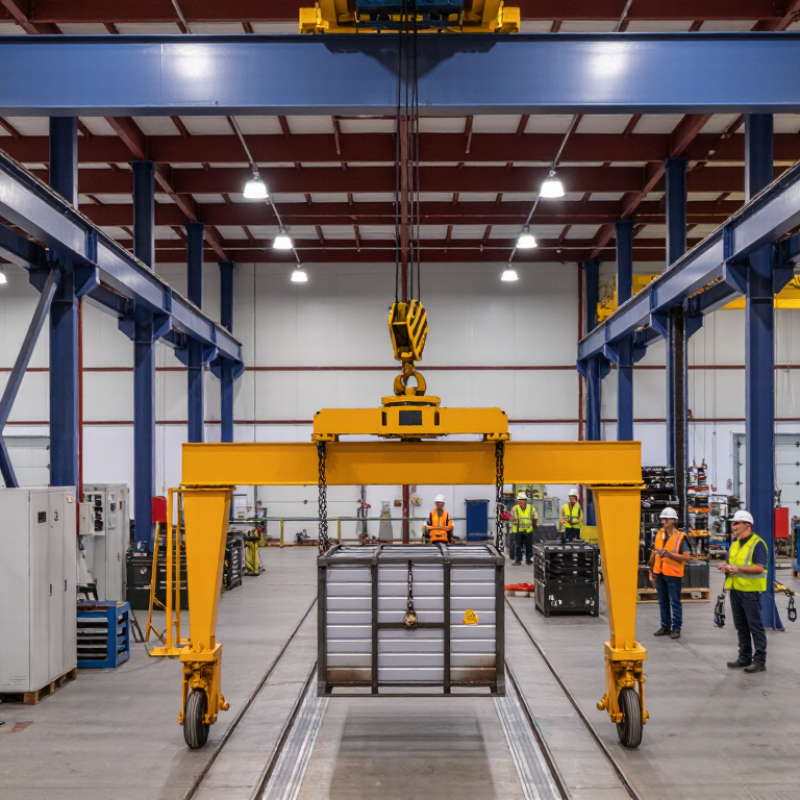
How to Choose the Best Motorized Hoists in 2026?

Define the Load, Lift Height, and Operating Environment

Before comparing motorized hoists, record the heaviest load you expect to lift, including slings, hooks, and attachments. A 500-pound machine may become a 560-pound lift once its rigging is counted. Treat the hoist’s rated capacity as a firm limit, not a target to exceed. Leave margin. Measure lift height from the load’s lowest pickup point to its highest placement, then allow space for the hook assembly and overhead clearance. A low starting point can require more chain than expected.

Operating conditions matter too. Dust, moisture, temperature changes, and frequent starts can affect duty requirements and component wear. Note whether the hoist will run briefly a few times daily or repeatedly through a shift. That difference matters. Check available power, the mounting structure, the travel path, and where the operator will stand. It is easy to focus on capacity and overlook control access; an awkward position can make routine lifts harder to manage.

Consider how the load hangs, not just what it weighs. An uneven center of gravity may cause swinging, especially in a tight workspace. If the weight or balance is uncertain, verify it before choosing equipment. Guessing feels quicker, but it leaves an important detail unresolved.
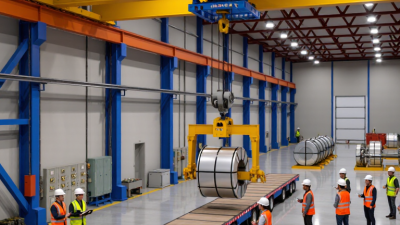
How to Choose the Best Motorized Hoist in 2026

Start with the load, then confirm lift height and operating conditions.

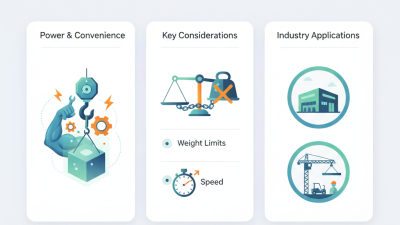
These are common example rated-capacity sizes, not a complete product range. Choose a hoist rated for at least the heaviest load, including below-the-hook equipment. Then check that its lift height and duty rating suit the job, and confirm the unit is appropriate for the site’s temperature, dust, moisture, and other environmental conditions.

Compare Hoist Types, Capacities, and Lifting Speeds

How to Choose the Best Motorized Hoists in 2026? Compare Hoist Types, Capacities, and Lifting Speeds

Electric chain hoists suit compact work areas and frequent short lifts; wire-rope hoists often fit taller lifts and heavier, repeated production cycles. The right capacity is not simply the heaviest load on the floor. Include the lifting attachment, container, and any load imbalance, then leave headroom within the hoist’s rated capacity. Check the nameplate. Small detail, big consequence.

Compare speed against lift height and hourly demand. For example, raising a load 6 metres in 30 seconds requires a nominal lifting speed of 12 metres per minute. Real cycles also include hook positioning, loading, and pauses, so a faster rating may not improve output much. I still find those pauses easy to underestimate. For variable workloads, consider whether two-speed control offers useful precision near the landing point.

Duty matters as much as capacity. ISO 4301-1 classifies cranes using factors such as operating cycles and load spectrum; use that framework to describe actual service to a qualified supplier, rather than guessing from occasional peak loads. Ask for rated capacity, lift height, rated speed, duty classification, and compatible power supply in writing. Compare those details across models, and confirm installation and inspection requirements against applicable standards. A hoist that is fast on paper may be a poor fit when operators need careful, repeatable positioning.

Assess Power Options, Controls, and Safety Features

How to Choose the Best Motorized Hoists in 2026?

Assess power options, controls, and safety features before comparing prices. Electric hoists suit many indoor work areas with steady power. Battery-powered models can help where outlets are scarce, but runtime and charging access matter. Match the hoist’s rated capacity and lifting speed to the actual load. A heavy machine part may need slower, controlled movement rather than maximum speed. Check the duty rating, too; frequent lifting can overheat equipment that is suited only to occasional use.

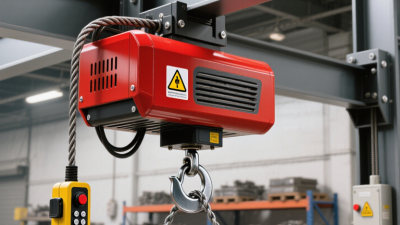
Controls should feel clear while the operator watches the load. Pendant controls are common, while remote controls can keep people farther from moving equipment. Test the emergency stop, upper-limit switch, and braking response under suitable conditions. Confirm that the hook latch closes and the chain or wire rope tracks properly. These details are easy to overlook. A checklist helps, but it cannot predict every awkward lift or cramped workspace.

Tips: Compare control reach, power supply, and rated capacity with your real setup. Inspect lifting components before use, and follow the maker’s operating instructions. If movement feels jerky, stop and investigate rather than compensating with repeated button presses. The “best” choice may be less powerful, but easier to control safely.

How to Choose the Best Motorized Hoists in 2026? - Assess Power Options, Controls, and Safety Features

Selection Factor Light-Duty Hoist General Workshop Hoist Production Hoist Heavy-Duty Hoist
Typical rated capacity 125–500 kg (275–1,100 lb) 500 kg–2 t (1,100–4,400 lb) 1–5 t (2,200–11,000 lb) 5 t and above (11,000 lb and above)
Common power options Single-phase supply, commonly 120 or 230 V, depending on the unit Single-phase or three-phase; commonly 230 V or 208–480 V, depending on the unit Usually three-phase; commonly 208–480 V, depending on the unit Usually three-phase; voltage and motor configuration depend on the installation
Typical lifting speed Approximately 4–8 m/min (13–26 ft/min) Approximately 2–6 m/min (7–20 ft/min) Approximately 1.5–6 m/min (5–20 ft/min); variable-speed options may be available Approximately 0.5–4 m/min (2–13 ft/min); slower speeds can support precise positioning
Control options Wired pendant with clearly marked up/down buttons Wired pendant; radio remote may be offered Pendant or radio remote; variable-frequency drive (VFD) control may provide smoother starting and stopping Pendant or radio remote, with VFD or dual-speed control where specified
Lift and travel configuration Usually fixed suspension; single or multiple chain falls affect lift speed and headroom Fixed or trolley-mounted; confirm beam and trolley compatibility Often trolley-mounted for horizontal movement; bridge-crane integration may be possible Configured to suit the crane, runway, lift height, and required load path
Duty and usage suitability Occasional lifting with relatively low operating frequency Regular workshop or maintenance use; select duty rating to match actual cycles Frequent production use; verify the hoist’s rated duty and thermal limits High-load or frequent-cycle applications; engineering review and duty-cycle confirmation are important
Safety features to verify Load brake, upper/lower limit protection, emergency stop, and rated-load marking Brake, limit switches, emergency stop, and overload protection where specified Brake, upper/lower limits, overload protection, and controls that prevent unintended operation Application-appropriate braking and limits, overload protection, and compatible crane safety devices
Best suited to Light maintenance, small work areas, and infrequent lifts Repair shops, fabrication areas, and general material handling Assembly lines, manufacturing cells, and repeated production lifts Heavy industrial handling and demanding lifting applications
Key checks before purchase Confirm load weight, lift height, supply voltage, and mounting clearance Check load capacity, beam size, lift height, control reach, and operating frequency Confirm duty rating, lifting speed, power supply, trolley fit, and required protection devices Obtain a qualified review of the structure, crane interface, load spectrum, controls, and applicable regulations

Values are indicative selection ranges, not guaranteed specifications. Actual capacity, speed, voltage, duty rating, and safety features vary by hoist design. Always verify the equipment nameplate, technical documentation, installation requirements, and applicable local standards before use.

Verify Standards, Installation Needs, and Maintenance Support

Before buying a motorized hoist, match its rated capacity, duty cycle, lift height, and operating speed to the actual work. Check the load path, beam capacity, headroom, and available power at the installation site. ASME B30.16 covers overhead underhung and stationary hoists; use its applicable requirements alongside local rules and the hoist’s documentation. A high capacity rating alone proves little.

Installation details matter. Confirm the support structure is assessed by a qualified person, and specify suitable guarding, controls, and emergency stopping arrangements. The U.S. Bureau of Labor Statistics recorded 885 fatal work injuries involving falls, slips, and trips in 2023. That figure is not hoist-specific, but it underscores why access, housekeeping, and safe work positioning deserve attention. Small details count.

Ask for a written inspection schedule, parts availability, technician response times, and clear records of repairs and tests. Check whether the supplier can support the installed equipment, not just deliver it. A hoist may be technically sound and still become a problem when service is slow. I would also review the plan after a few months; real use can expose assumptions that looked fine on paper.

Compare Total Cost, Reliability, and Future Requirements

How to Choose the Best Motorized Hoists in 2026?

A low purchase price can hide expensive energy use, frequent servicing, or lost production. Compare total cost across the hoist’s expected working life, not just the supplier’s quote. The U.S. Department of Energy’s 2002 United States Industrial Electric Motor Systems Market Opportunities Assessment estimated that motor systems used about 69% of industrial electricity. That figure covers industrial motor systems, not hoists alone, but it highlights why duty cycle matters. Record lifts per hour, load weight, travel distance, and idle time. Then estimate energy, inspections, parts, and downtime. NIST Handbook 135 provides a life-cycle cost framework for comparing purchase, operating, maintenance, and replacement costs.

Small details count. A dusty shop floor, for example, may change service needs.

Reliability depends on matching the hoist to real work. Check rated capacity, lift height, operating class, brake design, and control access. Ask for maintenance intervals and parts availability, then compare them with your shift schedule. A breakdown during a production peak can cost more than a modest difference in purchase price. I would also ask how service needs change as operating hours rise; buyers sometimes overlook that.

For future requirements, allow for heavier loads, more daily cycles, or a new power supply—but avoid paying for capacity you may never use. Get the assumptions in writing. They are easy to miss. A simple spreadsheet helps, though its estimates can still be wrong. Cite the DOE and NIST sources in your procurement notes, and revisit the figures when site conditions change.