Inquiry
Form loading...

How to Choose a Trolley Crane Hoist in 2026?

Choosing a Trolley Crane Hoist in 2026 requires more than comparing lifting capacity and purchase price. The decision should reflect load weight, lifting frequency, travel distance, duty classification, installation height, and maintenance access. A 5-ton hoist moving steel coils every few minutes faces very different demands from one lifting maintenance parts twice daily. Small details matter.

Industry forecasts provide useful direction, but they are not a purchasing formula. Fortune Business Insights identifies steady expansion in the global overhead crane market, supported by manufacturing, construction, logistics, and energy investment. Grand View Research also links crane demand with factory automation and material-handling modernization. These reports suggest continued equipment investment, yet market growth does not guarantee the right hoist for every facility. Local humidity, dust, power quality, and operator training can change the outcome.

David Michaels, former U.S. Assistant Secretary of Labor for Occupational Safety and Health, stated, “Safety is a value, not a priority.” That distinction matters when evaluating a Trolley Crane Hoist. Priorities can shift when budgets tighten. Safety values should not. Buyers should examine brake performance, overload protection, emergency controls, pendant ergonomics, spare-parts support, and inspection records. They should also verify applicable standards, including ASME B30.16 and relevant local requirements.

A perfect purchase rarely exists. We may still overvalue headline capacity and underestimate lifecycle maintenance. This guide will compare practical specifications, duty cycles, control systems, and total ownership costs. It will also question common assumptions, because the cheapest hoist can become the most expensive equipment on the floor.
How to Choose a Trolley Crane Hoist in 2026?

Define Your Lifting Requirements and Workplace Conditions

How to Choose a Trolley Crane Hoist in 2026?

Define Your Lifting Requirements and Workplace Conditions

Start with the load, not the hoist catalogue. Record the heaviest item, its shape, and how it will be attached. Include slings, spreader beams, and other lifting accessories in the suspended load. Note how often lifts occur, how far loads travel, and the required lifting height. Occasional maintenance lifts demand different performance from repeated production cycles. Small details matter.

Then inspect the workplace. Measure the runway beam’s flange width and check its rated capacity with a qualified engineer. Confirm that the trolley fits the beam and that there is enough headroom beneath ceilings, ducts, and lights. A compact hoist may help in a low building, but reduced headroom can complicate access for maintenance. Measure twice.

Dust, moisture, heat, and outdoor exposure can affect equipment choice and service life. Consider the available power supply, control position, and whether operators need precise, low-speed movement near machinery. Check the travel path for obstructions and clear sightlines. Write down these conditions before comparing options; memory tends to skip awkward constraints. If a measurement or duty estimate is uncertain, verify it rather than treating an assumption as a specification.
Compare Trolley Crane Hoist Types and Operating Mechanisms

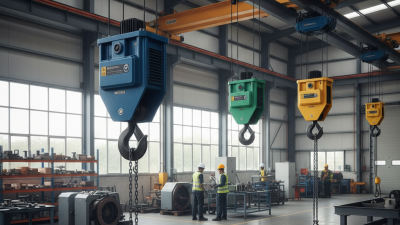
Choosing a trolley crane hoist in 2026 means matching the lifting mechanism to the load, travel path, and duty cycle. Chain hoists are compact and suit many workshop lifts. Wire-rope hoists often offer faster lifting and greater capacity, but need more headroom. Check the rated load, lift height, and starts per hour—not capacity alone.

Trolley movement matters too. A push trolley is simple for short, occasional travel. Geared or motorized trolleys reduce effort on longer runs and heavier loads. Electric hoists suit many indoor applications; pneumatic models may fit environments where compressed air is already available. Each adds maintenance needs. A motorized option is not automatically better.

The U.S. Bureau of Labor Statistics recorded 5,283 fatal work injuries across all industries in 2023. That figure is not hoist-specific, but it is a reminder to treat controls and operator training as part of equipment selection. Compare braking, limit switches, pendant or radio controls, and inspection access. The wrong match can feel fine at first.

Tips: Measure beam size and available headroom on site. Test the trolley path under a realistic load, and confirm the duty rating with a qualified supplier. Some choices are less obvious than they look.

Source: U.S. Bureau of Labor Statistics, Census of Fatal Occupational Injuries, 2023.

How to Choose a Trolley Crane Hoist in 2026?

Compare Trolley Crane Hoist Types and Operating Mechanisms

Wire-rope electric hoists are generally selected for the highest lifting capacities and long lifting heights. Electric chain hoists provide compact construction and precise control for light- to medium-duty handling. Pneumatic chain hoists are suitable for hazardous or wet environments when compressed air is available, while manual chain hoists offer the simplest operation where lifting speed and productivity are less critical. The capacities shown are representative industry ranges and must be verified against the required duty class, lifting height, operating cycle, environment, and applicable safety standards.

Check Load Capacity, Lift Height, Speed, and Duty Classification

Choosing a trolley crane hoist in 2026 starts with the real load, not the impressive maximum. Record the heaviest lift, attachments, impact risk, and side-pull possibility. A 5-ton hoist may be unsuitable if daily loads approach its limit. ASME B30.16 requires the rated load to be clearly identified and supported by inspection controls. Leave practical headroom.

Lift height affects more than hook travel. Measure the lowest hook position, beam clearance, and drum or chain length. In a workshop, a few lost inches can prevent safe pallet handling. Check the upper limit device and available vertical space. ASME B30.17 and applicable crane standards emphasize clearance, inspection, and operating conditions. Do not trust a catalogue dimension alone.

Speed should match the operator’s control needs. Fast lifting saves time, but slower movement improves load placement near machinery. For repeated production work, calculate cycles per hour rather than choosing the highest speed. Duty classification is equally important. ISO 4301-1 evaluates crane use through total operating time and load spectrum, while FEM classification methods consider working cycles and loading severity. Select a class that reflects actual repetition, not occasional usage. A hoist used for short lifts may still face severe duty when cycles are frequent. I have seen specifications fail here. The numbers looked adequate, but the heat buildup was ignored. Review maintenance access, brake response, and inspection records before approval.

Evaluate Safety Features, Controls, Power Supply, and Maintenance

When choosing a trolley crane hoist in 2026, assess safety features before lifting capacity alone. Check the rated-load marking, upper-limit switch, overload protection, emergency stop, and brake response. Ask how the trolley behaves during a power loss. A suspended load should not drift.

BLS reported 5,283 fatal work injuries in the United States in 2023; this figure covers all industries, not hoists specifically, but it underlines why safe equipment and work practices matter.

Controls should suit the operator’s position and the load path. Pendant buttons need clear labels and a reachable emergency stop; radio controls need reliable signal coverage and secure pairing. Test them with an unloaded trolley, then confirm that travel and lift directions match the labels. Small details matter. I would not assume a familiar layout is automatically intuitive.

Match the power supply to the site voltage, phase, and available circuit capacity, and protect cables from abrasion near rails and moving parts. For maintenance, review the manufacturer’s inspection schedule and the hoist’s duty classification. Keep records of inspections, repairs, and unusual noises or brake changes. ASME B30.16 provides guidance for underhung and stationary hoists, but a standard does not replace site-specific checks. A checklist can still miss a developing fault, so operators should report changes promptly.

Verify Standards, Installation Needs, Supplier Support, and Total Cost

How to Choose a Trolley Crane Hoist in 2026?

A trolley crane hoist should match the real lifting cycle, not just the rated load. Check load weight, lifting frequency, travel distance, headroom, power supply, and ambient temperature. ISO 4301 duty classifications help compare expected service life. ASME B30.16 and ISO 9927-1 also provide useful guidance for hoist safety and inspections. Requirements differ by jurisdiction. Confirm them with a qualified engineer.

Installation details often decide whether a hoist performs well. Measure runway alignment, flange width, hook approach, structural capacity, and available clearance before ordering. A few centimeters can change the trolley design. Confirm brake testing, overload protection, emergency stops, grounding, and commissioning records. The International Labour Organization estimates 2.78 million work-related deaths annually, with many linked to unsafe working conditions. Small oversights matter. I have seen projects underestimate power routing and later pay for costly modifications.

Supplier support should include drawings, manuals, spare-parts availability, operator training, inspection schedules, and response times. Ask who will support the equipment after installation. Calculate total cost over its planned life, including delivery, structural changes, testing, energy, lubrication, replacement parts, downtime, and disposal. A lower purchase price may hide frequent brake or wheel replacements. Keep a written comparison. It exposes weak assumptions, though mine are not always perfect. Recheck the figures with maintenance personnel before approval.