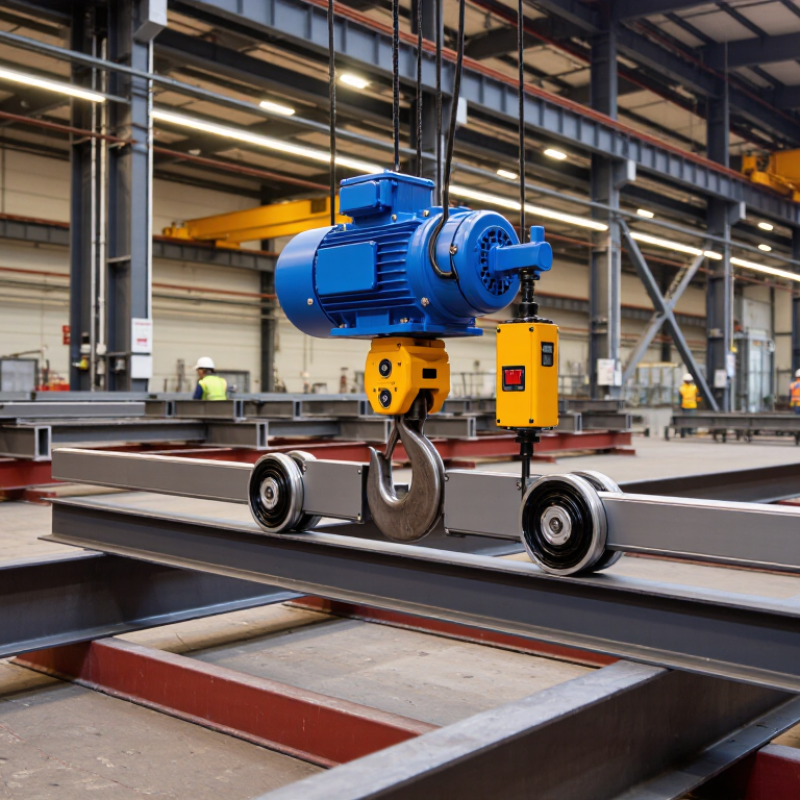
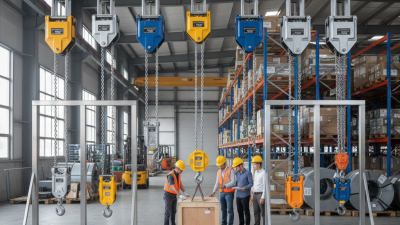
Choosing the right Electric Trolly Hoist begins with understanding the work, not just comparing prices. A hoist lifting steel parts in a fabrication shop faces different demands from one moving sacks in a warehouse. Load weight, lifting height, travel distance, duty cycle, and working environment all influence the correct specification. A small workshop may need a compact unit for occasional 500-kilogram lifts. A production line may require reliable daily operation, precise trolley movement, and stronger thermal protection.
Real operating conditions matter. Measure the beam width before selecting the trolley. Check whether the runway is straight, level, and strong enough for the combined load. Consider how often operators start, stop, and reverse the equipment. Moisture, dust, heat, and limited headroom can also change the decision. A well-designed braking system, emergency stop, overload protection, and accessible controls support safer handling. These features are not decorative. They affect daily confidence.
Do not choose by capacity alone.
A reputable manufacturer should provide clear technical data, inspection guidance, spare-parts support, and traceable quality information. Ask about noise, maintenance access, warranty terms, and operator training. I have seen specifications look suitable on paper, yet poor clearance caused practical problems during installation. That mistake is easy to overlook. It is worth reviewing the lifting plan with a qualified technician before purchase. The best Electric Trolly Hoist is not necessarily the most powerful model. It is the one that matches the real workload, site conditions, and long-term safety expectations. Some assumptions may still need testing. Reflecting on them early can prevent costly changes later.
Choosing an electric trolley hoist starts with the load, not the catalogue. Record the maximum weight, average load, center of gravity, lifting height, and required travel distance. Include slings, hooks, spreader beams, and other attachments. A 2-ton load can create greater stress when it swings or starts suddenly. Define the duty cycle honestly. Occasional lifting differs greatly from repeated production work.
The work environment matters just as much. Measure aisle width, runway length, floor condition, ceiling clearance, temperature, dust, moisture, and available power. Outdoor areas may require weather-resistant protection. Confined spaces need controlled pendant access and clear emergency procedures. According to the U.S. Bureau of Labor Statistics, transportation and material-moving occupations recorded 1,069 fatal work injuries in 2023. This figure does not select a hoist, but it reinforces the need for planned movement, visibility, and exclusion zones.
Use recognized guidance, such as ASME B30.16, when checking inspection and operating requirements. A competent person should compare the hoist’s rated capacity, lift speed, motor duty rating, braking system, and trolley compatibility. Do not size equipment by maximum weight alone. A neat spreadsheet can still miss a tilted load or an uneven runway. That is where the assessment needs another review. If operators work near noise, heat, or moving machinery, controls must remain practical, not merely compliant. Small details often decide whether lifting feels controlled or unpredictable.
Define the load, lifting frequency, and work environment before selecting a hoist. The chart shows typical planning ranges for rated lifting capacity by application; always verify the required duty class, lift height, travel speed, and environmental protection for the actual installation.
Typical planning ranges: light maintenance 0.5–2 tonnes, general workshop work 1–5 tonnes, production handling 2–10 tonnes, and heavy fabrication 5–20 tonnes. Select a rated capacity above the maximum lifted load and consider dynamic loads and future requirements.
Choosing an electric trolley hoist starts with the load, not the motor size. Record the heaviest routine load, including slings, hooks, and lifting beams. A 2-ton requirement should not be matched with a 2-ton hoist at its limit. Allow a practical safety margin recommended by qualified engineers and local regulations. Also check the load shape and center of gravity. An uneven steel frame can swing sharply during lifting. That detail is often missed.
Lift height and travel distance determine whether the hoist fits your workspace. Measure from the lowest hook position to the highest required landing point. Then account for headroom, beam depth, and remaining hook clearance. A high lift may need a longer chain or wire rope, but extra length can increase handling risks. Travel distance is different. It describes how far the trolley moves along the beam. Measure the full route, including stops near walls, machinery, or loading doors. Shorter travel may be acceptable, though poor measurements can force costly changes later.
Tips: Compare rated capacity, lift height, and travel distance under the same duty cycle. Check lifting speed and trolley speed for precise placement. Confirm the beam profile and flange width before ordering. Ask a competent technician to review the duty class, controls, brakes, and inspection access. Keep clearance visible. A simple site sketch helps. Do not rely on catalog figures alone; actual conditions can be less forgiving.
Choosing an electric trolley hoist begins with the trolley type. A motorized trolley suits frequent horizontal movement and precise positioning. A geared trolley works well when movement is occasional and manually controlled. A plain trolley may fit simple lifting tasks, but it needs a separate pulling method. Check the beam flange width, curve radius, headroom, and available runway length before selecting one. A hoist that fits the load may still fail to fit the building.
Power configuration deserves equal attention. Confirm the site voltage, phase supply, frequency, and control circuit before ordering. Single-phase power can suit lighter applications and smaller workshops. Three-phase power usually supports smoother starting and heavier duty cycles. Match motor capacity to the rated load, lifting speed, travel speed, and operating frequency. Do not size the motor by load weight alone. Duty class, starts per hour, and ambient temperature also affect performance.
Small details prevent expensive changes. Measure the beam in several places, since older structures may not be uniform. Check whether the control pendant can reach the operator without stretching. Include overload protection, upper limit switches, emergency stopping, and reliable brakes. A qualified engineer should verify the supporting structure and electrical installation. I would also question an overly fast trolley. It saves seconds, but it may increase sway and positioning errors. That trade-off is easy to overlook. Regular inspections should cover wheels, cables, brakes, connectors, and unusual motor noise.
When selecting an electric trolley hoist, inspect safety features before comparing lifting speed. A reliable unit should include overload protection, emergency stopping, upper-limit protection, and a dependable brake. Check the hook latch, chain or wire rope, and trolley wheels for solid construction. During site inspections, I have seen small defects become serious risks when operators ignored unusual noise or uneven movement. Test the emergency stop under controlled conditions. It should respond quickly and remain easy to reach.
Controls must match the working environment. Pendant controls need clear buttons, readable labels, and a suitable cable length. Wireless controls may improve visibility, but they require battery checks and secure signal management. Variable-speed control can reduce load swing near shelves or machinery. Keep the controls simple. Complicated panels invite mistakes, especially during stressful lifts. I would also question claims that sound impressive but lack test records.
Operating standards should reflect local workplace rules, electrical requirements, and recognized lifting guidance. Ask for manuals, inspection procedures, test certificates, and maintenance schedules before purchase. The hoist should suit the temperature, dust, moisture, and floor conditions around it. A careful selection can still fail if training is weak. That part is often underestimated. Schedule competent inspections, document repairs, and reassess the equipment when loads or workflows change.
How to Choose an Electric Trolley Hoist for Your Needs?
Purchase price rarely shows the real cost of an electric trolley hoist. Installation may require runway checks, structural reinforcement, electrical upgrades, and commissioning labor. Confirm headroom, beam width, load distribution, travel speed, and duty class before requesting quotations. A compact hoist can still need expensive modifications. Small details matter.
Energy use deserves attention, even when lifting cycles seem short. The U.S. Department of Energy’s Industrial Motor Systems Market Assessment found motor-driven equipment consumed about 70% of industrial electricity. Hoist motors are only one part of that demand, but inefficient starts and unnecessary travel can increase operating costs. Request rated motor efficiency, standby consumption, and duty-cycle assumptions. The figures may look too clean. Recheck them against actual shift patterns.
Maintenance planning affects total ownership costs more directly than many buyers expect. The U.S. Bureau of Labor Statistics reported a median annual wage of about $60,210 for industrial machinery mechanics in 2023. Technician time, access equipment, inspections, lubrication, brake testing, and spare parts can exceed the original price difference. Choose components with accessible service points and documented inspection intervals, referencing applicable ASME and ISO guidance. Keep records for failures, repairs, and missed production hours. Downtime hurts. A simple cost model should compare purchase, installation, energy, maintenance, training, and lost production over ten years. The lowest quotation may win today, but it can lose badly during the fifth year.
| Assessment Dimension | What to Check | Typical Data or Range | Installation and Maintenance Impact | Selection Guidance |
|---|---|---|---|---|
| Rated Load Capacity | Maximum gross load, including lifting accessories, below-the-hook devices, and dynamic effects. | Common electric trolley hoist capacities range from approximately 0.5 to 20 metric tonnes. Select a rated capacity above the heaviest planned load. | Higher capacity normally requires a stronger runway, larger power supply, heavier components, and more expensive inspections. | Choose the smallest rated capacity that safely covers the maximum working load with an appropriate safety margin. |
| Duty Class and Workload | Average operating hours, lifting cycles per hour, load spectrum, and the percentage of time spent near maximum capacity. | Light-duty equipment may suit occasional lifting; medium-duty equipment is generally used for regular workshop operations; heavy-duty equipment is intended for frequent cycles and high load utilization. | A higher duty class increases purchase price but can reduce overheating, unplanned downtime, and premature component replacement. | Base the selection on the actual load spectrum rather than only the maximum load. |
| Lift Height and Lifting Speed | Required hook travel, lifting speed, positioning accuracy, and the number of lifts per shift. | Typical lifting speeds are about 2 to 8 metres per minute, while some variable-speed units provide slower positioning speeds. | Greater lift height may require longer chain or wire rope, additional guides, more inspection time, and increased energy use. | Use dual-speed or variable-speed control when accurate load placement is more important than maximum lifting speed. |
| Trolley Travel Speed | Runway length, required positioning time, travel frequency, and the need for smooth acceleration and braking. | Common travel speeds are approximately 5 to 25 metres per minute; variable-speed travel improves control and reduces load swing. | Higher speeds can require more precise runway alignment, stronger end stops, and additional attention to wheel and rail wear. | Select a lower or variable travel speed where personnel, fragile loads, or limited floor space are involved. |
| Power Supply | Voltage, phase, frequency, available current, cable route, and compatibility with the existing electrical system. | Industrial units commonly use three-phase AC power, such as 380–480 V at 50 or 60 Hz, but the required rating must be confirmed from the equipment specification. | Electrical installation may require a dedicated circuit, disconnect, overload protection, festoon or conductor bar, and qualified electrical labor. | Verify the site supply before purchase. A voltage mismatch can create conversion costs or make the hoist unsuitable. |
| Runway and Building Structure | Runway beam size, span, rail condition, support spacing, deflection, headroom, and building load capacity. | The runway must be engineered for the hoist weight, rated load, impact effects, wheel loads, and allowable deflection; exact limits depend on the design standard. | Structural reinforcement, new runway steel, access platforms, or building surveys can exceed the cost of the hoist itself. | Obtain a structural assessment before ordering. Do not assume that an existing beam is suitable. |
| Installation Requirements | Delivery access, lifting equipment, assembly space, electrical work, runway alignment, testing, and operator training. | Installation time may range from one working day for a simple replacement to several days or more for a new runway and electrical installation. | Labor, access equipment, production stoppage, commissioning, and load testing are major initial cost drivers. | Request an itemized installation quotation that separates equipment, labor, electrical work, testing, and site modifications. |
| Safety and Control Features | Emergency stop, upper and lower limit switches, overload protection, brakes, pendant or radio control, and anti-collision requirements. | Safety functions should be selected and validated according to applicable local regulations and recognized lifting-equipment standards. | More advanced controls may increase purchase and training costs but can reduce misuse, load damage, and downtime. | Specify safety functions based on the risk assessment, operating environment, and required level of load control. |
| Maintenance Schedule | Inspection frequency, lubrication points, brake checks, chain or rope condition, hooks, wheels, electrical controls, and limit switches. | Pre-use checks are typically performed by operators; periodic inspections may be monthly, quarterly, or annual depending on usage, regulations, and risk. | Poor maintenance increases wear, inspection failures, emergency repairs, and production interruptions. | Prefer accessible service points, clear manuals, available spare parts, and a documented preventive-maintenance plan. |
| Operating Environment | Indoor or outdoor use, dust, moisture, corrosive chemicals, temperature, hazardous areas, and washdown exposure. | Enclosure and protection requirements vary by location. Standard indoor equipment may not be suitable for outdoor, corrosive, or hazardous environments. | Environmental protection can increase initial cost and may require more frequent cleaning, corrosion checks, and component replacement. | Match the hoist enclosure, insulation, coatings, and electrical classification to the actual site conditions. |
| Energy Consumption | Motor power, lifting cycles, average load, operating hours, and local electricity tariff. | Annual energy cost can be estimated as: motor input power × operating hours × electricity rate. Actual consumption is lower than full-rated power when the hoist operates intermittently. | Efficient motors and variable-speed drives may reduce energy use and mechanical shock, although they add electronics that require suitable protection. | Compare energy cost over the expected service life instead of focusing only on the purchase price. |
| Spare Parts and Serviceability | Availability of brakes, contactors, control pendants, wheels, chains, wire rope, limit switches, and motors. | Common wear parts should be readily obtainable, with clear part numbers and documented replacement procedures. | Long lead times can extend downtime and increase the cost of holding critical spare parts on site. | Evaluate local technical support, spare-parts lead times, warranty terms, and repair capabilities before purchase. |
| Total Cost of Ownership | Purchase price, installation, structural work, commissioning, energy, inspections, maintenance, spare parts, downtime, and disposal. | A practical life-cycle model is: total ownership cost = purchase cost + installation cost + operating cost + maintenance cost + downtime cost − residual value. | A lower initial price may produce higher long-term costs if the hoist has poor service access, limited parts availability, or an unsuitable duty rating. | Compare at least a five-year ownership forecast using the same workload, labor rates, electricity price, and inspection assumptions. |
| Compliance and Documentation | Rated-load documentation, inspection records, operating instructions, maintenance instructions, declarations, and test certificates. | Documentation should identify the rated capacity, duty classification, electrical data, inspection requirements, and applicable design or safety standards. | Missing documentation can delay commissioning, increase compliance work, and create avoidable operational risk. | Make complete technical documentation and acceptance testing part of the purchase specification. |