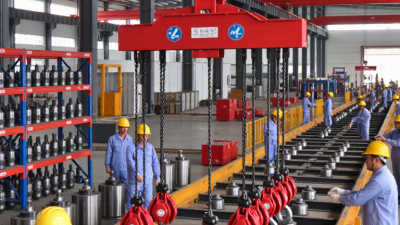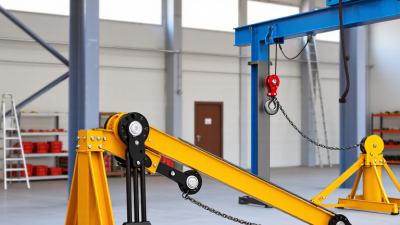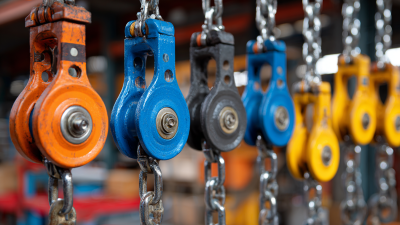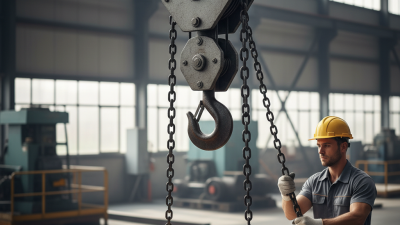
Choosing among the top 10 Manual Chain Blocks requires more than comparing prices, lifting capacity, and product photographs. Buyers must examine working load limits, chain grade, brake performance, hook design, corrosion resistance, and service support. A compact block may look efficient on a warehouse shelf, yet feel unreliable when its hand chain drags under a heavy, uneven load.
Pat Davison, a recognized material-handling and lifting-equipment specialist, offers a practical reminder: “The safest lift begins before the load leaves the ground.” This principle shapes our evaluation. Every selected Manual Chain Blocks model should show clear ratings, smooth operation, dependable load control, and accessible inspection guidance. Small details matter. A readable nameplate, a properly seated hook latch, and a brake that holds without sudden movement can influence daily safety.
Real buying decisions are rarely perfect. Some models excel in narrow spaces but sacrifice operating speed. Others offer stronger housings but weigh more than expected. Price can also mislead; a cheaper block may create higher maintenance costs over time. We therefore consider both technical specifications and realistic working conditions, including repetitive lifting, dusty floors, limited headroom, and operator fatigue.
This guide compares ten leading options for professional buyers, maintenance teams, workshops, and carefully managed industrial applications. It does not treat one model as universally superior. The right choice depends on load frequency, environment, available inspection routines, and the consequences of equipment failure. Always verify manufacturer documentation and local safety requirements before purchase or use.
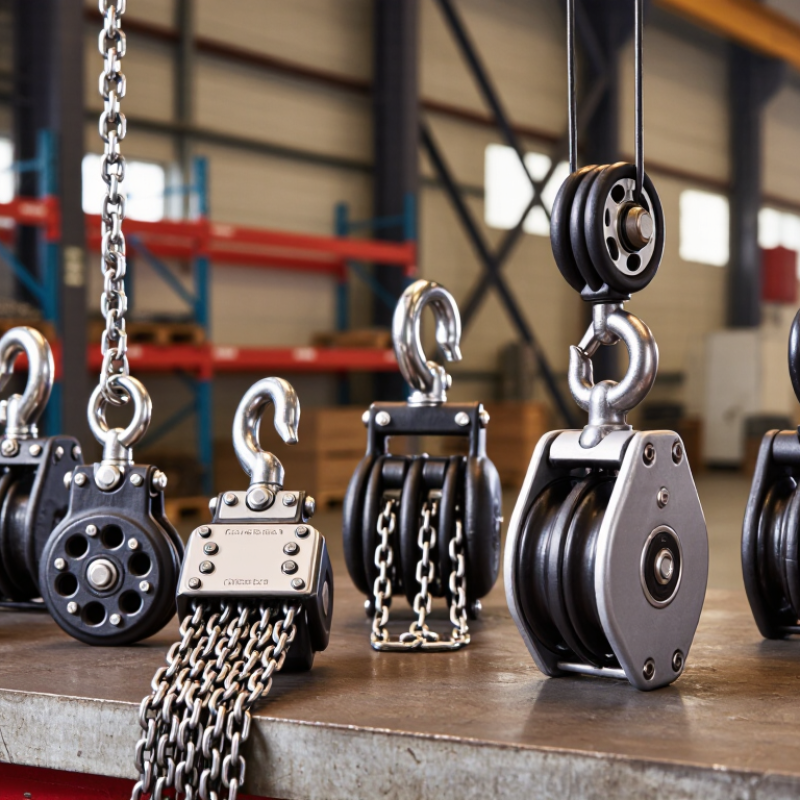
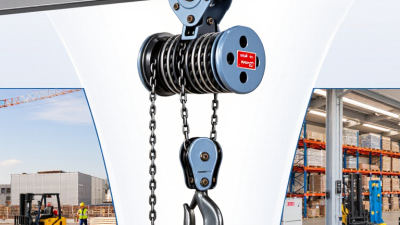
A manual chain block is a compact lifting device operated by pulling a hand chain. The chain turns a wheel, which drives reduction gears and a load sprocket. The sprocket moves the load chain through the body. A friction brake holds the suspended load when the operator stops pulling. It is simple, but not effortless.
The gear ratio multiplies hand force while reducing lifting speed. For example, a rated one-ton block may need repeated pulls and several minutes to raise a pallet. Its rated capacity applies only to controlled, vertical lifting. Side loading, shock loading, twisted chains, or damaged hooks can create dangerous forces. ASME B30.16-2022 addresses design, inspection, testing, and operating practices for overhead hoists. Buyers should also check the manufacturer’s rated pull, lift height, chain size, and working temperature.
Look closely at the details. The hook should close properly, the chain should move without grinding, and the brake should hold without creeping. The U.S. Bureau of Labor Statistics reported 1,069 fatal workplace injuries in transportation and material-moving occupations during 2023; this figure is not specific to chain blocks, but it shows the wider risk environment. A useful inspection record matters more than a confident sales claim. I have seen buyers focus on capacity and overlook headroom. That is an easy mistake. A short lift can still fail when the upper hook, chain path, or attachment point is unsuitable.
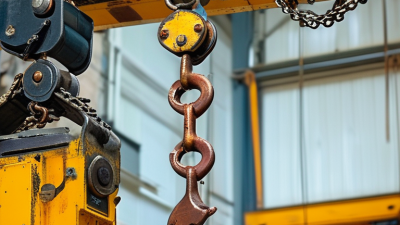
When comparing manual chain blocks, start with working load limit, not advertised lifting capacity. The correct rating must cover the load, rigging, and dynamic movement. Check lift height and headroom carefully. A compact body matters in low-ceiling workshops. It does not solve every access problem.
Brake reliability deserves close attention. The load should hold steadily when the operating chain stops. Look for clear overload protection, forged hooks, visible safety latches, and a load chain with traceable grade markings. ASME B30.16 and EN 13157 provide useful benchmarks for design, inspection, and safe operation. Their requirements are more meaningful than a polished finish. A bright coating can mislead. It says little about internal wear.
Ergonomics also affects real productivity. A smooth hand chain, moderate pulling force, and balanced housing reduce fatigue during repeated lifts. Ask for inspection records, proof-test documentation, spare-chain availability, and maintenance instructions. The U.S. Bureau of Labor Statistics recorded 5,283 fatal occupational injuries in 2023, showing why equipment selection cannot rely on price alone. That figure covers all industries, not chain blocks specifically, but it still supports a cautious approach. In field use, I would also check hook throat opening, chain corrosion, and brake behavior under a controlled test load. Buyers often overlook storage conditions. That is a mistake. A unit used outdoors may need better corrosion resistance, while a workshop model may benefit more from low weight and easy servicing.
The top ten manual chain blocks should be ranked by capacity, safety, and durability, not price alone. A 0.5-ton model suits maintenance benches, while 1-, 2-, and 3-ton blocks fit workshops and construction tasks. Five-ton units handle heavier structural work, but they need stronger anchor points. Larger 10- and 20-ton blocks offer power, yet their weight reduces portability. The remaining strong choices are compact low-headroom designs, corrosion-resistant units, and models with overload protection. Capacity must match the load’s actual weight.
The U.S. Occupational Safety and Health Administration requires rated-load information and regular inspection for lifting equipment. ASME B30.16 also emphasizes inspection, operating controls, and load-chain condition. A 2023 lifting-equipment market report from Grand View Research valued the global hoist market at billions of dollars, showing continued industrial demand. However, market growth does not prove product quality. Buyers should examine brake performance, hook deformation, chain wear, and frame thickness. A smooth pull matters. So does a clear inspection label.
Tips: Measure headroom before ordering. Check the anchor structure, not only the block. Choose a safety factor recommended by the applicable standard. Test the brake with a controlled load, never a sudden shock. Keep chains clean and lightly lubricated. I have seen small rust spots become expensive failures. That detail is easy to ignore. Also, advertised durability can be vague, so request inspection records, material specifications, and replacement-part availability.
The top 10 manual chain blocks should not be ranked by lifting capacity alone. Leading models differ by application, travel frequency, headroom, and operator control. Compact lever blocks suit maintenance teams working beside machinery. Hand chain blocks fit workshops and fixed lifting points. Ratchet designs offer precise positioning, especially during equipment alignment. For construction sites, a higher-capacity unit with a wider suspension hook is more practical.
Capacity matters.
According to the U.S. Bureau of Labor Statistics’ 2023 Census of Fatal Occupational Injuries, transportation and material-moving occupations recorded 1,069 fatal work injuries. This figure does not prove that chain blocks caused those incidents, but it shows why selection and handling deserve serious attention. Buyers should verify rated load, chain grade, brake performance, and inspection access. ASME B30.16 also emphasizes proper inspection, operation, and maintenance for overhead lifting equipment.
Harsh environments require different choices. Galvanized chains resist moisture better, while enclosed gearing helps reduce dust intrusion. Low-headroom blocks work beneath beams, but their compact frames may limit service access. For frequent lifting, smoother hand-chain operation can reduce fatigue. For occasional positioning, a lever block may offer better control. These differences are easy to overlook. A unit rated for two tonnes is not automatically suitable for every two-tonne lift. Load balance, lift height, anchorage, and operator experience still matter. Some rankings also depend too heavily on catalogue specifications. Field conditions can tell a different story.
| Rank | Manual Chain Block Type | Rated Capacity | Typical Standard Lift | Typical Headroom | Approx. Net Weight | Best Application | Main Advantages | Important Limitations | Recommended Buying Criteria |
|---|---|---|---|---|---|---|---|---|---|
| 1 | Compact Low-Capacity Block | 0.5 t | 3 m | 250–300 mm | 8–12 kg | Tool positioning, light maintenance, workshops, and installation work. | Lightweight, portable, economical, and suitable for one-person handling. | Limited lifting capacity and less suitable for frequent production work. | Check compact dimensions, hook opening, overload protection, and chain grade. |
| 2 | General-Purpose Workshop Block | 1 t | 3 m | 280–350 mm | 10–18 kg | Routine maintenance, machinery assembly, fabrication, and garage lifting. | Balanced capacity, manageable weight, and broad availability of spare parts. | May require additional lifting height or longer hand chain for large work areas. | Compare hand-chain effort, minimum curve radius, lift length, and suspension options. |
| 3 | Medium-Duty Fabrication Block | 2 t | 3–6 m | 320–400 mm | 18–30 kg | Steel fabrication, pump installation, plant maintenance, and construction tasks. | Good capacity-to-size ratio and practical for repeated manual lifting. | Heavier than compact units and slower than powered lifting equipment. | Verify load-chain diameter, brake holding ability, trolley compatibility, and duty rating. |
| 4 | Heavy-Duty Maintenance Block | 3 t | 3–6 m | 380–470 mm | 28–45 kg | Industrial maintenance, conveyors, motors, gearboxes, and equipment replacement. | Strong general-purpose performance with a wide range of lifting accessories. | Requires a suitable overhead support and more effort when lifting near full capacity. | Prioritize certified load testing, corrosion protection, brake design, and inspection access. |
| 5 | Low-Headroom Block | 1–3 t | 3 m | 230–330 mm | 15–42 kg | Workshops, plant rooms, structural beams, and locations with restricted vertical clearance. | Maximizes usable lifting height where standard blocks would lose clearance. | Compact geometry can increase purchase price and may reduce access for servicing. | Measure hook-to-hook dimensions, beam clearance, trolley height, and available hand-chain space. |
| 6 | Corrosion-Resistant Block | 0.5–5 t | 3 m | 280–550 mm | 10–70 kg | Marine maintenance, wastewater plants, outdoor construction, and humid environments. | Improved resistance to rust when equipped with suitable coatings and plated components. | Surface protection does not eliminate the need for cleaning, lubrication, and inspection. | Specify coating system, plated chain, sealed bearings, drainage, and material compatibility. |
| 7 | Spark-Reduced or Special-Environment Block | 0.5–5 t | 3 m | 300–600 mm | 12–75 kg | Potentially hazardous areas where ignition control and strict work procedures are required. | Can be configured with suitable materials and controls for specialized environments. | No manual block should be treated as automatically explosion-proof without formal certification. | Confirm area classification, certification, material selection, grounding, and site risk assessment. |
| 8 | Long-Lift Construction Block | 1–5 t | 6–12 m | 300–600 mm | 18–80 kg | Structural erection, pipe installation, roofing, and work on tall equipment. | Provides additional lifting travel without repeatedly repositioning the block. | Longer chains add weight, storage requirements, and potential tangling hazards. | Check chain storage, lift accuracy, operator access, chain weight, and site fall-protection rules. |
| 9 | High-Capacity Industrial Block | 5–10 t | 3–6 m | 500–750 mm | 70–150 kg | Heavy machinery, plant shutdowns, mold handling, and large equipment positioning. | Delivers substantial lifting force without electrical or hydraulic power. | Slow operation, high self-weight, and significant support-structure demands. | Verify support capacity, lifting points, brake holding load, load distribution, and transport method. |
| 10 | Ultra-High-Capacity Rigging Block | 10–50 t | 3–6 m | 700–1,400 mm | 150–900 kg | Heavy rigging, bridge installation, shipyard work, and controlled industrial positioning. | Enables controlled lifting where powered equipment is unavailable or impractical. | Requires engineered lifting plans, substantial support structures, multiple operators, and strict supervision. | Demand certified capacity, documented proof testing, engineered rigging points, and a formal lift plan. |
A strong top-ten list of manual chain blocks should begin with fit, not popularity. Buyers need to match rated capacity, lifting height, chain size, and working environment. A block rated for 2 tons should not handle a 2-ton load continuously. Leave a sensible safety margin. Check the product plate, inspection records, and operating instructions before purchase. Capacity markings must remain clear and readable.
Inspect the block closely. Look for stretched, twisted, cracked, or heavily worn chain links. The hooks should close properly, without deep gouges or spreading. Test the load brake with a controlled, suspended load. It should hold without slipping. The hand chain should move smoothly. Grinding sounds are warning signs. Do not ignore them. Also examine the side plates, gears, pins, and safety latches. A qualified inspector should verify equipment used in demanding workplaces.
Maintenance should be simple and recorded. Clean dirt from the chain, then apply the approved lubricant sparingly. Excess oil attracts abrasive dust. Store the block in a dry area, away from impact and corrosive chemicals. Schedule inspections by usage, not only by calendar date. Heavy daily lifting needs closer attention. A common mistake is replacing a chain without checking the load brake. The whole mechanism matters. No checklist is perfect. Buyers should question unclear certificates, inconsistent markings, and unusually low prices before accepting the risk.
The chart shows ten common rated-capacity categories used when selecting manual chain blocks. These capacity ranges are representative of standard market offerings and are not associated with any specific company or brand.
Capacity values are shown in metric tonnes and represent common manual chain block categories. Always verify the product nameplate, applicable lifting regulations, and the manufacturer’s inspection requirements before operation.