How to Choose the Right Manual Chain Hoist?
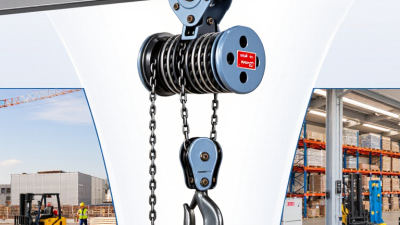
Choosing the right Manual Chain hoist is a safety decision, not merely a purchasing task. The correct model must match the load, lifting height, operating frequency, and working environment. A 1-ton hoist may appear suitable, yet awkward access, shock loading, or poor anchoring can create serious risks.
The International Labour Organization reported about 2.93 million work-related deaths worldwide in 2019, including incidents linked to unsafe working conditions. That figure should make every lifting choice more deliberate. ASME B30.16 provides widely recognized guidance for overhead hoists, while OSHA requires equipment to be inspected and used within its rated capacity. These standards offer direction, but they cannot replace a site-specific assessment.
David Michaels, former Assistant Secretary of Labor for OSHA, has consistently emphasized that prevention should rely on evidence rather than assumptions. That principle applies directly to Manual Chain selection. Check the manufacturer’s duty rating, chain grade, brake design, hook safety latch, and certification records. Inspect the supporting beam too. It is often forgotten.
A practical evaluation should consider the operator’s hand position, floor condition, available headroom, and the load’s center of gravity. A compact hoist may fit a crowded workshop, but a longer lift can make operation slow and tiring. This guide is not perfect; product labels can be unclear, and real workplaces rarely match catalog images. Still, careful comparison reduces guesswork and helps buyers choose equipment that is controllable, durable, and appropriate for the task.
Define the Load, Lift Height, and Working Conditions
Choosing the Right Manual Chain Hoist: Define the Load, Lift Height, and Working Conditions
Start with the real load, not the guessed load. Include the object, slings, shackles, hooks, and any lifting attachments. The working load limit must exceed this combined weight. A small safety margin matters. Never select a hoist by appearance or price alone. Check the load’s center of gravity and lifting points. An uneven load can swing, tilt, or overload one connection.
Lift height also affects the correct hoist. Measure from the supporting beam to the final landing point. Then check available headroom, chain length, and hook clearance. A compact hoist may fit a low ceiling, but its chain bag could still interfere with nearby equipment. Confirm the required lifting distance before ordering. This step is often rushed.
Working conditions deserve equal attention. Dust, moisture, heat, corrosive vapors, and outdoor exposure can affect chains, brakes, and load hooks. Frequent lifting may require a different duty rating than occasional maintenance work. Consider operator position, pulling space, and the need for precise control. Keep the load directly below the hoist. Side pulling is unsafe and can damage internal parts. A qualified person should inspect the hoist before use and follow the applicable safety requirements. I have found that written measurements prevent more mistakes than memory. Still, recheck them at the installation point; drawings can be wrong.
Match the Hoist to Installation Space and Operating Frequency
How to Choose the Right Manual Chain Hoist?
Match the hoist to installation space and operating frequency before comparing lifting capacity. Measure the beam height, available headroom, lifting distance, and surrounding clearance. A compact hoist may fit a low ceiling, but its shorter lift can slow daily work. Check the load’s center of gravity, too. An uneven load can pull the chain sideways and reduce control.
One detail is easy to miss. Leave enough room for the hand chain to move freely without striking walls, pipes, or stored materials. The hook must also align vertically with the load. Side pulling creates dangerous stress on the hoist body and supporting structure. Use a rated anchor point, and confirm that the structure can support the lifted load, not just the hoist rating.
Operating frequency changes the selection. Occasional maintenance work may suit a standard manual hoist with a moderate lifting speed. Repeated lifting throughout a shift needs durable gearing, smooth chain movement, and a suitable duty rating. Inspect the load chain, hooks, brake, and identification plate at planned intervals. Field conditions are rarely perfect. Dust, moisture, awkward access, and rushed operators can expose weaknesses that a catalogue does not show. I have seen teams choose a lighter model because it was easier to carry, then struggle with frequent lifts. Reconsider the choice when effort becomes excessive. Safety should not depend on unusually careful handling.
How to Choose the Right Manual Chain Hoist? - Match the Hoist to Installation Space and Operating Frequency
| Installation and Operating Profile |
Typical Working Load Limit |
Recommended Hoist Configuration |
Typical Minimum Headroom* |
Recommended Lift Length |
Operating Frequency |
Selection Guidance |
| Very restricted overhead space; occasional positioning |
0.5–1 tonne |
Compact hand-chain hoist with a short headroom design |
Approximately 250–350 mm |
2–3 m |
Up to 5 lifting cycles per day |
Prioritize compact dimensions, low empty weight, and sufficient clearance above the load. |
| Limited headroom; maintenance and workshop lifting |
1–2 tonnes |
Standard manual chain hoist with a compact trolley or fixed suspension |
Approximately 300–450 mm |
3–6 m |
5–15 lifting cycles per day |
Choose a unit whose rated capacity exceeds the heaviest load and whose hook path fits the available vertical space. |
| General workshop or fabrication area with adequate overhead clearance |
2–5 tonnes |
Heavy-duty hand-chain hoist with two or more load-chain falls |
Approximately 400–600 mm |
3–9 m |
10–30 lifting cycles per day |
A multi-fall design reduces manual pull effort but generally increases lifting speed time and headroom requirements. |
| Frequent material handling in a repair, assembly, or production environment |
1–3 tonnes |
Low-effort manual hoist with ergonomic hand-chain operation |
Approximately 350–550 mm |
3–6 m |
30–60 lifting cycles per day |
Select for smooth operation, durable load-chain components, accessible inspection points, and reduced operator fatigue. |
| Heavy loads with moderate frequency and limited operator effort |
5–10 tonnes |
High-capacity manual chain hoist with multiple load-chain falls |
Approximately 500–800 mm |
3–6 m |
Up to 20 lifting cycles per day |
Confirm supporting-structure capacity, hook opening dimensions, load-chain reeving, and allowable hand force before selection. |
| Outdoor, dusty, humid, or intermittently exposed installation |
0.5–5 tonnes |
Corrosion-protected manual hoist with enclosed or protected braking components |
Approximately 300–650 mm |
Based on the lifting path and storage arrangement |
Up to 15 lifting cycles per day |
Check corrosion protection, operating-temperature limits, drainage, lubrication requirements, and storage conditions. |
|
Important: The figures above are typical planning ranges for manual chain hoist selection, not universal product specifications. Actual headroom, dimensions, duty rating, hand-chain pull, lifting speed, and permissible operating cycles vary by design and capacity. Verify the manufacturer's technical data and applicable lifting-equipment regulations before use. Never exceed the marked working load limit.
|